Encyclopedia: I
758 entries under I · page 4 of 8: Indian Councils Act 1909 – Instruction of Amenemhat
- Indian Councils Act 1909Work / monumentThe Indian Councils Act 1909, known as the Morley–Minto reforms after the Secretary of State John Morley and the Viceroy Lord Minto, enlarged the legislative councils…
- Indian independenceEventIndian independence refers to the end of British rule in India in 1947, when the subcontinent was partitioned into India and Pakistan.
- Indian Independence Act 1947Work / monumentThe Indian Independence Act 1947 was an act of the British Parliament that partitioned British India into the two independent dominions of India and Pakistan from 15…
- Indian Institute of ScienceInstitutionThe Indian Institute of Science is a research university in Bengaluru, India, founded in 1909.
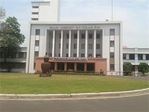 Indian Institutes of TechnologyInstitutionThe Indian Institutes of Technology (IITs) are a group of public engineering and technology universities in India, the first founded at Kharagpur in 1951 as part of…
 Indian National ArmyPeople / groupThe Indian National Army was a force raised with Japanese support, largely from Indian prisoners of war captured in Malaya and Singapore, to fight British rule in India.
 Indian National CongressInstitutionThe Indian National Congress is a political party founded in 1885 that became the leading organisation of the Indian independence movement.
 Indian OceanPlaceThe Indian Ocean is the world's third-largest ocean, bounded by Africa, Asia and Australia.
- Indian Ocean tradeTermIndian Ocean trade refers to the maritime exchange of goods such as spices, textiles, gold, ivory and ceramics across the Indian Ocean, driven by seasonal monsoon winds.
 Indian Rebellion of 1857Revolt · 1857The Indian Rebellion of 1857 was a major uprising against the rule of the British East India Company, beginning with a mutiny of Indian soldiers.
 Indian subcontinentPlaceThe Indian subcontinent is the large region of South Asia comprising present-day India, Pakistan, Bangladesh, Nepal, Sri Lanka and neighbouring lands.
 Indian TerritoryPlaceIndian Territory was the land west of Arkansas, in present-day Oklahoma, set aside by the United States for Native American nations removed from the east under the…
 Indian Wild Ass SanctuaryPlaceThe Indian Wild Ass Sanctuary is a protected area in the Little Rann of Kutch in Gujarat, India, established in 1972.
 IndibilisPersonIndibilis was a chief of the Ilergetes, an Iberian people of the plain around Lleida in north-eastern Spain, during the Second Punic War.
- IndigénatInstitutionThe indigénat was a legal regime in the French colonial empire that subjected colonial subjects to separate administrative penalties, imposed by officials without trial.
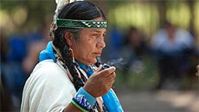 Indigenous peoples of CaliforniaPeople / groupThe Indigenous peoples of California include more than a hundred distinct groups, such as the Chumash, Tongva, Ohlone, Miwok and Pomo, whose ancestors lived there for…
- IndigoTermIndigo is a blue dye obtained from plants, widely used to colour textiles.
- Indira GandhiPersonIndira Gandhi (1917–1984) was an Indian politician, the daughter of Jawaharlal Nehru, who served as prime minister from 1966 to 1977 and from 1980 until her death, the…
- Indira Kala Sangeet VishwavidyalayaInstitutionIndira Kala Sangeet Vishwavidyalaya is a university of music, dance and fine arts at Khairagarh in Chhattisgarh, India, founded in 1956.
- Indirect ruleReligion / ideaIndirect rule is a method of government in which an imperial power governs through existing local rulers and institutions rather than replacing them.
- Indo-AryansPeople / groupThe Indo-Aryans are speakers of the Indo-Aryan branch of the Indo-European languages, which includes Sanskrit.
 Indo-European languagesTermThe Indo-European languages are a family of related languages spoken across Europe and much of western and southern Asia, descended from a reconstructed ancestor…
 Indo-FijiansPeople / groupIndo-Fijians are Fijian citizens of Indian descent, most of them descended from about 60,000 indentured labourers brought from India between 1879 and 1916 to work on…
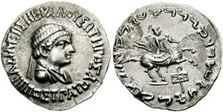 Indo-Greek KingdomStateThe Indo-Greek Kingdom was a group of Hellenistic states in north-western India and present-day Pakistan and Afghanistan, ruled by Greek kings from the second century…
- Indo-Islamic cultureReligion / ideaIndo-Islamic culture refers to the blend of Islamic, Persian and Indian traditions that developed in South Asia under Muslim rulers.
 Indo-Pakistani War of 1965War · 1965The Indo-Pakistani War of 1965 was fought between India and Pakistan from August to September 1965.
- Indo-Persian cultureReligion / ideaIndo-Persian culture refers to the synthesis of Persian and Indian traditions that flourished in South Asia, especially at Muslim courts.
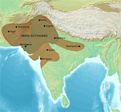 Indo-ScythiansPeople / groupThe Indo-Scythians were Saka groups who moved from Central Asia through Sistan and Gandhara into north-western India from the late second century BCE.
 IndochinaPlaceIndochina, or French Indochina, was the federation of French colonial territories in South-East Asia comprising Vietnam's three regions, Cambodia and Laos.
 Indochina UniversityInstitutionIndochina University was the first modern university in French Indochina, founded in Hanoi in 1906 under Governor-General Paul Beau.
 Indochinese Communist PartyPeople / groupThe Indochinese Communist Party was the communist party founded by Ho Chi Minh in Hong Kong in 1930, merging rival Vietnamese communist groups.
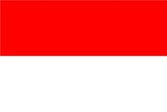 IndonesiaPlaceIndonesia is an archipelago nation in South-East Asia comprising thousands of islands, including Java and Sumatra.
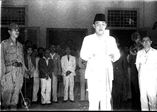 Indonesian independenceEventIndonesian independence was proclaimed in 1945 and recognised by the Netherlands in 1949 after a period of armed conflict and negotiation.
 Indonesian National Armed ForcesInstitutionThe Indonesian National Armed Forces (Tentara Nasional Indonesia, TNI) are the army, navy and air force of Indonesia.
 Indonesian National PartyPeople / groupThe Indonesian National Party (PNI) was founded by Sukarno and others in Bandung on 4 July 1927 to win independence through mass non-cooperation with the Dutch.
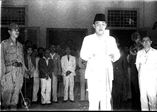 Indonesian National RevolutionRevolution · War · 1947–1949The Indonesian National Revolution was the armed and diplomatic struggle for independence from Dutch rule, fought from 1947 to 1949 in its main phase.
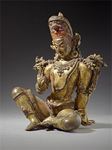 IndraReligion / ideaIndra is the king of the gods in the Rigveda, the god of thunder and rain who wields the thunderbolt and slays the serpent Vritra to release the waters.
- Indra IIIPersonIndra III was the Rashtrakuta emperor of the Deccan from 914 to 929.
- Indra IVPersonIndra IV was the last claimant of the Rashtrakuta dynasty, a grandson of Krishna III.
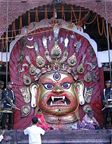 Indra JatraEventIndra Jatra is an annual festival in Kathmandu, Nepal, held in late summer or early autumn in honour of the god Indra.
 Indragiri Hilir RegencyPlaceIndragiri Hilir is a regency on the east coast of Sumatra in Riau province, Indonesia, covering the lower course and delta of the Indragiri River.
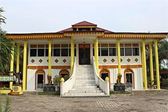 Indragiri Hulu RegencyPlaceIndragiri Hulu is a regency in Riau province on Sumatra, Indonesia, covering the upper course of the Indragiri River.
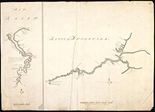 Indragiri RiverPlaceThe Indragiri River rises in the Minangkabau highlands of West Sumatra, where it is called the Kuantan, and flows east through Riau province into the Strait of Malacca.
 Indrapura (Champa)PlaceIndrapura was a capital of Champa in central Vietnam, at Đồng Dương in Quảng Nam province, from the late 9th century.
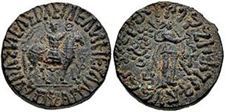 IndravarmaPersonIndravarma was a ruler of the Apracharaja dynasty of Bajaur in the north-west of the Indian subcontinent around the turn of the era.
- IndrayudhaPersonIndrayudha was a king of Kannauj in northern India in the late 8th century, the first known ruler of the Ayudha dynasty.
 IndusPlaceThe Indus is a great river of South Asia flowing from Tibet through Pakistan to the Arabian Sea.
- Indus ValleyPlaceThe Indus Valley is the region along the Indus River in present-day Pakistan and north-western India.
 Indus Valley CivilisationStateThe Indus Valley Civilisation was a Bronze Age civilisation in the Indus basin, known for planned cities such as Harappa and Mohenjo-daro.
- Industrial and Commercial Workers' UnionPeople / groupThe Industrial and Commercial Workers' Union was a trade union founded by Clements Kadalie in Cape Town in 1919, beginning among dock workers.
 Industrial RevolutionEventThe Industrial Revolution was the transition to mechanised production, steam power and factory industry that began in Britain in the eighteenth century.
- IndutiomarusPersonIndutiomarus was a leader of the Treveri, a Gallic people of the Moselle valley, during Julius Caesar's Gallic Wars.
 Ine of WessexPersonIne of Wessex was king of the West Saxons from 688 to 726, one of the strongest Anglo-Saxon rulers before Alfred.
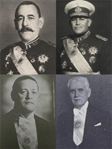 Infamous DecadeEventThe Infamous Decade is the name given to the period of Argentine history from the coup of 1930 to the military revolution of 1943.
- Infaq al-MaysurWork / monumentInfaq al-Maysur is a historical work by Muhammad Bello, the second ruler of the Sokoto Caliphate.
 Inferno (Dante)Work / monumentInferno is the first part of Dante Alighieri's Divine Comedy, written in the early 14th century.
 Inflanty VoivodeshipPlaceThe Inflanty Voivodeship was a province of the Polish–Lithuanian Commonwealth formed from the part of Livonia that Poland-Lithuania kept after its 17th-century wars…
- InflationTermInflation is a sustained rise in the general level of prices, reducing the purchasing power of money.
- Inflation and currency debasementHistorical factorInflation and currency debasement is a recurring pattern in which rulers reduce the precious-metal content of coins or over-issue paper money to meet expenses, leading…
 IngapircaPlaceIngapirca is the largest Inca archaeological site in Ecuador, in Cañar province.
- IngauniPeople / groupThe Ingauni were a Ligurian people of the western Riviera of Italy, centred on Albium Ingaunum, modern Albenga.
 Inge SargentPersonInge Sargent is an Austrian-born writer who married Sao Kya Seng, the saopha of the Shan state of Hsipaw, whom she met as a student in the United States.
- IngelgerPersonIngelger was a 9th-century Frankish noble regarded as the founder of the first dynasty of the counts of Anjou.
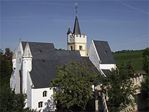 Ingelheim am RheinPlaceIngelheim am Rhein is a town in Rhineland-Palatinate, Germany, on the Rhine west of Mainz.
 IngiloysPeople / groupThe Ingiloys are a Georgian-speaking ethnographic group of north-western Azerbaijan, living mainly in the Qakh, Zaqatala and Balakan districts.
- IngolstadtPlaceIngolstadt is a city in Upper Bavaria, Germany, on the Danube.
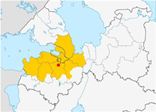 IngriaPlaceIngria is a historical region on the southern shore of the Gulf of Finland, around present-day St Petersburg.
 Ingrian FinnsPeople / groupThe Ingrian Finns are the Lutheran Finnish-speaking population of Ingria, around the Gulf of Finland and modern St Petersburg.
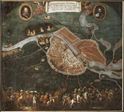 Ingrian WarWar · 1610–1617The Ingrian War was fought between Sweden and the Tsardom of Russia during and after Russia's Time of Troubles.
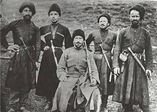 Ingush peoplePeople / groupThe Ingush are a Nakh people of the central North Caucasus, closely related to the Chechens, living mainly in the Republic of Ingushetia in Russia.
 ÞingvellirPlaceÞingvellir is a site in south-western Iceland where the Althing, the island's general assembly, met in the open air from around 930 until 1798.
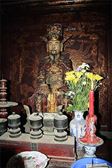 Đinh LiễnPersonĐinh Liễn was the eldest son of Đinh Tiên Hoàng, the first emperor of the Đinh dynasty of Đại Cồ Việt in Vietnam.
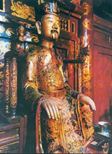 Đinh Tiên HoàngPersonĐinh Tiên Hoàng, born Đinh Bộ Lĩnh, was a local leader from Hoa Lư who defeated the rival warlords of the Twelve Warlords period.
 InhambanePlaceInhambane is a port town on a sheltered bay on the coast of southern Mozambique.
- Íñigo AristaPersonÍñigo Arista was the first king of Pamplona, the kingdom later known as Navarre.
- Íñigo López EzquerraPersonÍñigo López Ezquerra was the first recorded lord or count of Biscay, appearing in documents from about 1040 as a vassal of the kings of Navarre.
 InisfallenPlaceInisfallen is an island in Lough Leane, the Lower Lake of Killarney, in County Kerry, Ireland.
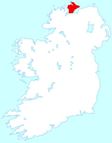 InishowenPlaceInishowen is the largest peninsula in Ireland, in the north of County Donegal between Lough Swilly and Lough Foyle, ending at Malin Head, the most northerly point of…
- Injo of JoseonPersonInjo was the sixteenth king of Joseon, ruling from 1623 to 1649.
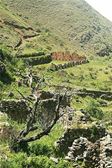 InkallajtaPlaceInkallajta is an Inca archaeological site in the Cochabamba Department of Bolivia, on the eastern frontier of the empire, built in the late 15th century.
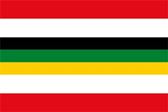 Inkatha Freedom PartyPeople / groupThe Inkatha Freedom Party is a South African political party founded in 1975 by Mangosuthu Buthelezi as a Zulu cultural and political movement, Inkatha, and relaunched…
 Inle LakePlaceInle Lake is a freshwater lake in the hills of southern Shan State, Myanmar, at about 880 metres above sea level.
 Inn (river)PlaceThe Inn is a river of central Europe, flowing about 520 kilometres from the Swiss Engadine through Tyrol and Bavaria to join the Danube at Passau.
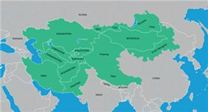 Inner AsiaPlaceInner Asia refers to the interior regions of Asia, including Mongolia, Manchuria, Xinjiang, Tibet and the Central Asian steppe.
 Inner HebridesPlaceThe Inner Hebrides are the islands off the west coast of mainland Scotland, including Skye, Mull, Islay, Jura, Iona and Tiree.
 Inner MongoliaPlaceInner Mongolia is the southern part of the Mongolian plateau, lying along the north of China, now an autonomous region of the People's Republic of China.
 Inner Niger DeltaPlaceThe Inner Niger Delta is a vast seasonal floodplain of the Niger River in present-day Mali.
 Innocent of AlaskaPersonInnocent of Alaska, born Ivan Veniaminov, was a Russian Orthodox missionary, linguist and bishop.
 InnsbruckPlaceInnsbruck is the capital of the Austrian state of Tyrol, on the Inn at the foot of the Nordkette range.
 InnuPeople / groupThe Innu, called Montagnais by the French, are an Indigenous people of eastern Quebec and Labrador in Canada who traditionally lived by hunting caribou and fishing.
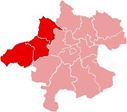 InnviertelPlaceThe Innviertel is a region of Upper Austria between the Inn, the Danube and the Salzach rivers, with towns such as Braunau am Inn and Ried.
- InseinPlaceInsein is a township in the northern part of Yangon, Myanmar.
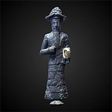 InshushinakReligion / ideaInshushinak was the patron god of Susa in ancient Elam, whose name means 'lord of Susa' in Sumerian.
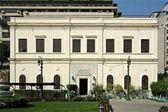 Institut d'ÉgypteInstitutionThe Institut d'Égypte was a learned society founded in Cairo by Napoleon Bonaparte in August 1798 to study Egypt's history, natural history and society, on the model of…
 Institutes of JustinianWork / monumentThe Institutes of Justinian is a textbook of Roman law completed in 533 CE as part of the codification ordered by the emperor Justinian I.
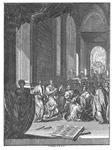 Institutio OratoriaWork / monumentThe Institutio Oratoria is a twelve-book Latin treatise on the education and training of the orator, written by Quintilian, a rhetorician from Calagurris in Hispania…
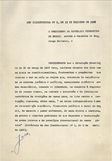 Institutional Act Number FiveWork / monumentInstitutional Act Number Five, known as AI-5, was a decree issued by the Brazilian military government on 13 December 1968 under President Artur da Costa e Silva.
- Institutional ActsWork / monumentThe Institutional Acts were seventeen decrees issued by Brazil's military governments between 1964 and 1969, which placed themselves above the constitution.
 Institutional Revolutionary PartyPeople / groupThe Institutional Revolutionary Party (PRI) is a Mexican political party that held the presidency without interruption from its founding in 1929 until 2000.
 Instruction of AmenemhatWork / monumentThe Instruction of Amenemhat is an ancient Egyptian literary text of the Twelfth Dynasty in which the dead king Amenemhat I advises his son Senusret I, describing an…