Encyclopedia: O
628 entries under O · page 2 of 7: Oedipus – Old Saybrook
 OedipusPersonIn Greek mythology, Oedipus was a king of Thebes who unknowingly killed his father Laius and married his mother Jocasta, fulfilling a prophecy.
 Oeiras, PiauíPlaceOeiras is a town in the Brazilian state of Piauí that grew from a cattle-ranching settlement and became the first capital of the captaincy of Piauí in the eighteenth…
 Óengus I of the PictsPersonÓengus son of Fergus was king of the Picts from 729 to 761 and the most powerful ruler in northern Britain of his time.
- OenopidesPersonOenopides of Chios was a Greek astronomer and mathematician of the fifth century BCE.
 OenotriansPeople / groupThe Oenotrians were an ancient Italic people of southern Italy, recorded by Greek writers as living in what are now Basilicata and Calabria before the founding of the…
 OeshoReligion / ideaOesho is a deity who appears on the coins of the Kushan Empire from the reign of Vima Kadphises, shown with several arms, a trident and often the bull Nandi.
- OezalcesPersonOezalces was king of the Massylii in Numidia around 207–206 BCE.
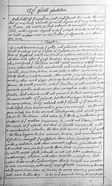 Of Plymouth PlantationWork / monumentOf Plymouth Plantation is a history of the Pilgrims and Plymouth Colony written by William Bradford, the colony's long-serving governor, between 1630 and 1651.
- Ofala festivalEventThe Ofala festival is an annual royal festival held by the Obi of Onitsha and by other traditional rulers in Igboland, especially in Anambra State, Nigeria.
 Offa of MerciaPersonOffa was king of Mercia in central England from 757 to 796 and the most powerful Anglo-Saxon king before Alfred.
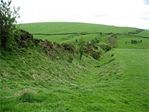 Offa's DykeWork / monumentOffa's Dyke is a linear earthwork running roughly along the border between England and Wales, generally attributed to Offa, king of Mercia from 757 to 796.
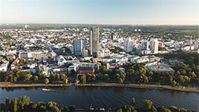 Offenbach am MainPlaceOffenbach am Main is a city in Hesse, Germany, on the Main opposite Frankfurt.
- Offenburg ProgrammeWork / monumentThe Offenburg Programme was a set of radical democratic demands proclaimed at a meeting in Offenburg, Baden, on 12 September 1847.
 Office du NigerInstitutionThe Office du Niger is a large irrigation authority in the inner Niger delta of Mali, founded by the French colonial government in 1932.
- Ofori PaninPersonOfori Panin was an early ruler (Okyenhene) of Akyem Abuakwa, the Akan kingdom in the forest of southern Ghana, and is remembered as a founding figure of its royal house.
- OfuPlaceOfu is a small volcanic island in the Manuʻa group of American Samoa, separated from neighbouring Olosega by a narrow channel now crossed by a bridge.
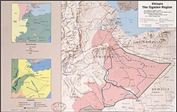 OgadenPlaceThe Ogaden is a plateau and lowland region in the Horn of Africa, today forming part of eastern Ethiopia.
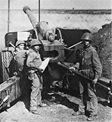 Ogaden WarWar · 1977–1978The Ogaden War was fought between Somalia and Ethiopia in 1977–1978 over the Ogaden, the Somali-inhabited region of eastern Ethiopia.
 Ogasawara clanPeople / groupThe Ogasawara clan was a Japanese samurai family descended from the Seiwa Genji, taking its name from its estate in Kai province and later holding Shinano province.
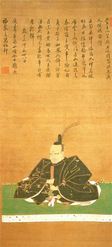 Ogasawara TadazanePersonOgasawara Tadazane was a Japanese daimyo and relative of the Tokugawa who in 1632 received the Kokura domain in northern Kyushu, with 150,000 koku, when the Hosokawa…
- Ogboni societyInstitutionThe Ogboni society was a religious and judicial institution among the Yoruba, devoted to the earth cult.
- Ögedeid khanateStateThe Ögedeid khanate refers to the domains of the descendants of Ögedei Khan in Central Asia, which became a significant power under Kaidu in the late thirteenth century.
- OgedengbePersonOgedengbe was a Yoruba war leader from Ilesa in the Ijesha kingdom of south-western Nigeria.
- OghursPeople / groupThe Oghurs were a group of Turkic-speaking peoples, including the Onogurs, Saragurs and Ogurs, who moved from Central Asia onto the Pontic–Caspian steppe around 463…
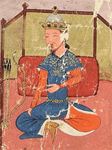 Oghuz KhanPersonOghuz Khan is the legendary ancestor of the Oghuz Turks, celebrated in Turkic epic and genealogical tradition.
- Oghuz TurksPeople / groupThe Oghuz Turks were a confederation of Turkic tribes who lived on the steppes north of the Caspian and Aral seas.
- Ogiso dynastyStateThe Ogiso dynasty, whose name means Kings of the Sky, was the earliest ruling line of the Edo kingdom centred on Ubini, later Benin City.
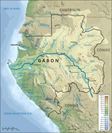 OgoouéPlaceThe Ogooué is the main river of Gabon, flowing about 1,200 kilometres from the Republic of the Congo to the Atlantic, where it forms a wide delta near Cape Lopez and…
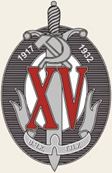 OGPUInstitutionThe OGPU (Joint State Political Directorate) was the Soviet political police from 1923 to 1934, successor to the Cheka and GPU.
- OgunmolaPersonOgunmola was a war chief of Ibadan, the Yoruba military state, who rose through success in battle to hold the title of Bashorun in the 1860s.
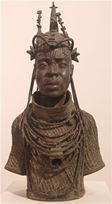 OguolaPersonOguola was an Oba of Benin in the late thirteenth century, dated by the site to c. 1274–1287.
 OhatsuPersonOhatsu was the second daughter of Azai Nagamasa and Oichi.
 OhioPlaceOhio is a state of the Midwestern United States, between Lake Erie and the Ohio River.
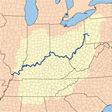 Ohio RiverPlaceThe Ohio River is a major river of the eastern United States, flowing about 1,580 km from Pittsburgh to join the Mississippi at Cairo, Illinois.
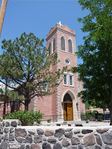 Ohkay OwingehPlaceOhkay Owingeh, formerly San Juan Pueblo, is a Tewa pueblo on the Rio Grande north of Santa Fe, New Mexico.
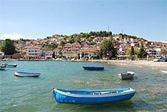 OhridPlaceOhrid is a city in North Macedonia on the north-eastern shore of Lake Ohrid.
 OhrigstadPlaceOhrigstad, originally Andries-Ohrigstad, is a small town in Mpumalanga, South Africa.
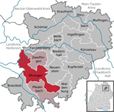 ÖhringenPlaceÖhringen is a town in the Hohenlohe district of Baden-Württemberg, Germany, on the site of a Roman fort on the Upper Germanic Limes.
- Ohthere of HålogalandPersonOhthere of Hålogaland was a Norwegian chieftain and trader who visited the court of King Alfred of Wessex around 890.
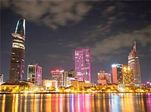 Đổi MớiEventĐổi Mới ('renovation') is the programme of economic reform adopted by the Sixth Congress of the Communist Party of Vietnam in December 1986.
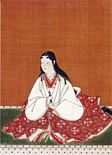 OichiPersonOichi was a younger sister of Oda Nobunaga, married to Azai Nagamasa around 1567 to secure their alliance.
- Oil palmTermThe oil palm is a tree native to West and Central Africa whose fruit yields palm oil, an important food and trade product.
- OiratsPeople / groupThe Oirats are a group of western Mongol peoples who became a major power on the Mongolian and Central Asian steppe from the fifteenth century.
 OireachtasInstitutionThe Oireachtas is the national parliament of Ireland, made up of the President and two houses, Dáil Éireann and Seanad Éireann.
 OisePlaceThe Oise is a river of Belgium and northern France, rising in the Belgian Ardennes and flowing south-west for about 340 kilometres to join the Seine near Paris at…
 Oise (department)PlaceOise is a department of northern France in the Hauts-de-France region, created in 1790 and named after the river Oise.
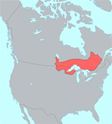 OjibwePeople / groupThe Ojibwe, also called Ojibwa or Chippewa, are an Algonquian-speaking Indigenous people of the Great Lakes region of Canada and the United States.
- OjigiPersonOjigi was an Alaafin, or king, of the Oyo Empire in the early eighteenth century.
 Oka crisisCrisis · 1990The Oka crisis was a 78-day armed stand-off in 1990 between Mohawk protesters and the Quebec police and Canadian army near the town of Oka, west of Montreal.
 Oka RiverPlaceThe Oka is a river of European Russia, about 1,500 kilometres long, the largest right-bank tributary of the Volga, which it joins at Nizhny Novgorod.
- OkahandjaPlaceOkahandja is a town in central Namibia, about 70 km north of Windhoek.
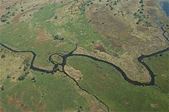 Okavango DeltaPlaceThe Okavango Delta is a vast inland delta in north-western Botswana, where the Okavango River spreads out into channels, lagoons and islands and evaporates into the…
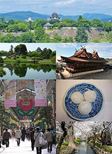 OkayamaPlaceOkayama is a city in western Honshu, Japan, and the capital of Okayama Prefecture, near the Inland Sea coast.
 Okayama PrefecturePlaceOkayama Prefecture is a prefecture of Japan in the Chūgoku region of western Honshu, facing the Inland Sea, with its capital at Okayama.
- OkazakiPlaceOkazaki is a city in Aichi Prefecture, Japan, in the former province of Mikawa.
 OkerPlaceThe Oker is a river in Lower Saxony, Germany, flowing about 125 kilometres north from the Harz past Wolfenbüttel and Brunswick to join the Aller.
 Okhotsk culturePeople / groupThe Okhotsk culture was a maritime culture of hunters, fishers and gatherers around the southern Sea of Okhotsk, in Sakhalin, northern and eastern Hokkaido and the…
- OkhtyrkaPlaceOkhtyrka is a city in Sumy Oblast in north-eastern Ukraine, on the Vorskla river.
 Okinawa IslandPlaceOkinawa Island is the largest island of the Ryukyu chain, between Kyushu and Taiwan, and the site of Naha, capital of Okinawa Prefecture.
 Okinawa PrefecturePlaceOkinawa Prefecture is the southernmost prefecture of Japan, created in 1879 when the Meiji government annexed the Ryukyu Kingdom, deposed King Sho Tai and abolished the…
- Okinawa Reversion AgreementTreaty · 1971The Okinawa Reversion Agreement was a treaty between the United States and Japan, signed on 17 June 1971, under which the Ryukyu Islands, administered by the United…
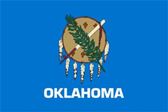 OklahomaPlaceOklahoma is a state of the south-central United States.
- OkmulgeePlaceOkmulgee is a town in eastern Oklahoma in the United States.
- Okomfo AnokyePersonOkomfo Anokye was an Akan priest who, with Osei Tutu, founded the Ashanti Empire around 1700.
 OktoberfestEventOktoberfest is the annual folk festival held on the Theresienwiese in Munich, Bavaria.
 Ōkubo TadachikaPersonŌkubo Tadachika was a Japanese daimyo and senior retainer of Tokugawa Ieyasu, lord of the Odawara Domain in Sagami Province and a leading official of the early Tokugawa…
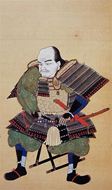 Okubo TadayoPersonOkubo Tadayo was a senior retainer of Tokugawa Ieyasu who fought in many of his campaigns.
- Okubo TadazanePersonOkubo Tadazane was daimyo of the Odawara domain and a senior official of the Tokugawa shogunate, serving as a member of its council of elders (roju).
 Okubo ToshimichiPersonOkubo Toshimichi was a samurai of the Satsuma Domain and one of the leading statesmen of the Meiji Restoration of 1868.
- OkukenuPersonOkukenu was the first ruler recognised as Alake of the united Egba at Abeokuta, in south-western Nigeria, installed in 1854.
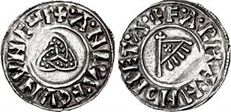 Olaf CuaránPersonOlaf Cuarán was a Norse-Gaelic king who ruled York twice in the 940s and 950s and Dublin for over thirty years.
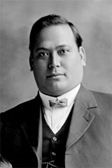 Olaf Frederick NelsonPersonOlaf Frederick Nelson was a Samoan merchant of Swedish and Samoan descent and a leader of the Mau, the non-violent movement against New Zealand rule in Western Samoa.
- Olaf GuildPeople / groupThe Olaf Guild, named after the Norwegian saint Olaf, was the oldest of the guilds of Reval (Tallinn).
- Olaf GuthfrithsonPersonOlaf Guthfrithson was a Viking king of Dublin from 934 and of York from 939 until his death in 941.
 Olaf II of DenmarkPersonOlaf II of Denmark, also Olaf IV of Norway, was the son of Haakon VI of Norway and Margaret, daughter of Valdemar IV of Denmark.
 Olaf II of NorwayPersonOlaf Haraldsson, later Saint Olaf, was King of Norway from 1015 to 1028.
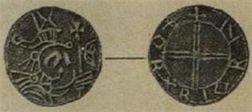 Olaf III of NorwayPersonOlaf III of Norway, known as Olaf Kyrre ('the Peaceful'), was the son of Harald Hardrada and survived his father's defeat at Stamford Bridge in 1066.
 Olaf TryggvasonPersonOlaf Tryggvason was king of Norway from 995 to 1000.
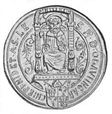 Olav EngelbrektssonPersonOlav Engelbrektsson was the last Catholic archbishop of Nidaros (Trondheim), from 1523, and the leading figure of the Norwegian council of the realm.
- Old Assyrian periodStateThe Old Assyrian period is the earliest phase of Assyrian history, from about 2025 BCE, when Assur emerged as an independent city-state.
 Old Babylonian EmpireStateThe Old Babylonian Empire, or First Dynasty of Babylon, was an Amorite state in central Mesopotamia that grew to dominate the region under Hammurabi in the eighteenth…
 Old BavariaPlaceOld Bavaria is the historic core of Bavaria, made up of Upper Bavaria, Lower Bavaria and the Upper Palatinate, as distinct from Franconia and Swabia, which were joined…
 Old BelieversPeople / groupThe Old Believers are Russian Orthodox Christians who rejected the liturgical reforms of Patriarch Nikon in the 1650s and 1660s.
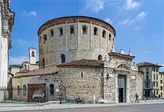 Old Cathedral, BresciaWork / monumentThe Old Cathedral of Brescia, known as the Rotonda, is a Romanesque church of circular plan built in the late 11th century on the site of an earlier basilica.
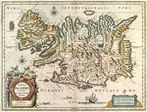 Old Covenant (Iceland)Treaty · 1262–1264The Old Covenant was the agreement of 1262-1264 by which the Icelanders accepted the rule of the Norwegian king Haakon IV and his son Magnus, ending the Icelandic…
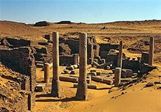 Old DongolaPlaceOld Dongola, known in Nubian as Tungul, is an abandoned town on the east bank of the Nile in northern Sudan, the capital of the Christian kingdom of Makuria from about…
- Old FrenchTermOld French is the form of the French language spoken from around the ninth to the fourteenth century.
 Old Great BulgariaStateOld Great Bulgaria was a Bulgar state on the steppe between the lower Dnieper, the Sea of Azov and the Kuban, formed by Khan Kubrat in the 630s from the Onogurs…
- Old High GermanTermOld High German is the earliest recorded stage of the German language, used from about the eighth to the eleventh century.
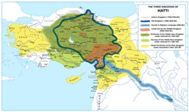 Old Hittite KingdomStateThe Old Hittite Kingdom was the first phase of Hittite statehood in central Anatolia, established around 1650 BCE with Hattusa as its capital.
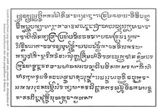 Old JavaneseTermOld Javanese, or Kawi, is the literary and administrative language of Java recorded from the late 8th century, heavily influenced by Sanskrit.
- Old KannadaTermOld Kannada, or Halegannada, is the form of the Kannada language used in inscriptions and literature of the later first and early second millennium CE, from the…
- Old KhmerTermOld Khmer is the earliest recorded form of the Khmer language, used in inscriptions in Cambodia from the seventh century.
- Old MalayTermOld Malay is the earliest attested form of the Malay language, known from inscriptions in Sumatra and nearby regions.
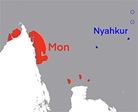 Old MonTermOld Mon is the earliest recorded form of the Mon language, an Austroasiatic language of mainland Southeast Asia.
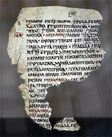 Old NubianTermOld Nubian is the medieval written form of the Nubian language, used in the Christian kingdoms of the middle Nile from about the 8th to the 15th century.
- Old PersianTermOld Persian is the ancient Iranian language of the Achaemenid kings, written in a cuneiform script.
- Old Point ComfortPlaceOld Point Comfort is a point of land at the mouth of the James River in Hampton, Virginia, guarding the entrance to Hampton Roads.
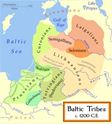 Old PrussiansPeople / groupThe Old Prussians were a Baltic people who lived between the lower Vistula and the Neman on the south-eastern coast of the Baltic Sea.
 Old SaybrookPlaceOld Saybrook is a town in Connecticut, United States, at the mouth of the Connecticut River on Long Island Sound.