Encyclopedia: D
1,066 entries under D · page 3 of 11: Daulat Qazi – Deioces
- Daulat QaziPersonDaulat Qazi was a Bengali poet of the early 17th century who wrote at the court of Mrauk U in Arakan, under the patronage of the minister Ashraf Khan.
 Daulat Rao ScindiaPersonDaulat Rao Scindia was the Maharaja of Gwalior from 1794 to 1827, successor of Mahadji Scindia as head of the Scindia family in the Maratha Confederacy.
- DaulatabadPlaceDaulatabad is a historic fortress city in the Deccan region of western India.
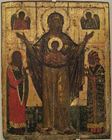 Daumantas of PskovPersonDaumantas of Pskov was a Lithuanian prince who took part in the murder of King Mindaugas in 1263 and then fled to Pskov.
 Dauphin of FranceTermDauphin of France was the title of the heir apparent to the French throne from 1350 to 1830.
- DauraPlaceDaura is a town in Katsina State in northern Nigeria, regarded in Hausa tradition as the oldest of the Hausa states.
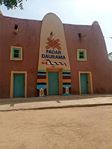 DauramaPersonDaurama is the queen of Daura in the Bayajidda legend, the origin story of the Hausa states.
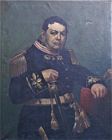 Davi CanabarroPersonDavi Canabarro was a gaúcho military leader of the Ragamuffin War in southern Brazil.
 DavidPersonDavid was, according to the Hebrew Bible, the second king of the united kingdom of Israel and Judah, successor of Saul and father of Solomon, who made Jerusalem his…
 David Alfaro SiqueirosPersonDavid Alfaro Siqueiros was a Mexican painter, one of the three great artists of the Mexican mural movement with Diego Rivera and José Clemente Orozco.
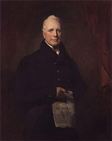 David BairdPersonSir David Baird was a Scottish general in the British Army.
- David Ben-GurionPersonDavid Ben-Gurion was the Zionist labour leader who declared Israel's independence on 14 May 1948 and served as its first prime minister, leading the state through the…
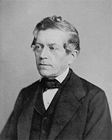 David Friedrich StraussPersonDavid Friedrich Strauss was a German theologian and writer from Ludwigsburg, a pupil of Ferdinand Christian Baur at Tübingen.
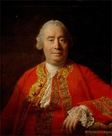 David HumePersonDavid Hume was a Scottish philosopher, historian and essayist, one of the leading figures of the Scottish Enlightenment.
 David II of ImeretiPersonDavid II was King of Imereti in western Georgia from 1784 to 1789.
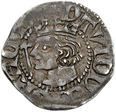 David II of ScotlandPersonDavid II was King of Scots from 1329 to 1371, the son of Robert the Bruce.
 David III KuropalatesPersonDavid III Kuropalates was a Bagratid prince of Tao in south-western Georgia from the 960s until his death in 1001.
 David IV of GeorgiaPersonDavid IV of Georgia, known as the Builder, became king in 1089 and stopped paying tribute to the Seljuks.
- David KomnenosPersonDavid Komnenos was a grandson of the Byzantine emperor Andronikos I who, with his brother Alexios, seized Trebizond in April 1204 with Georgian troops provided by their…
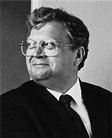 David LangePersonDavid Lange was Prime Minister of New Zealand from 1984 to 1989, leading the Fourth Labour Government.
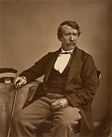 David LivingstonePersonDavid Livingstone was a Scottish missionary and explorer of central and southern Africa.
- David MarshallPersonDavid Marshall was a Singaporean lawyer of Baghdadi Jewish descent who became the first chief minister of Singapore in 1955, after his Labour Front won the first…
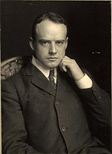 David Moore RobinsonPersonDavid Moore Robinson was an American classical archaeologist and professor at Johns Hopkins University.
- David OatesPersonDavid Oates was a British archaeologist of ancient Mesopotamia.
 David OchterlonyPersonSir David Ochterlony (1758–1825) was a Boston-born general of the British East India Company.
 David of BurgundyPersonDavid of Burgundy was an illegitimate son of Philip the Good, Duke of Burgundy, who had him made bishop of Utrecht in 1456 against the chapter's own candidate.
 David of MakuriaPersonDavid was a king of Makuria, the Christian Nubian kingdom on the middle Nile, in the 1270s.
- David of TrebizondPersonDavid of Trebizond was the last emperor of Trebizond, reigning from 1459.
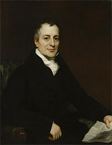 David RicardoPersonDavid Ricardo was a British political economist and one of the leading classical economists.
 David RoentgenPersonDavid Roentgen was a German cabinetmaker who ran the family workshop at Neuwied founded by his father, Abraham Roentgen.
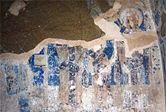 David SoslanPersonDavid Soslan was an Alanian prince who became the second husband of Queen Tamar of Georgia around 1189 and her co-ruler.
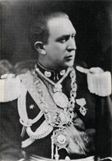 David ToroPersonDavid Toro was a Bolivian army officer who served in the Chaco War and became president after a military coup in May 1936.
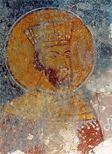 David VI NarinPersonDavid VI Narin was king of Georgia, crowned as co-ruler with his cousin David VII Ulu under Mongol overlordship.
 David VII UluPersonDavid VII, called Ulu ('the Elder'), was king of Georgia from 1247 to 1270, reigning at first jointly with his cousin David VI Narin under Mongol overlordship.
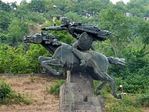 Davit BekPersonDavit Bek was an Armenian military leader who led a revolt in Syunik, in southern Armenia, from 1722, first against Persian khans and then against Ottoman invaders, as…
 DavosPlaceDavos is a town in the canton of Graubünden in eastern Switzerland, set in a high Alpine valley at about 1,560 metres.
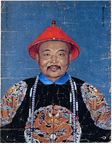 DawachiPersonDawachi was the last khan of the Dzungar Khanate, a grandson of the general Tsering Dondub.
- DawaroPlaceDawaro was a historic Muslim region and polity in the south-eastern highlands of present-day Ethiopia.
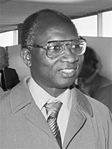 Dawda JawaraPersonDawda Jawara was a Gambian veterinarian and politician who led The Gambia to independence from Britain in 1965.
- Dawit IPersonDawit I was an emperor of Ethiopia in the late fourteenth and early fifteenth centuries.
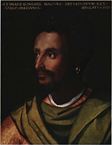 Dawit IIPersonDawit II, also known as Lebna Dengel, was emperor of Ethiopia in the early sixteenth century.
 Dawro ZonePlaceThe Dawro Zone is an administrative zone of south-western Ethiopia, between the Omo and Gojeb rivers, with its centre at Tarcha.
- Dawsonne DrakePersonDawsonne Drake was an official of the British East India Company who served as governor of Manila during the British occupation of 1762–1764, after its capture in the…
- Dawud PashaPersonDawud Pasha was the last Mamluk governor of Baghdad, ruling from 1817 to 1831.
 DaxPlaceDax is a spa town on the Adour in the Landes department of south-western France.
 Day of the SeaEventThe Day of the Sea is a Bolivian national commemoration held every 23 March, the anniversary of the death of Eduardo Abaroa at the Battle of Topáter in 1879, at the…
 Dayak peoplePeople / groupThe Dayak are the indigenous, mainly non-Malay peoples of the interior of Borneo, comprising many groups such as the Iban, Ngaju, Kayan and Kenyah.
 Dayan KhanPersonDayan Khan, Batu Möngke, was a Borjigin khan of the Northern Yuan who reunited the eastern Mongols in the late 15th and early 16th centuries, with the help of his queen…
- Dayfa KhatunPersonDayfa Khatun was an Ayyubid princess, daughter of al-Adil I and niece of Saladin, who married al-Zahir Ghazi, ruler of Aleppo.
 DaylamPlaceDaylam was the mountainous region south-west of the Caspian Sea, in the highlands of modern Gilan and Qazvin provinces of Iran.
- DaylamitesPeople / groupThe Daylamites were an Iranian people of Daylam, the highlands south-west of the Caspian Sea, famed as tough infantry and mercenaries.
 Dayton AgreementTreaty · Peace · 1995The Dayton Agreement was the peace settlement that ended the Bosnian War, negotiated at an air base near Dayton, Ohio, in November 1995 and signed in Paris on 14…
 Dazexiang uprisingRevolt · 209 BCEThe Dazexiang uprising was the first major revolt against the Qin dynasty, begun in 209 BCE by Chen Sheng and Wu Guang, leaders of a party of conscripts held up by rain…
 De Administrando ImperioWork / monumentDe Administrando Imperio is a Greek handbook on foreign policy compiled around 950 by the Byzantine emperor Constantine VII Porphyrogennetos for his son Romanos.
 De BeersInstitutionDe Beers is a diamond mining and trading company founded at Kimberley in South Africa in 1888, when Cecil Rhodes merged the mines of the area into De Beers Consolidated…
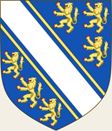 de Bohun familyPeople / groupThe de Bohuns were an Anglo-Norman noble family who were earls of Hereford from 1200, later also earls of Essex, and hereditary constables of England.
 de Braose familyPeople / groupThe de Braose family were Anglo-Norman barons from Briouze in Normandy who became some of the most powerful marcher lords in Wales, holding Brecknock, Radnor, Builth…
 Dead SeaPlaceThe Dead Sea is a salt lake in the Jordan Rift Valley between Jordan to the east and Israel and the West Bank to the west, its shore the lowest land on Earth.
- Dean BarrowPersonDean Barrow is a Belizean lawyer and politician, leader of the United Democratic Party, who was prime minister of Belize from 2008 to 2020.
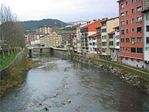 Deba RiverPlaceThe Deba is a river of the Basque Country in northern Spain, flowing north through the province of Gipuzkoa past Arrasate-Mondragón and Eibar into the Bay of Biscay at…
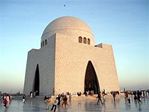 DebalPlaceDebal was a port of Sindh near the mouth of the Indus, close to modern Karachi, often identified with the excavated site of Banbhore.
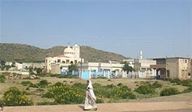 DebarwaPlaceDebarwa is a town in the central highlands of Eritrea, south of Asmara, near the Mareb river.
 Debre BerhanPlaceDebre Berhan is a town in the highlands of North Shewa, Ethiopia, north-east of Addis Ababa.
- Debre DamoPlaceDebre Damo is an ancient monastery on a flat-topped mountain in northern Ethiopia, reachable only by rope.
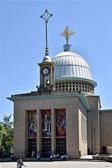 Debre LibanosPlaceDebre Libanos is a monastery in the Shewa highlands north of Addis Ababa, founded in the 13th century by the saint Tekle Haymanot.
 Debre MarkosPlaceDebre Markos is a town in the Amhara Region of Ethiopia, in the highlands of Gojjam south of Lake Tana.
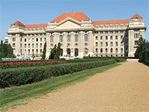 DebrecenPlaceDebrecen is the second-largest city of Hungary, in the east of the country.
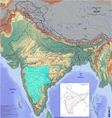 DeccanPlaceThe Deccan is the large plateau region of peninsular India south of the Narmada River.
- Deccan PlateauPlaceThe Deccan Plateau is the elevated tableland covering much of central and southern India.
- Deccan States AgencyInstitutionThe Deccan States Agency was a political agency of British India formed in 1933 to supervise the princely states of the Deccan and the Southern Maratha Country, many of…
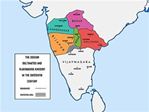 Deccan sultanatesStateThe Deccan sultanates were a group of Muslim kingdoms, including Bijapur, Golconda and Ahmadnagar, that emerged in the Deccan after the break-up of the Bahmani Sultanate.
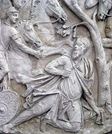 DecebalusPersonDecebalus was king of Dacia from 87 to 106 CE.
- DeceleaPlaceDecelea was a deme of northern Attica on the route from Athens to Euboea and Boeotia.
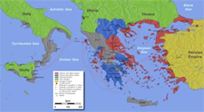 Decelean WarWar · 413–404 BCEThe Decelean War, also called the Ionian War, was the final phase of the Peloponnesian War, from 413 to 404 BCE.
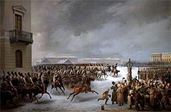 DecembristsRevolt · 1825The Decembrists were Russian army officers and nobles who staged a revolt in St Petersburg on 14 December 1825 (Old Style), refusing to swear allegiance to Nicholas I…
- DeceneusPersonDeceneus was a Dacian high priest and adviser to King Burebista in the 1st century BCE, according to Strabo and Jordanes.
- Decimal military organisationTermDecimal military organisation is a system of dividing an army into units of ten, a hundred, a thousand and ten thousand, each under its own commander.
- Decimal systemReligion / ideaThe decimal system, or place-value notation, is a method of writing numbers using ten digits whose value depends on their position, including a symbol for zero.
- Decimal system (Mongol army)InstitutionThe decimal system of the Mongol army organised troops into units of ten (arban), a hundred (jaghun), a thousand (mingghan) and ten thousand (tumen).
 Decimus Junius Brutus AlbinusPersonDecimus Junius Brutus Albinus was a Roman general and one of Julius Caesar's leading officers in Gaul, where in 56 BCE he commanded the fleet that destroyed the navy of…
- Decimus Junius Brutus CallaicusPersonDecimus Junius Brutus Callaicus was a Roman general and consul in 138 BCE.
 Declaration of ArbroathWork / monumentThe Declaration of Arbroath is a letter dated 6 April 1320 from the barons and community of Scotland to Pope John XXII, asking him to recognise Robert I as king and…
- Declaration of MeudonEventThe Declaration of Meudon was a secret agreement of 30 September 1736 by which Stanisław Leszczyński, the deposed king of Poland who was to receive the duchies of…
- Declaration of State Sovereignty of the Russian SFSRWork / monumentThe Declaration of State Sovereignty of the Russian SFSR was adopted by the republic's Congress of People's Deputies on 12 June 1990.
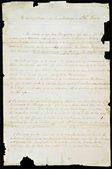 Declaration of the Independence of New ZealandWork / monumentThe Declaration of the Independence of New Zealand, in Māori He Whakaputanga o te Rangatiratanga o Nu Tireni, was signed at Waitangi on 28 October 1835 by 34 northern…
 Declaration of the Rights of Man and of the CitizenWork / monumentThe Declaration of the Rights of Man and of the Citizen was adopted by the French National Constituent Assembly on 26 August 1789.
- DecolonisationEventDecolonisation refers to the process by which colonies gained independence from imperial powers, especially in the decades after the Second World War.
- Decree of AristotelesWork / monumentThe Decree of Aristoteles is an Athenian inscription of 378/377 BCE, proposed by a certain Aristoteles, that sets out the founding terms of the Second Athenian League.
- Dedition of Nice to SavoyEventThe Dedition of Nice to Savoy was the act of 1388 by which Nice and its hinterland, then part of the county of Provence, placed themselves under the protection of…
- Deed of Cession (Fiji)Treaty · 1874The Deed of Cession was the instrument by which Ratu Seru Cakobau and other Fijian chiefs ceded Fiji to Queen Victoria on 10 October 1874, making the islands a British…
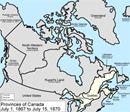 Deed of SurrenderWork / monumentThe Deed of Surrender was the agreement of 1869 by which the Hudson's Bay Company surrendered its charter rights over Rupert's Land to the British Crown, for transfer…
 DeegPlaceDeeg is a town in eastern Rajasthan, India, north of Bharatpur.
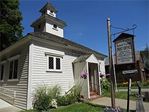 Deerfield, MassachusettsPlaceDeerfield is a town in the Connecticut River valley of western Massachusetts, settled by English colonists in the 1670s.
 Defenders of the HomelandPeople / groupThe Defenders of the Homeland, known as PETA, was a volunteer army of Indonesians raised by the Japanese occupiers in Java in October 1943 to help resist an Allied…
 Defenestration of Prague (1618)Revolt · 1618The Defenestration of Prague took place on 23 May 1618, when Protestant nobles of Bohemia, angered by Habsburg restrictions on their religious rights, threw two…
- DeflationTermDeflation is a sustained fall in the general level of prices, often linked to a shortage of money.
- DeforestationTermDeforestation is the large-scale clearing of forests.
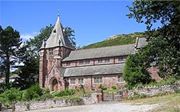 DeganwyPlaceDeganwy is a site on twin volcanic hills above the estuary of the River Conwy in north Wales, beside the modern town of the same name.
- Deidamia II of EpirusPersonDeidamia was the last ruler of the Aeacid royal house of Epirus, a daughter of Pyrrhus II.
- DeiocesPersonDeioces was the traditional founder of the Median kingdom (r. c. 678–c. 655 BCE), known chiefly from the account of Herodotus.