Encyclopedia: E
904 entries under E · page 6 of 10: Encyclopédie – Erdene Zuu
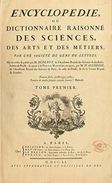 EncyclopédieWork / monumentThe Encyclopédie was a French encyclopaedia edited by Denis Diderot and, until 1759, Jean le Rond d'Alembert, published in 17 volumes of text and 11 of plates between…
- End of Kanem–Bornu independenceEventThe end of Kanem–Bornu independence came in 1893, when the Sudanese warlord Rabih az-Zubayr conquered Bornu.
- EndovelicusReligion / ideaEndovelicus was a god of the pre-Roman peoples of western Iberia, worshipped above all at a sanctuary near Alandroal in Portugal's Alentejo.
 EndubisPersonEndubis was a king of Aksum who reigned around 270 CE.
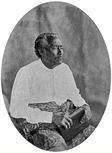 Enele MaʻafuPersonEnele Maʻafu was a Tongan prince who went to Fiji in the 1840s to look after Tongan interests and built up power in the Lau Islands and eastern Fiji.
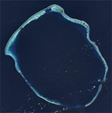 EnewetakPlaceEnewetak is a large coral atoll in the Marshall Islands.
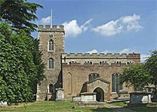 Enfield, LondonPlaceEnfield is a town in north London, now the centre of a London borough.
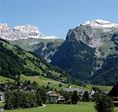 EngelbergPlaceEngelberg is a village and mountain resort in the canton of Obwalden in central Switzerland, lying in a high valley below Titlis.
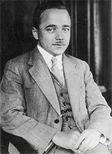 Engelbert DollfussPersonEngelbert Dollfuss was an Austrian Christian Social politician, chancellor from 1932.
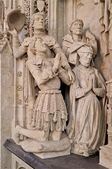 Engelbert I of NassauPersonEngelbert I was Count of Nassau-Dillenburg and Lord of Breda.
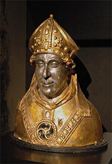 Engelbert II of BergPersonEngelbert II of Berg was Count of Berg and, from 1216, Archbishop of Cologne.
 Engelbrekt EngelbrektssonPersonEngelbrekt Engelbrektsson was a Swedish mine owner from the Bergslagen mining district who led a rebellion in 1434 against King Eric of Pomerania and his Danish bailiffs.
- Engke TemürPersonEngke Temür was a Chagatayid prince of Kara Del, the Mongol principality centred on Hami in the eastern Tarim region.
 EnglandPlaceEngland is a country in the south of Great Britain.
 English ChannelPlaceThe English Channel is the arm of the Atlantic Ocean that separates southern England from northern France, joining the North Sea at the Strait of Dover, about 33 km wide.
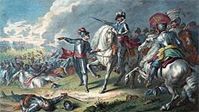 English Civil WarWar · 1642–1651The English Civil War was a series of wars from 1642 to 1651 between the supporters of King Charles I and of Parliament, part of the wider Wars of the Three Kingdoms in…
 English Council of StateInstitutionThe English Council of State was the executive body of the English republic, set up by the Rump Parliament in February 1649 after the execution of Charles I.
- English languageTermEnglish is a Germanic language that originated in England.
- EnglishryTermThe Englishry was the lowland part of a marcher lordship in Wales, settled by English and Flemish colonists and run under English law and manorial custom, as distinct…
 Enguerrand VII de CoucyPersonEnguerrand VII de Coucy was a French nobleman and soldier, lord of one of the great baronies of northern France and son-in-law of Edward III of England.
 EnguriPlaceThe Enguri is a river of western Georgia, about 213 km long, rising in the high Caucasus of Svaneti and flowing south-west to the Black Sea.
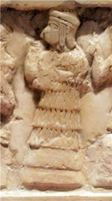 EnheduannaPersonEnheduanna was the daughter of Sargon of Akkad, appointed high priestess of the moon god Nanna at Ur.
- Enipeus (Thessaly)PlaceThe Enipeus is a river of Thessaly in central Greece, which rises in the Othrys mountains and flows north past Pharsalus through the Thessalian plain to join the Peneus…
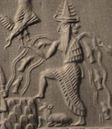 EnkiReligion / ideaEnki was the Sumerian god of fresh water, crafts, wisdom and magic, known to the Akkadians as Ea.
- EnkomiPlaceEnkomi is an archaeological site near Famagusta on the east coast of Cyprus, one of the chief towns of the island in the Late Bronze Age.
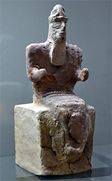 EnlilReligion / ideaEnlil was the chief god of the Sumerian pantheon, lord of the wind and air, whose temple, the Ekur, stood at Nippur.
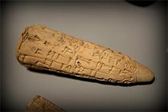 Enlil-baniPersonEnlil-bani was a king of the Isin dynasty in Mesopotamia in the 19th century BCE.
 Enlil-nadin-ahiPersonEnlil-nadin-ahi was the last king of the Kassite dynasty of Babylonia, ruling for about three years in the mid-12th century BCE.
 EnmebaragesiPersonEnmebaragesi was a king of Kish who lived around 2700 BCE and is one of the earliest Mesopotamian rulers attested in inscriptions.
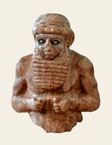 EnmerkarPersonEnmerkar was a legendary king of Uruk, listed in the Sumerian King List and remembered in Sumerian epic poems as a son of the sun god Utu.
 EnmetenaPersonEnmetena was a ruler of the Sumerian city-state of Lagash around 2400 BCE and a nephew of Eannatum.
- Énna CennselachPersonÉnna Cennselach was a king of Leinster in early medieval Ireland, said to have lived in the 5th century.
- Enna-DaganPersonEnna-Dagan was a king of Mari on the Euphrates in the twenty-fourth century BCE.
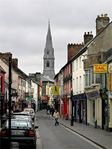 EnnisPlaceEnnis is the county town of County Clare in the west of Ireland, on the River Fergus.
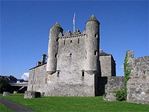 EnniskillenPlaceEnniskillen is the county town of Fermanagh in Northern Ireland, on an island between Upper and Lower Lough Erne.
 Enniskillen CastleWork / monumentEnniskillen Castle is a castle in Enniskillen, County Fermanagh, built by the Maguire lords of Fermanagh in the 15th century to guard the passage between Upper and…
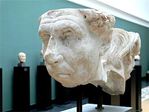 EnniusPersonQuintus Ennius was a Latin poet, born in 239 BCE at Rudiae in the Messapian south of Italy.
- EnnsPlaceThe Enns is a river about 250 kilometres long in Austria, rising in the Radstadt Tauern in Salzburg and flowing through Styria to join the Danube at the town of Enns.
 Enomoto TakeakiPersonEnomoto Takeaki was a Japanese admiral of the Tokugawa shogunate who refused to surrender its fleet in 1868 and sailed north to Hokkaido.
 Enrico DandoloPersonEnrico Dandolo was Doge of Venice from 1192, elected in old age and nearly blind.
- Enrico De NicolaPersonEnrico De Nicola was a Neapolitan jurist and liberal politician who became provisional head of state after Italians voted to abolish the monarchy in June 1946.
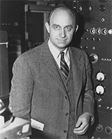 Enrico FermiPersonEnrico Fermi was an Italian physicist who built the first nuclear reactor.
- Enrico PescatorePersonEnrico Pescatore was a Genoese adventurer and corsair who held the title Count of Malta.
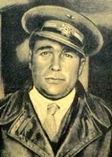 Enrique LísterPersonEnrique Líster was a Spanish Communist commander in the Spanish Civil War, a former stonemason who rose to lead the 11th Division and later an army corps of the Republic.
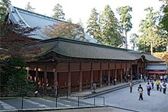 Enryaku-jiPlaceEnryaku-ji is a Buddhist monastery on Mount Hiei near Kyoto, founded by the monk Saichō in 788 and the head temple of the Tendai school.
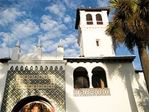 EnsenadaPlaceEnsenada is a port city on the Pacific coast of the Mexican state of Baja California, on the Bay of Todos Santos about 100 kilometres south of Tijuana.
- EnsérunePlaceEnsérune is an oppidum, a fortified hilltop settlement, near Nissan-lez-Ensérune between Béziers and Narbonne in southern France.
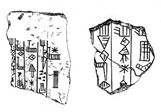 EnshakushannaPersonEnshakushanna was a king of Uruk in the Early Dynastic period, around the twenty-fourth century BCE, listed in the Sumerian King List.
- EnsiInstitutionEnsi was a Sumerian title for the ruler or governor of a city-state.
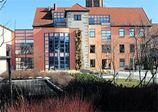 EnsisheimPlaceEnsisheim is a small town in Alsace, France, north of Mulhouse.
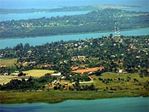 EntebbePlaceEntebbe is a town on a peninsula in Lake Victoria about 35 km south-west of Kampala, the seat of the British colonial administration for most of the protectorate period.
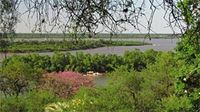 Entre Ríos ProvincePlaceEntre Ríos is a province of Argentina between the Paraná and Uruguay rivers.
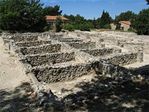 Entremont (oppidum)PlaceEntremont is the site of a fortified hilltop town, or oppidum, on a plateau just north of Aix-en-Provence in southern France.
- EntrepôtTermAn entrepôt is a port or trading centre where goods are imported, stored and re-exported, often without further processing.
- Enuma ElishWork / monumentEnuma Elish is the Babylonian epic of creation, named after its opening words 'When on high'.
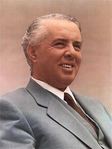 Enver HoxhaPersonEnver Hoxha was the communist ruler of Albania from 1944 until his death in 1985.
 Enver PashaPersonEnver Pasha was an Ottoman officer and politician, a leader of the Young Turk Revolution of 1908 and of the Committee of Union and Progress.
- Environmental degradationHistorical factorEnvironmental degradation refers to the long-term damage of land, soil, water and forests through overuse, salinisation or deforestation, often combined with climatic…
- EnylusPersonEnylus was the last known independent king of Byblos under Persian rule in the fourth century BCE, known from his coins and from the historian Arrian.
 Enzo of SardiniaPersonEnzo was an illegitimate son of Emperor Frederick II who became King of Sardinia by title after marrying Adelasia of Torres in 1238.
- Eógan mac NéillPersonEógan mac Néill is the traditional ancestor of the Cenél nEógain, one of the sons of Niall of the Nine Hostages in Irish genealogy, said to have died in 465.
 Eóganacht ChaisilPeople / groupEóganacht Chaisil was the leading branch of the Eóganachta, the dynasty claiming descent from the legendary Eógan Mór that dominated the kingship of Munster from about…
- Eóganacht RaithlindPeople / groupThe Eóganacht Raithlind were a branch of the Eóganacht dynasties of Munster, based in the south of the province around Cork and the Bandon valley, who at times held the…
 EóganachtaPeople / groupThe Eóganachta were a group of related dynasties that ruled the Kingdom of Munster in early medieval Ireland, claiming descent from Éogan Mór.
- Eóganán mac ÓengusaPersonEóganán mac Óengusa was king of the Picts and of Fortriu from about 837, a son of Óengus II.
- EohricPersonEohric was a Danish king of East Anglia, ruling the Viking kingdom established by Guthrum.
 EOKAPeople / groupEOKA, the National Organisation of Cypriot Fighters, was a Greek Cypriot guerrilla organisation that fought British rule in Cyprus from 1955 to 1959 with the aim of…
 EorcenwaldPersonEorcenwald was Bishop of London from 675 until his death around 693 and a founder of monasteries in south-east England.
 EpaminondasPersonEpaminondas was a Theban general and statesman who, with Pelopidas, made Thebes the leading power of Greece.
 EphesusPlaceEphesus was an ancient Greek city on the west coast of Anatolia, near modern Selçuk in Turkey, famed for its Temple of Artemis, one of the Seven Wonders of the World.
- Ephialtes (Athenian statesman)PersonEphialtes was an Athenian democratic politician who in 462/461 BCE carried reforms that stripped the aristocratic Council of the Areopagus of most of its political and…
- EphorInstitutionEphor was the title of senior magistrates, best known from Sparta, who supervised the conduct of kings and officials.
- EphorusPersonEphorus of Cyme was a Greek historian of the 4th century BCE, said to have been a pupil of Isocrates.
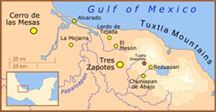 Epi-Olmec culturePeople / groupThe Epi-Olmec culture followed the Olmec civilisation in the Gulf Coast lowlands of southern Veracruz and Tabasco in Mexico, from about 300 BCE to 250 CE, with centres…
 Epic of GilgameshWork / monumentThe Epic of Gilgamesh is an ancient Mesopotamian poem about the legendary king of Uruk and his search for immortality.
- Epic of KirtaWork / monumentThe Epic of Kirta is a poem from Ugarit preserved on three clay tablets in alphabetic cuneiform.
- Epic of ManasWork / monumentThe Epic of Manas is the traditional oral epic of the Kyrgyz, telling of the hero Manas, his son Semetey and grandson Seytek, who unite the Kyrgyz and fight their…
 EpicurusPersonEpicurus was a Greek philosopher, born on Samos to Athenian settlers, who founded the Epicurean school.
- Epidemic diseaseHistorical factorEpidemic disease refers to outbreaks of infectious illness that killed large parts of a population, disrupting economies, armies and government.
 EpimenidesPersonEpimenides was a semi-legendary Cretan seer and poet, traditionally dated to the 7th or 6th century BCE.
- EpipolaePlaceEpipolae is the limestone plateau that rises above the ancient city of Syracuse in Sicily.
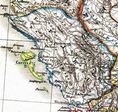 EpirusPlaceEpirus is a mountainous region of south-eastern Europe between the Pindus range and the Ionian Sea, divided today between north-western Greece and southern Albania.
- EppillusPersonEppillus was a British king of the late 1st century BCE and early 1st century CE known from his coins, which call him a son of Commius.
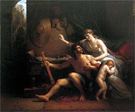 EpponinaPersonEpponina was the wife of Julius Sabinus, a Lingonian nobleman who rebelled against Rome in 70 CE.
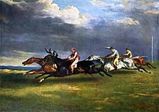 Epsom DerbyEventThe Epsom Derby is a flat horse race for three-year-old colts and fillies run each year over about a mile and a half at Epsom Downs in Surrey, England.
- EpyaxaPersonEpyaxa was queen of Cilicia, the wife of its king Syennesis, in the late 5th century BCE.
- Equal Franchise Act 1928Work / monumentThe Representation of the People (Equal Franchise) Act 1928 gave women in the United Kingdom the vote on the same terms as men, from the age of twenty-one.
- Equal-field systemInstitutionThe equal-field system was a land allocation system used in China from the Northern Wei to the Tang Dynasty.
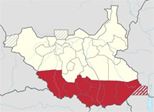 EquatoriaPlaceEquatoria is a region in the far south of present-day South Sudan.
- EquitesInstitutionThe equites, or equestrian order, were the second rank of the Roman aristocracy below the senators.
 Era of SilenceEventThe Era of Silence was the period of authoritarian rule in Estonia that began with Konstantin Päts's self-coup of 12 March 1934, carried out with General Johan Laidoner…
 EranPlaceEran is an archaeological site in the Sagar district of Madhya Pradesh, central India, the ancient town of Airikina.
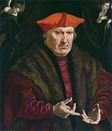 Erard de la MarckPersonErard de la Marck was prince-bishop of Liège from 1505 to 1538 and a cardinal from 1520.
 ErasmusPersonDesiderius Erasmus of Rotterdam was a Dutch humanist scholar, the most famous of the Northern Renaissance.
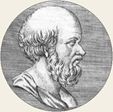 EratosthenesPersonEratosthenes of Cyrene was a Greek scholar who became head of the Library of Alexandria under the Ptolemies.
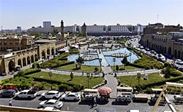 ErbilPlaceErbil, ancient Arbela, is the capital of the Kurdistan Region of Iraq.
- Erchanger, Duke of SwabiaPersonErchanger was a Swabian count who led opposition to King Conrad I of East Francia.
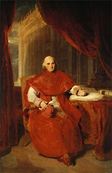 Ercole ConsalviPersonErcole Consalvi was an Italian cardinal and cardinal secretary of state to Pope Pius VII.
 Ercole I d'EstePersonErcole I d'Este was Duke of Ferrara, Modena and Reggio from 1471 to 1505.
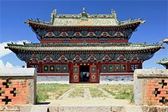 Erdene ZuuWork / monumentErdene Zuu is the oldest surviving Buddhist monastery in Mongolia, founded around 1585 by Abtai Sain Khan beside the ruins of the Mongol capital Karakorum, partly with…