Encyclopedia: S
2,833 entries under S · page 13 of 29: Shalmaneser I – Shedet
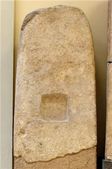 Shalmaneser IPersonShalmaneser I was a king of Assyria in the thirteenth century BCE.
 Shalmaneser IIIPersonShalmaneser III was king of Assyria from 859 to 824 BCE.
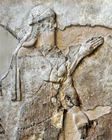 Shalmaneser VPersonShalmaneser V was king of Assyria from 727 to 722 BCE, son and successor of Tiglath-Pileser III.
- Shalom AleichemWork / monumentShalom Aleichem, "Peace be upon you", is a song that many Jews sing every Friday night on coming home from the synagogue.
- Shama, GhanaPlaceShama is a coastal town in the Western Region of Ghana, at the mouth of the Pra river.
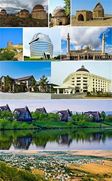 ShamakhiPlaceShamakhi is a town in the mountains of eastern Azerbaijan, for centuries the capital of the Shirvanshahs and of the province of Shirvan.
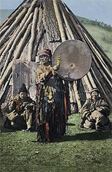 ShamanismReligion / ideaShamanism refers to religious practices centred on a shaman, a figure believed to communicate with spirits through trance and ritual.
- Shamash-resha-usurPersonShamash-resha-usur was a governor of Suhu and Mari on the middle Euphrates in the first half of the 8th century BCE, nominally subject to Babylon.
 Shamash-shum-ukinPersonShamash-shum-ukin was king of Babylon from 668 to 648 BCE, a son of the Assyrian king Esarhaddon, who made him ruler of Babylonia under his younger brother Ashurbanipal.
 Shambaa peoplePeople / groupThe Shambaa are a Bantu-speaking people of the Usambara Mountains in the Tanga Region of north-eastern Tanzania.
- Shammar YahrishPersonShammar Yahrish was a king of Himyar in south Arabia in the late 3rd and early 4th centuries CE.
 Shams al-DawlaPersonShams al-Dawla was the Buyid ruler of Hamadan and the surrounding Jibal from 997 to about 1021, a son of Fakhr al-Dawla.
- Shams al-Din Ali ibn Mas'udPersonShams al-Din Ali ibn Mas'ud was the founder of the Mihrabanid dynasty of maliks in Sistan, on the borders of present-day Iran and Afghanistan.
- Shams al-Din EldiguzPersonShams al-Din Eldiguz was a former Kipchak slave who founded the Eldiguzid dynasty of atabegs of Azerbaijan.
- Shams al-Din Muhammad KartPersonShams al-Din Muhammad Kart was the first malik of the Kart dynasty of Herat, of a family linked to the Ghurid Sultanate.
- Shamsher PrakashPersonShamsher Prakash was Raja of Sirmur, a princely state in the Himalayan foothills of present-day Himachal Pradesh, from 1856 to 1898.
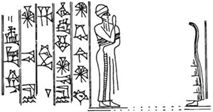 Shamshi-Adad IPersonShamshi-Adad I was an Amorite ruler who reigned c. 1808–1776 BCE and built a kingdom across northern Mesopotamia, including the city of Assur.
- Shamsuddin Ahmad KhanPersonShamsuddin Ahmad Khan was nawab of Loharu and Firozpur Jhirka in northern India, son of the state's founder Ahmad Bakhsh Khan.
- Shamsuddin Ilyas ShahPersonShamsuddin Ilyas Shah was the founder of the Ilyas Shahi dynasty and of the independent Bengal Sultanate.
- Shamsuddin Muhammad Shah GhaziPersonShamsuddin Muhammad Shah Ghazi, born Muhammad Khan Sur, was the governor of Bengal for the Sur Empire who declared independence after the death of Islam Shah Suri in…
 Shan StatePlaceShan State is the largest state of Myanmar, covering the Shan Plateau in the east of the country.
 ShandongPlaceShandong is a coastal province of eastern China on the lower Yellow River, with its capital at Jinan.
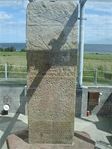 Shandwick StoneWork / monumentThe Shandwick Stone, or Clach a' Charridh, is a Pictish cross-slab of around 800 CE standing above the village of Shandwick in Easter Ross, Scotland.
- Shane O'NeillPersonShane O'Neill was an Irish chief of the O'Neills of Tyrone in Ulster.
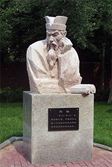 Shang YangPersonShang Yang was a Chinese statesman and Legalist thinker, a nobleman of the State of Wey, who served Duke Xiao of Qin from 361 BCE.
 Shang ZhixinPersonShang Zhixin was the son of Shang Kexi, the Qing dynasty's feudatory prince in Guangdong.
- Shangcai CountyPlaceShangcai County is a county in Zhumadian, in south-central Henan province, China.
- Shangcunling cemeteryPlaceThe Shangcunling cemetery is an archaeological site at Sanmenxia in Henan, China, belonging to the State of Guo of the late Western Zhou and early Spring and Autumn…
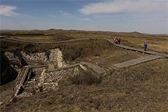 ShangduPlaceShangdu, known in the West as Xanadu, was the summer capital of the Yuan dynasty, in present-day Inner Mongolia, China.
 ShanghaiPlaceShanghai is China's largest city, a port at the mouth of the Yangtze on the Huangpu River.
- Shanghai French ConcessionPlaceThe Shanghai French Concession was a foreign concession in Shanghai under French administration from 1849 to 1943.
 Shanghai Municipal CouncilInstitutionThe Shanghai Municipal Council was the governing body of the Shanghai International Settlement from 1854 to 1943.
- Shangjing of LiaoPlaceShangjing, the Supreme Capital, was the principal capital of the Khitan Liao dynasty, founded by Abaoji in 918 in present-day Bairin Left Banner, Inner Mongolia.
- ShangqingReligion / ideaShangqing ('Highest Clarity') is a school of Daoism based on revelations received in the 360s by Yang Xi, who wrote down scriptures dictated, he said, by perfected…
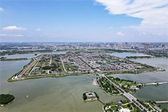 ShangqiuPlaceShangqiu is a city in eastern Henan, on the plain between the Yellow and Huai rivers.
 Shanhai PassPlaceThe Shanhai Pass is a strategic pass at the eastern end of the Great Wall, between the mountains and the sea.
- ShankaraganaPersonShankaragana was a king of the Kalachuris of Mahishmati in the late 6th century, son of Krishnaraja and father of Buddharaja.
- Shankaraji NarayanPersonShankaraji Narayan was a Deshastha Brahmin official of the Maratha state who was appointed Sachiv, one of the king's chief ministers, by Rajaram in 1697.
- ShanrongPeople / groupThe Shanrong, or Mountain Rong, were a non-Zhou people of north-eastern China, in the region of present-day Hebei, during the Spring and Autumn period.
 Shantala DeviPersonShantala Devi was the queen of the Hoysala king Vishnuvardhana, celebrated in inscriptions as an accomplished dancer and musician.
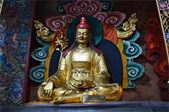 ShantarakshitaPersonShantarakshita was an Indian Buddhist philosopher and abbot of the great monastery of Nalanda who was invited to Tibet by the emperor Trisong Detsen in the eighth…
 ShanxiPlaceShanxi is a province of northern China, rich in coal and iron.
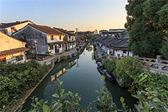 ShaoxingPlaceShaoxing is a city in northern Zhejiang, south of Hangzhou Bay.
 ShapsugsPeople / groupThe Shapsugs are a Circassian people of the north-western Caucasus who lived along the Black Sea coast and the northern slopes of the mountains between Anapa and the…
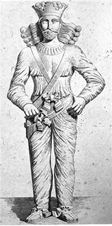 Shapur IPersonShapur I was the second king of the Sasanian Empire, who reigned from 241 to 272 CE.
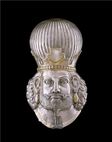 Shapur IIPersonShapur II was a king of the Sasanian Empire who reigned for most of the fourth century CE.
 Shar-Kali-SharriPersonShar-Kali-Sharri was the last powerful king of the Akkadian Empire and a son of Naram-Sin.
- SharaReligion / ideaShara was the patron god of the Sumerian city of Umma, worshipped in his temple there during the third millennium BCE.
 Sharaf al-DawlaPersonSharaf al-Dawla was a Buyid emir, the eldest son of Adud al-Dawla.
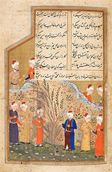 Sharaf al-Din Ali YazdiPersonSharaf al-Din Ali Yazdi was a Persian historian and poet of the Timurid court, born in Yazd.
- Sharaf al-Din Mahmud ShahPersonSharaf al-Din Mahmud Shah was the founder of the Injuid dynasty in Fars, southern Iran.
 Sharaf al-Din QaraqushPersonSharaf al-Din Qaraqush was an Armenian-born mamluk who carved out a domain in Tripolitania and southern Ifriqiya.
 Sharaf Khan BidlisiPersonSharaf Khan Bidlisi was a Kurdish emir of Bitlis and historian, born in 1543 and raised at the Safavid court.
- SharafnamaWork / monumentThe Sharafnama is a history of the Kurdish dynasties and principalities written in Persian by Sharaf Khan Bidlisi, emir of Bitlis, and completed in 1597.
 Sharafuddin of SelangorPersonSharafuddin Idris Shah is the ninth Sultan of Selangor, who succeeded his father Salahuddin in 2001.
- Sharahbil Ya'furPersonSharahbil Ya'fur was a king of Himyar in south Arabia in the mid-5th century, a son of Abikarib As'ad.
- ShariaReligion / ideaSharia refers to Islamic law, the body of religious and legal rules derived from the Quran, the example of the Prophet and the work of jurists.
- al-Sharif al-MurtadaPersonAl-Sharif al-Murtada was a Twelver Shia theologian, jurist and poet of Baghdad, a descendant of the Prophet through the Imam Musa al-Kazim and brother of al-Sharif…
 al-Sharif al-RadiPersonAl-Sharif al-Radi was a poet and scholar of Baghdad, a descendant of the Prophet and brother of al-Sharif al-Murtada.
- Sharif AliPersonSharif Ali was the third sultan of Brunei in the traditional list, reigning in the early fifteenth century.
- Sharif KabungsuanPersonSharif Kabungsuan was a Muslim preacher from Johor, of Arab descent, who arrived in Mindanao in the early 16th century.
 Sharif of MeccaTermThe Sharif of Mecca was the ruler of Mecca and much of the Hejaz, chosen from among the descendants of the Prophet Muhammad through his grandson Hasan, from the 10th…
 Sharif ul-Hashim of SuluPersonSharif ul-Hashim, also called Sayyid Abu Bakr, is credited in Sulu tradition as the founder and first sultan of the Sulu Sultanate in the mid-fifteenth century.
 Sharjah FortWork / monumentSharjah Fort, known as Al Hisn, is a fort in the centre of Sharjah, United Arab Emirates, built around 1820 under Sultan bin Saqr Al Qasimi.
- Shark Island concentration campPlaceThe Shark Island concentration camp was a German prison camp on a small island off Lüderitz in German South West Africa, used during the war against the Herero and Nama.
- Sharof RashidovPersonSharof Rashidov was an Uzbek writer and politician who led the Communist Party of the Uzbek SSR as first secretary from 1959 until his death in 1983.
 Sharpeville massacreEventThe Sharpeville massacre took place on 21 March 1960 in the township of Sharpeville, south of Johannesburg, when police fired on a crowd protesting against the pass…
- SharqiyinPeople / groupThe Sharqiyin are an Arab tribe of the east coast of the Oman peninsula, centred on Fujairah.
- Sharri-KushuhPersonSharri-Kushuh, born Piyassili, was a son of the Hittite king Suppiluliuma I, who made him king of Carchemish after capturing the city around 1325 BCE.
- SharuhenPlaceSharuhen was a fortified town in southern Canaan, near Gaza, which served as a refuge of the Hyksos after their expulsion from Egypt.
- SharukanPersonSharukan was a Cuman khan of the late 11th century, a leader of the tribes on the Donets steppe.
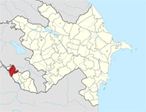 Sharur DistrictPlaceSharur is a district of the Nakhchivan Autonomous Republic of Azerbaijan, in the fertile plain of the Aras River near the borders with Turkey, Iran and Armenia.
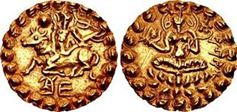 ShashankaPersonShashanka was a king of Gauda in Bengal in the late 6th and early 7th centuries, often described as the first ruler to unite much of Bengal.
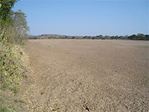 Shashe RiverPlaceThe Shashe is a river of southern Africa that rises in north-eastern Botswana and forms part of the border between Botswana and Zimbabwe before joining the Limpopo.
- Shatapatha BrahmanaWork / monumentThe Shatapatha Brahmana ('Brahmana of a hundred paths') is a Sanskrit prose text of the White Yajurveda, composed in the first half of the 1st millennium BCE and…
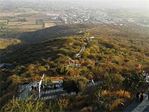 ShatrunjayaPlaceShatrunjaya is a sacred hill above Palitana in Gujarat, India, one of the holiest pilgrimage sites of the Jains.
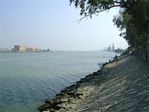 Shatt al-ArabPlaceThe Shatt al-Arab is the river formed by the joining of the Tigris and Euphrates in southern Iraq, flowing past Basra to the Persian Gulf.
- ShattiwazaPersonShattiwaza was a king of Mitanni in the fourteenth century BCE.
- Shattiwaza treatyWork / monumentThe Shattiwaza treaty was a treaty concluded c. 1330 BCE between the Hittite king Suppiluliuma I and Shattiwaza of Mitanni.
- Shattuara IPersonShattuara I was a ruler of the Mitanni rump state of Hanigalbat in the thirteenth century BCE.
- Shattuara IIPersonShattuara II was the last known king of Mitanni, or Hanigalbat, in the 13th century BCE.
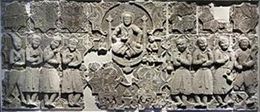 ShatuoPeople / groupThe Shatuo were a Turkic people of the Western Turkic tradition who settled on the northern frontier of Tang China in the 9th century.
- ShaushgamuwaPersonShaushgamuwa was a king of Amurru in the late 13th century BCE and a vassal and brother-in-law of the Hittite king Tudhaliya IV.
- ShaushtatarPersonShaushtatar was a king of Mitanni around 1450 BCE, under whom the kingdom reached a peak of power.
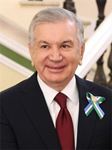 Shavkat MirziyoyevPersonShavkat Mirziyoyev is an Uzbek politician who became president of Uzbekistan in 2016 after the death of Islam Karimov, whose prime minister he had been since 2003.
- ShavshetiPlaceShavsheti is a historic region of south-western Georgia, today the Şavşat district of Artvin Province in north-eastern Turkey.
- ShawlTermA shawl is a large piece of cloth worn over the shoulders or head.
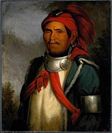 ShawneePeople / groupThe Shawnee are an Algonquian-speaking Native American people who in the 18th century lived mainly in the Ohio country.
- ShaybanidsPeople / groupThe Shaybanids were an Uzbek dynasty descended from Shiban, a grandson of Genghis Khan, who ruled much of Central Asia in the sixteenth century.
- al-Shaykh al-MufidPersonAl-Shaykh al-Mufid was a Twelver Shia theologian and jurist of Baghdad and the leading Shia scholar of the Buyid period.
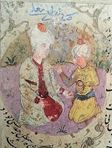 Shaykh HaydarPersonShaykh Haydar was head of the Safavid Sufi order of Ardabil from 1460 to 1488 and father of Shah Ismail I.
 Shaykh JunaydPersonShaykh Junayd was head of the Safavid Sufi order of Ardabil from 1447 to 1460.
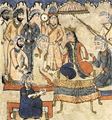 Shaykh UwaysPersonShaykh Uways was sultan of the Jalayirid dynasty from 1356 to 1374, son of its founder Hasan Buzurg.
 Shays' RebellionRevolt · 1786–1787Shays' Rebellion was an armed uprising in western Massachusetts in 1786–1787 by indebted farmers, led by the war veteran Daniel Shays, against high taxes and the…
- ShchedrykWork / monument"Shchedryk" is a Ukrainian shchedrivka, a song sung to wish a household well at the New Year; its name comes from the Ukrainian word for "bountiful", and in English it…
 Sheba son of BichriPersonSheba son of Bichri was a Benjamite who, according to the Hebrew Bible, led a revolt of the northern tribes of Israel against King David soon after the rebellion of…
 Shebelle RiverPlaceThe Shebelle River, or Wabi Shebelle, rises in the Ethiopian Highlands and flows south-east into Somalia, where it ends in marshes near the coast without reaching the…
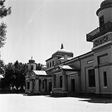 SheberghanPlaceSheberghan is a city in northern Afghanistan, the capital of Jowzjan Province on the plain between the Hindu Kush foothills and the Amu Darya.
 ShechemPlaceShechem was an ancient city of the central hill country of Canaan, at Tell Balata near modern Nablus in the West Bank.
- ShedetPlaceShedet was the chief town of the Faiyum in ancient Egypt, on the site of modern Faiyum city, and the main cult centre of the crocodile god Sobek.