Encyclopedia: J
1,204 entries under J · page 6 of 13: Jharkhand – Joanot Martorell
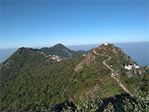 JharkhandPlaceJharkhand is a state of eastern India, created from southern Bihar in 2000, with its capital at Ranchi.
- JhelumPlaceThe Jhelum is one of the five rivers of the Punjab, flowing from Kashmir into present-day Pakistan.
 Ji'an, JilinPlaceJi'an is a city in Jilin province, China, on the Yalu river facing North Korea.
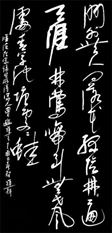 Jian'an poetryReligion / ideaJian'an poetry is the poetry written in China during the Jian'an era (196–220) at the end of the Han dynasty, centred on the court of Cao Cao.
 Jiang GuangnaiPersonJiang Guangnai was a Chinese general from Guangdong, commander of the Nineteenth Route Army, which resisted the Japanese attack on Shanghai in January–March 1932.
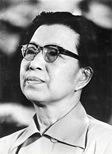 Jiang QingPersonJiang Qing was a Chinese actress and politician, the fourth wife of Mao Zedong.
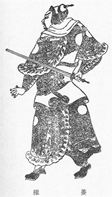 Jiang WeiPersonJiang Wei was a general of Shu Han in the Three Kingdoms period of China.
 Jiang ZeminPersonJiang Zemin was a Chinese Communist leader who became general secretary of the party after the Tiananmen Square protests of 1989 and served as president of the People's…
 Jiang ZiyaPersonJiang Ziya, also known as Jiang Taigong, was a minister and military adviser to Kings Wen and Wu of Zhou in the eleventh century BCE.
- JianglingPlaceJiangling is an ancient city on the north bank of the Yangtze in Hubei, China, now part of Jingzhou.
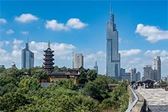 JiangsuPlaceJiangsu is a coastal province of eastern China, on the lower Yangtze and Huai rivers, with its capital at Nanjing.
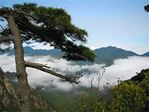 JiangxiPlaceJiangxi is an inland province of south-eastern China, with its capital at Nanchang, centred on the basin of the Gan River and Poyang Lake, which drain into the Yangtze.
 JiankangPlaceJiankang was the capital of the southern Chinese dynasties on the site of modern Nanjing.
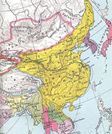 Jianzhou JurchensPeople / groupThe Jianzhou Jurchens were one of the three main groups into which the Ming dynasty divided the Jurchen peoples of Manchuria, living in the mountains east of Liaodong.
 Jiao ProvincePlaceJiao Province, or Jiaozhou, was a province of the Chinese empire covering northern Vietnam and, at times, parts of southern China, under dynasties from the Han to the…
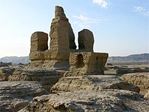 Jiaohe RuinsPlaceThe Jiaohe Ruins are the remains of an ancient city near Turpan in Xinjiang, China, on a narrow island plateau between two river channels.
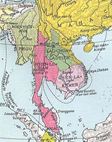 JiaozhiPlaceJiaozhi was the Chinese name for the region of the Red River delta in northern Vietnam.
 Jiaozhi ProvinceStateJiaozhi Province was the Ming Chinese province created in northern Vietnam after the Yongle Emperor's armies overthrew the Hồ dynasty in 1407, reviving an old Han-era…
 Jiaozhou BayPlaceJiaozhou Bay is an inlet of the Yellow Sea on the southern coast of the Shandong peninsula in eastern China, with the city of Qingdao on its eastern side.
- JiaoziTermJiaozi was a form of paper money that first appeared in Sichuan in the early eleventh century, initially issued by merchants and later taken over by the government.
 Jiaqing EmperorPersonThe Jiaqing Emperor was emperor of the Qing dynasty of China from 1796 to 1820, succeeding his father, the Qianlong Emperor.
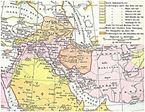 JibalPlaceJibal ("the mountains") was the name used by medieval Arab geographers for the mountainous region of western Iran, roughly ancient Media.
 JibinPlaceJibin was the Chinese name for a kingdom or region in the north-west of the Indian subcontinent, usually identified with Gandhara and Kashmir.
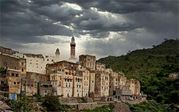 JiblaPlaceJibla, also called Dhu Jibla, is a town in the highlands of Yemen, south of Ibb.
 Jie of XiaPersonJie of Xia was, according to traditional Chinese histories, the last ruler of the Xia dynasty.
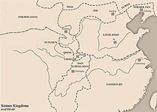 Jie peoplePeople / groupThe Jie were a non-Chinese people of northern China in the 4th century, probably of Central Asian origin and associated with the Xiongnu confederation, settled in Shanxi.
 JiedushiInstitutionJiedushi were military governors of the Tang Dynasty, originally appointed to command frontier armies.
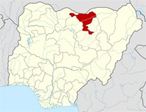 Jigawa StatePlaceJigawa State is a state in north-western Nigeria, created from part of Kano State in 1991, with its capital at Dutse.
 Jigme Dorje Palbar BistaPersonJigme Dorje Palbar Bista was the last king of Mustang, a small Tibetan Buddhist kingdom in northern Nepal, reigning from 1964 to 2008.
 Jigme Dorji WangchuckPersonJigme Dorji Wangchuck was the third king of Bhutan, reigning from 1952 until his death in 1972.
- Jigme Khesar Namgyel WangchuckPersonJigme Khesar Namgyel Wangchuck is the fifth Druk Gyalpo, king of Bhutan, who succeeded on the abdication of his father Jigme Singye Wangchuck in December 2006.
- Jigme Singye WangchuckPersonJigme Singye Wangchuck was the fourth King of Bhutan, reigning from 1972 to 2006.
- JihadTermJihad is an Islamic term meaning struggle or striving, which can refer to spiritual effort or to armed struggle in defence or expansion of the faith.
 JihlavaPlaceJihlava is a city in the Bohemian-Moravian Highlands of the Czech Republic, on the historic border between Bohemia and Moravia.
 Jijeung of SillaPersonJijeung was king of Silla from 500 to 514.
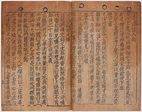 JikjiWork / monumentThe Jikji is a Korean anthology of Seon (Zen) Buddhist teachings compiled by the monk Baegun and printed with movable metal type at Heungdeoksa temple in Cheongju in…
 JilinPlaceJilin is a province of north-eastern China, bordering North Korea and Russia, with its capital at Changchun.
 Jilin CityPlaceJilin is a city in Jilin province in north-eastern China, on the Songhua River.
- Jim BolgerPersonJim Bolger was Prime Minister of New Zealand from 1990 to 1997, leading the Fourth National Government.
 Jim Crow lawsWork / monumentJim Crow laws were state and local laws enforcing racial segregation in the southern United States from the late nineteenth century until the 1960s.
- Jim Taylor (patrol officer)PersonJim Taylor was an Australian patrol officer in the Territory of New Guinea.
- Jimena DíazPersonJimena Díaz was the wife of Rodrigo Díaz de Vivar, El Cid, and a relative of King Alfonso VI of León and Castile.
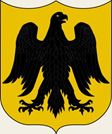 Jiménez dynastyPeople / groupThe Jiménez dynasty ruled the Kingdom of Pamplona, later Navarre, from 905, when Sancho Garcés I took the throne, until 1234.
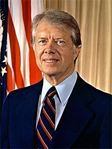 Jimmy CarterPersonJimmy Carter was the 39th president of the United States, serving from 1977 to 1981.
 Jimmy MoralesPersonJimmy Morales (born 1969) is a Guatemalan former television comedian who was president of Guatemala from 2016 to 2020.
- Jimmy StevensPersonJimmy Stevens was a ni-Vanuatu political leader who founded the Nagriamel movement on Espiritu Santo in the 1960s, campaigning for the return of land held by European…
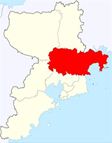 JimoPlaceJimo was an ancient city of the State of Qi in eastern Shandong, near modern Qingdao, of which Jimo is now a district.
- JimutavahanaPersonJimutavahana is a legendary Vidyadhara prince of Indian story, famed for his self-sacrifice.
- Jimyōin linePeople / groupThe Jimyōin line was a branch of the Japanese imperial family descended from Emperor Go-Fukakusa, rival to the Daikakuji line of his brother Emperor Kameyama.
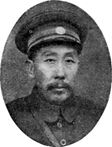 Jin ShurenPersonJin Shuren was a Chinese official who governed Xinjiang from 1928, after the assassination of Yang Zengxin, until 1933.
- JinakalamaliWork / monumentThe Jinakalamali is a Pali chronicle written by the monk Ratanapanna at Chiang Mai, completed in 1516–1517 under King Phra Mueang Kaeo.
 JinasenaPersonJinasena was a Digambara Jain monk and scholar of the ninth century, revered as teacher of the Rashtrakuta emperor Amoghavarsha I.
 Jinchuan campaignsCampaignThe Jinchuan campaigns were military expeditions of the Qing Empire in the eighteenth century against the Jinchuan chieftaincies in the mountains of western Sichuan.
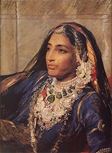 Jind KaurPersonJind Kaur was the youngest wife of Maharaja Ranjit Singh and mother of Duleep Singh, the last ruler of the Sikh Empire.
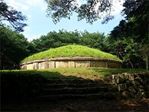 Jindeok of SillaPersonJindeok was queen of Silla from 647 to 654, the second woman to rule the kingdom.
- Jindo IslandPlaceJindo is an island off the south-western tip of the Korean peninsula, part of South Jeolla Province.
 Jindřich ZdíkPersonJindřich Zdík (c. 1083–1150) was Bishop of Olomouc from 1126 and a leading churchman of 12th-century Bohemia.
 Jing KePersonJing Ke was a retainer of Crown Prince Dan of Yan who tried to assassinate King Zheng of Qin, the future First Emperor, in 227 BCE.
- Jingkang incidentSiege · 1127The Jingkang incident was the capture of the Northern Song capital Kaifeng by Jurchen Jin forces in 1127, in which the retired emperor Huizong and the reigning emperor…
 JingkouPlaceJingkou was the ancient name of Zhenjiang, a city on the south bank of the Yangtze in Jiangsu, China, at its junction with the Grand Canal.
 JingzhouPlaceJingzhou is a city on the Yangtze River in southern Hubei province, China.
- Jinheung of SillaPersonJinheung was king of Silla from 540 to 576 and its greatest early conqueror.
- JinjaPlaceJinja is a city in eastern Uganda on the northern shore of Lake Victoria, near the point where the Victoria Nile leaves the lake.
- JinkaishūWork / monumentThe Jinkaishū was a law code issued in 1536 by Date Tanemune for the lands of the Date clan in southern Mutsu, in northern Japan.
 Jinnō ShōtōkiWork / monumentThe Jinnō Shōtōki ('Chronicle of the Direct Descent of Gods and Sovereigns') is a history of Japan written by Kitabatake Chikafusa in 1339 and revised in 1343.
- Jinseong of SillaPersonJinseong was queen of Silla from 887 to 897, the third woman to rule the kingdom.
 Jinsha sitePlaceThe Jinsha site is an archaeological site in western Chengdu, Sichuan, discovered in 2001 and dating from about 1200 to 500 BCE.
 JinshiInstitutionJinshi was the highest degree in the Chinese imperial examination system, awarded to candidates who passed the metropolitan and palace examinations.
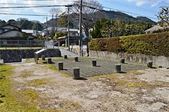 Jinshin WarWar · 672The Jinshin War was a succession war fought in Japan in 672 after the death of Emperor Tenji.
 JinulPersonJinul was a Korean Buddhist monk of the Goryeo period who reformed Seon (Zen) Buddhism.
- JinyangPlaceJinyang was an ancient city near modern Taiyuan in Shanxi, northern China.
 Jin–Song warsWar · 1125–1234The Jin–Song wars were a series of conflicts fought from 1125 to 1234 between the Jurchen-led Jin dynasty and the Song dynasty of China.
 JiroftPlaceJiroft is a city in Kerman province in south-eastern Iran, in the Halil river valley.
- Jisan-dong tombsPlaceThe Jisan-dong tombs are a group of over 700 burial mounds on a ridge above Goryeong in North Gyeongsang, South Korea, the royal cemetery of Daegaya.
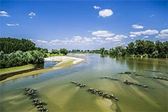 Jiu RiverPlaceThe Jiu is a river of south-western Romania, about 340 km long, that rises in the Southern Carpathians, cuts through them in a gorge and flows south across Oltenia past…
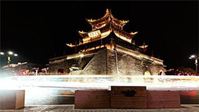 JiuquanPlaceJiuquan is a city in western Gansu province, China, in the Hexi Corridor.
- Jivaji Rao PuarPersonJivaji Rao Puar was a Maratha commander who, with his brother Tukoji Rao, came to Malwa with the Peshwa Baji Rao I and received Dewas around 1728.
 Jivajirao ScindiaPersonJivajirao Scindia was the last ruling maharaja of Gwalior, reigning from 1925.
 Jixia AcademyInstitutionThe Jixia Academy was a centre of learning in Linzi, capital of the State of Qi, named after the Ji Gate of the city.
 JizanPlaceJizan is a port city on the Red Sea in south-western Saudi Arabia and the capital of Jizan Province.
- JizyaInstitutionJizya was a tax levied in Islamic states on non-Muslim subjects, the dhimmi, in return for protection and exemption from military service.
- JnatrikasPeople / groupThe Jnatrikas were a Kshatriya clan of ancient north-east India, members of the Vajji confederacy, living at Kundagrama near Vaishali in modern Bihar.
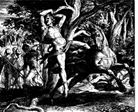 JoabPersonJoab was the nephew of King David and the commander of his army according to the Hebrew Bible.
 Joachim Ernest, Prince of AnhaltPersonJoachim Ernest, Prince of Anhalt, reunited all the Anhalt lands under his rule in 1570 and issued a common law code for them.
 Joachim Ernst, Duke of AnhaltPersonJoachim Ernst was the last Duke of Anhalt, succeeding as a minor in September 1918.
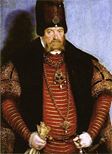 Joachim II HectorPersonJoachim II Hector was elector of Brandenburg from 1535 to 1571, of the Hohenzollern dynasty.
 Joachim MuratPersonJoachim Murat was a French cavalry commander and Marshal of the Empire who married Napoleon's sister Caroline.
 Joachim VadianPersonJoachim Vadian, born Joachim von Watt, was a Swiss humanist scholar, physician and reformer from St.
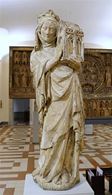 Joan I of NavarrePersonJoan I was Queen of Navarre and Countess of Champagne from 1274 until her death in 1305, the last of the house of Champagne.
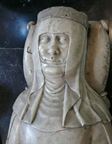 Joan II of NavarrePersonJoan II was queen of Navarre from 1328, the daughter of Louis X of France.
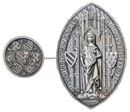 Joan III, Countess of BurgundyPersonJoan III was countess of Burgundy (the Franche-Comté) and of Artois from 1330 until her death in 1347, the eldest daughter of King Philip V of France.
 Joan of ArcPersonJoan of Arc was a peasant girl from Domrémy, on the borders of Lorraine and Champagne, who believed that saints' voices called her to save France in the Hundred Years'…
 Joan of England, Queen of SicilyPersonJoan of England was a daughter of Henry II of England and Eleanor of Aquitaine.
 Joan of PenthièvrePersonJoan of Penthièvre was a Breton noblewoman, niece of Duke John III and countess of Penthièvre, whose claim to Brittany was pressed by her husband Charles of Blois in…
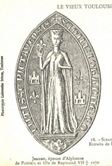 Joan, Countess of ToulousePersonJoan was the only child and heiress of Raymond VII, Count of Toulouse.
 Joanna I of NaplesPersonJoanna I was queen of Naples and countess of Provence from 1343 to 1382.
 Joanna II of NaplesPersonJoanna II (1373–1435) was queen of Naples from 1414 to 1435, succeeding her brother Ladislaus as the last ruler of the Angevin Durazzo line.
 Joanna la BeltranejaPersonJoanna la Beltraneja was the daughter of Henry IV of Castile, whose enemies claimed she was the child of the courtier Beltrán de la Cueva.
 Joanna, Duchess of BrabantPersonJoanna was Duchess of Brabant and Limburg from 1355 until her death in 1406.
 Joanot MartorellPersonJoanot Martorell was a Valencian knight and writer of the 15th century, the main author of the chivalric romance Tirant lo Blanc.