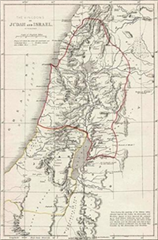
Ancient Near East
Kingdom of Israel
At a glance
- The northern Hebrew kingdom, formed when the tribes broke from Solomon’s heir c. 930 BCE, ruled from Samaria after Omri.
- Larger and richer than Judah, it fielded 2,000 chariots against Assyria at Qarqar in 853 BCE under King Ahab.
- Assyria took Samaria in 722 BCE and deported its people, giving rise to the legend of the Ten Lost Tribes.
Rise & Fall
- c. 930 BCEThe northern tribes reject Rehoboam at Shechem and make Jeroboam I king
- c. 880 BCEOmri founds the new capital of Samaria
- 853 BCEAhab fights Shalmaneser III of Assyria at the Battle of Qarqar
- c. 841 BCEJehu’s coup destroys the House of Omri; Jehu pays tribute to Assyria
- c. 788–747 BCEReign of Jeroboam II, Israel’s last period of prosperity
- 732 BCETiglath-pileser III annexes Galilee and Gilead
- 722 BCESamaria falls to the Assyrians after a long siege
- 720 BCESargon II deports some 27,000 people and creates the province of Samerina
Foundation
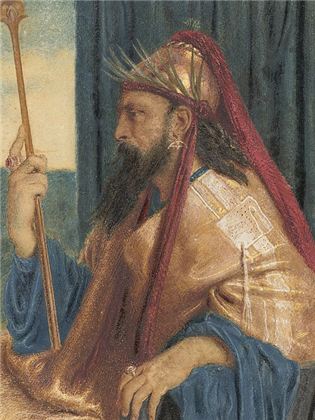
The Kingdom of Israel, often called the Northern Kingdom, arose c. 930 BCE when the northern tribes broke away from the United Kingdom of Israel after the death of Solomon. According to the Books of Kings, an assembly at Shechem asked Solomon’s son Rehoboam to lighten the forced labour and taxes of his father’s reign; when he refused, the northerners made Jeroboam I their king, a former overseer of Solomon’s labour gangs who had taken refuge in Egypt with Pharaoh Shishak. The extent and character of the earlier united monarchy are debated by historians and archaeologists, but the existence of two Iron Age kingdoms, Israel in the north and Judah around Jerusalem in the south, is secure. Jeroboam ruled first from Shechem and later from Tirzah, and he set up royal sanctuaries at Bethel and Dan, each with a golden calf, so that his subjects need not go on pilgrimage to the Temple in Jerusalem. The first decades brought border wars with Judah and a succession of coups. Stability came only with Omri, an army commander who seized power c. 885 BCE and founded a new capital on the hill of Samaria, which he bought, according to the Bible, from a man named Shemer.
Socioeconomy
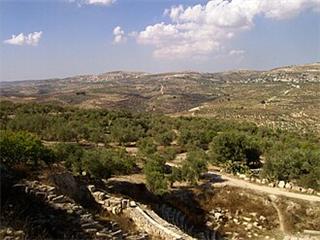
Israel held the more fertile and populous part of the southern Levant: the hill country of Samaria, the Jezreel Valley, Galilee and the lands of Gilead east of the Jordan. Most people were farmers and herders living in villages, organised in clans and households that held land by inheritance. The staple products were grain, wine and above all olive oil, pressed in large installations. The Samaria ostraca, inked potsherds of the eighth century BCE, record deliveries of wine and oil to the capital from the surrounding estates. Close ties with the Phoenician cities, sealed by Ahab’s marriage to Jezebel, daughter of the king of Sidon, brought luxury goods and craftsmen, and the carved ivory panels found at Samaria show the court’s taste for Phoenician work. Religion centred on Yahweh, worshipped at Bethel, Dan and many local shrines, but other gods were honoured beside him: inscriptions from Kuntillet Ajrud in Sinai invoke ‘Yahweh of Samaria and his Asherah’, and the Bible describes a temple of Baal in Samaria. In the prosperous eighth century wealth gathered in the hands of the court and great landowners, and the prophets Amos and Hosea denounced the luxury of Samaria, the oppression of the poor and the worship of other gods.
Military

In the ninth century BCE Israel was the strongest military power among the small kingdoms of the southern Levant. Its army combined a royal chariot corps and professional troops with levies from the tribes and towns. The Omride kings built or rebuilt fortified centres at Samaria, Jezreel, Megiddo and Hazor, with casemate walls, multi-chambered gates and large royal enclosures; the pillared buildings at Megiddo once credited to Solomon are now often dated to this period, although whether they were stables is still debated. At the Battle of Qarqar in 853 BCE Ahab joined a coalition of Levantine rulers against Shalmaneser III of Assyria; the Kurkh Monolith credits ‘Ahab the Israelite’ with 2,000 chariots and 10,000 foot soldiers, the largest chariot contingent in the coalition. Israel fought Aram-Damascus for decades over Gilead, and according to the Bible a king of Israel, traditionally Ahab, fell in battle at Ramoth-gilead. The Mesha Stele records that Omri and his son held Moab in subjection until King Mesha rebelled. Under Hazael of Damascus the Arameans took much of Israel’s territory in the later ninth century, but Joash and Jeroboam II won it back. Against the standing armies of Tiglath-pileser III and his successors, however, Israel had no effective answer.
Governance & Law
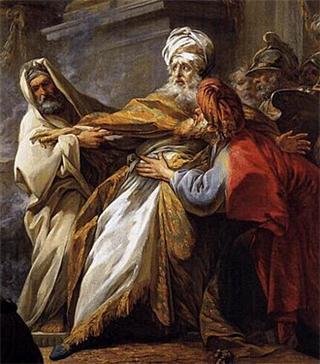
The king of Israel was anointed and claimed divine sanction, but the northern monarchy never created a lasting royal line. Of the nineteen or so kings named in the Bible, several were murdered, and the crown passed through a series of short-lived houses: those of Jeroboam I, Baasha, Omri and Jehu, followed by a string of usurpers. The House of Omri was the most influential, and Assyrian scribes long called Israel Bit Humri, the ‘House of Omri’, even after his line had fallen. Jehu, an army commander, overthrew it c. 841 BCE in a coup supported by the prophet Elisha, killing King Joram of Israel and King Ahaziah of Judah, although the Tel Dan Stele, probably set up by Hazael of Damascus, claims those deaths for the Aramean king. Jehu’s dynasty lasted almost a century, the longest in Israel’s history. Royal government rested on court officials, district governors and fortified towns, and on produce collected from crown estates, as the Samaria ostraca show. Prophets formed an independent voice that could challenge kings: Elijah opposed Ahab and Jezebel’s promotion of Baal, and Hosea condemned the court’s shifting alliances. The army was the decisive power broker, and most changes of dynasty were military coups, whereas Judah kept the House of David on its throne throughout.
Global & Regional Impact
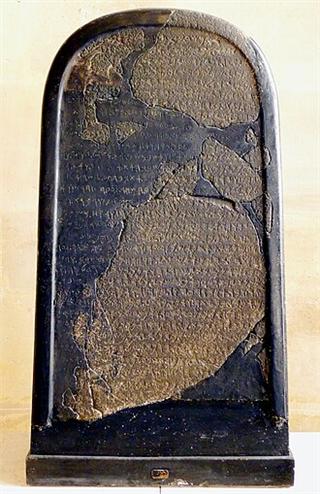
Israel was the first of the two Hebrew kingdoms to appear in foreign records. The Mesha Stele names ‘Omri, king of Israel’, the Kurkh Monolith names Ahab, and the Black Obelisk of Shalmaneser III shows Jehu, or his envoy, prostrate before the Assyrian king. Its greater legacy lay in the traditions it handed on. After the fall of Samaria, refugees from the north probably settled in Judah, whose capital Jerusalem grew sharply in the late eighth century, and northern texts and memories were absorbed into what became the Hebrew Bible. The prophecies of Amos and Hosea, the stories of Elijah and Elisha, and the Books of Kings’ verdict on the ‘sins of Jeroboam’ all concern the northern kingdom, although they reach us through Judahite editors who judged it harshly. The Samaritans, who survive as a small community at Mount Gerizim near Nablus and in Holon, trace their descent to the Israelites who remained in the land. The deportees became the subject of the legend of the Ten Lost Tribes, which inspired speculation about their whereabouts from Antiquity to the modern era. Archaeologically, Samaria, Megiddo, Hazor, Jezreel and Dan remain among the most intensively studied Iron Age sites of the Levant.
Decline & Fall
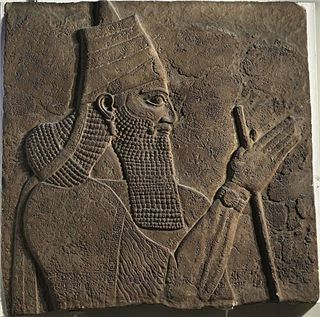
Israel’s last decades were shaped by the expansion of the Neo-Assyrian Empire under Tiglath-pileser III (r. 745–727 BCE). After the death of Jeroboam II the throne changed hands repeatedly by murder: Zechariah, Shallum, Menahem, Pekahiah and Pekah all reigned within about fifteen years. Menahem paid Assyria a tribute of 1,000 talents of silver, raised by a levy on wealthy landowners. Pekah instead joined Rezin of Damascus in an anti-Assyrian alliance and attacked Judah when its king Ahaz refused to take part, the conflict known as the Syro-Ephraimite War. Ahaz appealed to Assyria, and in 733–732 BCE Tiglath-pileser III took Damascus, annexed Galilee, the coastal plain and Gilead, and deported part of their population, leaving Israel a rump state around Samaria. Hoshea, who killed Pekah and became an Assyrian vassal, later stopped paying tribute and sought help from Egypt. Shalmaneser V besieged Samaria, which fell in 722 BCE after a siege the Bible puts at three years. Sargon II claimed the conquest, crushed a further revolt in 720 BCE, deported some 27,000 inhabitants to Mesopotamia and Media, settled people from other lands in their place, and made Samaria the centre of the Assyrian province of Samerina.
The Kingdom of Israel was the larger and wealthier of the two Hebrew kingdoms, a regional military power under Omri and Ahab, and the setting of the prophets Elijah, Amos and Hosea; its destruction by Assyria in 722 BCE shaped the Hebrew Bible and the legend of the Ten Lost Tribes.
References
- Finkelstein, I. (2013) The Forgotten Kingdom: The Archaeology and History of Northern Israel. Atlanta: Society of Biblical Literature.
- Finkelstein, I. and Silberman, N.A. (2001) The Bible Unearthed: Archaeology’s New Vision of Ancient Israel and the Origin of Its Sacred Texts. New York: Free Press.
- Grabbe, L.L. (2007) Ancient Israel: What Do We Know and How Do We Know It? London: T&T Clark.
- Kuhrt, A. (1995) The Ancient Near East, c. 3000–330 BC. 2 vols. London: Routledge.
- Miller, J.M. and Hayes, J.H. (2006) A History of Ancient Israel and Judah. 2nd edn. Louisville: Westminster John Knox Press.
Connections
Open the full connections map →