Encyclopedia: S
2,773 entries under S · page 18 of 28: Sinicization – Skardu
- SinicizationReligion / ideaSinicization refers to the process by which non-Chinese peoples adopt Chinese language, culture and political practices.
 SinjaPlaceSinja is a valley in Jumla district in the Karnali region of western Nepal that served as the capital of the Khasa Malla kingdom from the 12th to the 14th century.
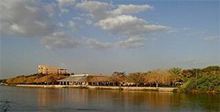 SinjarPlaceSinjar is a town in north-western Iraq at the southern foot of the Sinjar Mountains, west of Mosul.
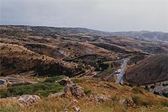 Sinjar MountainsPlaceThe Sinjar Mountains are a ridge rising from the plain of northern Iraq, west of Mosul, near the Syrian border.
 Sinking of the Rainbow WarriorEventThe sinking of the Rainbow Warrior was a bombing by agents of the French foreign intelligence service, the DGSE, in Auckland harbour on 10 July 1985.
 Sinmun of SillaPersonSinmun was king of Silla from 681 to 692, son of King Munmu.
- Sinn FéinPeople / groupSinn Féin is an Irish republican political party founded by Arthur Griffith in 1905.
- SinniPlaceThe Sinni is a river of Basilicata in southern Italy, rising in the Lucanian Apennines and flowing east into the Gulf of Taranto.
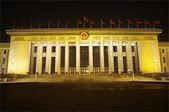 Sino-British Joint DeclarationTreaty · 1984The Sino-British Joint Declaration was signed in Beijing on 19 December 1984 by Margaret Thatcher and Zhao Ziyang.
 Sino-Burmese War (1765–1769)War · 1765–1769The Sino-Burmese War was fought from 1765 to 1769 between Qing China and the Konbaung dynasty of Burma.
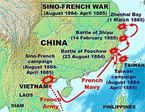 Sino-French WarWar · 1884–1885The Sino-French War was fought between France and Qing China from August 1884 to April 1885 over control of Tonkin in northern Vietnam.
 Sino-Indian WarWar · 1962The Sino-Indian War was a border war fought between China and India in October and November 1962 over disputed Himalayan territory in Aksai Chin and the North-East…
 Sino-Nepalese WarWar · 1788–1792The Sino-Nepalese War (1788–1792) began with Nepalese invasions of Tibet over trade and coinage disputes, culminating in the sack of the Tashilhunpo monastery in 1791.
 Sino-Portuguese Joint DeclarationTreaty · 1987The Sino-Portuguese Joint Declaration was signed in Beijing on 13 April 1987 by Portugal and the People's Republic of China.
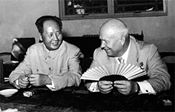 Sino-Soviet splitEventThe Sino-Soviet split was the breakdown of relations between the People's Republic of China and the Soviet Union.
 Sino-Vietnamese WarWar · 1979The Sino-Vietnamese War was a brief war fought in February and March 1979, when China invaded northern Vietnam in response to Vietnam's invasion of Cambodia and its…
- SinocentrismReligion / ideaSinocentrism is the view that China is the cultural and political centre of the world, with other peoples ranked by their relationship to the Chinese emperor.
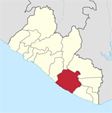 Sinoe CountyPlaceSinoe County is a county on the coast of south-eastern Liberia, with its capital at Greenville.
 SintiPeople / groupThe Sinti are a Romani people of Central Europe, settled in German-speaking lands since the 15th century.
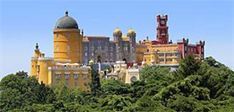 SintraPlaceSintra is a town in the hills west of Lisbon, Portugal.
- SinxayWork / monumentSinxay is a Lao epic poem attributed to the poet Pangkham and traditionally dated to the reign of Sourigna Vongsa in the 17th century.
 Sion, SwitzerlandPlaceSion is the capital of the Swiss canton of Valais, in the upper Rhône valley.
 Sip Song Chau TaiPlaceSip Song Chau Tai ('twelve Tai lands') was the traditional name for the Tai principalities of the Black River region of north-western Vietnam.
 SipahiInstitutionThe sipahis were cavalrymen of the Ottoman Empire who held land grants called timars, from which they collected revenue in return for military service.
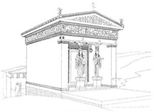 Siphnian TreasuryWork / monumentThe Siphnian Treasury is a small Ionic building at the sanctuary of Apollo at Delphi, built about 525 BCE by the people of Siphnos from the wealth of their gold and…
 SipontumPlaceSipontum was an ancient port on the Gulf of Manfredonia in northern Apulia, said in legend to have been founded by Diomedes.
 SipopaPersonSipopa was a Lozi prince who led the rising of 1864 that overthrew the Kololo rulers of Barotseland, killing most Kololo men and restoring the Lozi monarchy.
- SipparPlaceSippar was an ancient city in Mesopotamia on the Euphrates, a centre of the cult of the sun god Shamash.
- Sir Charles Wheler, 2nd BaronetPersonSir Charles Wheler, 2nd Baronet, was an English soldier and politician who sat in the House of Commons.
 Sir Harry Smith, 1st BaronetPersonSir Harry Smith was a British army officer who served in the Peninsular War and won the Battle of Aliwal in the First Anglo-Sikh War.
 Sir John KerrPersonSir John Kerr was Governor-General of Australia from 1974 to 1977.
 Sir Robert Eden, 1st Baronet, of MarylandPersonSir Robert Eden was the last colonial governor of Maryland, serving from 1769 to 1776.
 Sir Seewoosagur Ramgoolam Botanical GardenPlaceThe Sir Seewoosagur Ramgoolam Botanical Garden, long known as the Pamplemousses Garden, is a botanical garden in northern Mauritius and one of the oldest in the…
 Sir William Johnson, 1st BaronetPersonSir William Johnson was an Irish-born colonial official in New York who became British superintendent of Indian affairs for the northern colonies in 1756.
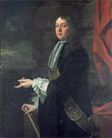 Sir William PennPersonSir William Penn was an English admiral who commanded the fleet of Oliver Cromwell's Western Design against the Spanish Caribbean.
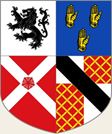 Sir William Stapleton, 1st BaronetPersonSir William Stapleton, 1st Baronet, was an Irish soldier and governor-in-chief of the Leeward Islands from 1672 to 1686.
- SiracesPeople / groupThe Siraces were a Sarmatian people of the plains of the Kuban river, north of the Caucasus, from about the fourth century BCE.
 SirafPlaceSiraf was a port on the Iranian coast of the Persian Gulf, near modern Bandar Taheri in Bushehr province.
 Siraj ud-DaulahPersonSiraj ud-Daulah was the last independent Nawab of Bengal, succeeding his grandfather Alivardi Khan in 1756.
 Siraya peoplePeople / groupThe Siraya are an Austronesian Indigenous people of the south-western plains of Taiwan, around modern Tainan.
- SirensReligion / ideaThe Sirens were dangerous creatures of Greek mythology, part woman and part bird, whose singing lured sailors to their deaths.
 SiretPlaceSiret is a town in Suceava County, north-eastern Romania, near the border with Ukraine and on the river of the same name.
 SirhindPlaceSirhind is a historic town in Punjab, India, on the road between Delhi and Lahore, which was the seat of a Mughal governorship controlling the plains south of the Sutlej.
 Sirimavo BandaranaikePersonSirimavo Bandaranaike was a Sri Lankan politician who in 1960 became the world's first woman prime minister, leading the Sri Lanka Freedom Party after the assassination…
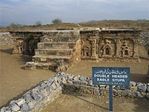 SirkapPlaceSirkap is the second city of Taxila, in present-day Punjab, Pakistan, laid out on a grid plan in the 2nd century BCE by the Indo-Greeks and rebuilt under the…
 SirmiumPlaceSirmium was a Roman city on the Sava river in Pannonia, today Sremska Mitrovica in Serbia.
- SironjPlaceSironj is a town in the Vidisha district of Madhya Pradesh, India.
 Sirpur, ChhattisgarhPlaceSirpur is a village on the Mahanadi river in Mahasamund district of Chhattisgarh, India, on the site of ancient Shripura, capital of the Panduvamshi kings of Dakshina…
 SirwahPlaceSirwah is an archaeological site in the Marib governorate of Yemen, west of Marib, that was a major religious and political centre of the ancient kingdom of Saba.
- Sis (Cilicia)PlaceSis, now Kozan in Adana province of southern Turkey, was the capital of the Armenian Kingdom of Cilicia.
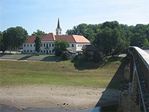 SisakPlaceSisak is a town in central Croatia at the confluence of the Kupa and the Sava, on the site of Roman Siscia, an important city and mint of Pannonia.
 Sisavang VongPersonSisavang Vong was King of Luang Phrabang from 1904 under French protection and King of Laos from 1946 until his death in 1959.
 SisebutPersonSisebut was king of the Visigoths from 612 to 621.
- SisibePeople / groupThe Sisibe were the ruling lineage of Bundu, the Muslim state between the Senegal and Falémé rivers, descended from its founder Malik Sy, who settled there around 1690.
- SisodiaPeople / groupThe Sisodia are a Rajput clan that ruled the kingdom of Mewar, with capitals at Chittorgarh and later Udaipur, from the 14th century until 1947.
 Sisodia dynastyPeople / groupThe Sisodias are a Rajput clan, a branch of the Guhila dynasty named after the village of Sisoda, that ruled Mewar from the recovery of Chittor by Hammir Singh around…
 SisophonPlaceSisophon is a town in north-western Cambodia, the capital of Banteay Meanchey Province, on the main road and railway between Phnom Penh and the Thai border.
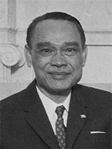 Sisowath Sirik MatakPersonSisowath Sirik Matak was a Cambodian prince and politician of the Sisowath branch of the royal family and a cousin of Norodom Sihanouk.
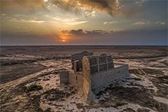 SistanPlaceSistan is a region in the basin of the Helmand river and Lake Hamun, divided today between south-eastern Iran and south-western Afghanistan.
 SisteronPlaceSisteron is a town in the Alpes-de-Haute-Provence department of France, at a narrow gap where the Durance cuts through the mountains between Provence and the Dauphiné.
 Sistine ChapelWork / monumentThe Sistine Chapel is a chapel in the Apostolic Palace in Vatican City, built between 1473 and 1481 for Pope Sixtus IV, after whom it is named.
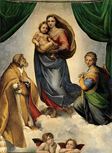 Sistine MadonnaWork / monumentThe Sistine Madonna is an oil painting by Raphael, made about 1512–1513 for the church of San Sisto in Piacenza.
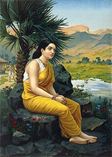 SitaReligion / ideaSita is the heroine of the Ramayana, wife of Rama and daughter of King Janaka of Videha, who in the epic found her in a furrow while ploughing.
- SitalcesPersonSitalces was king of the Odrysian Kingdom of Thrace from about 431 to 424 BCE, the son of its founder Teres I.
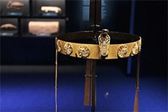 SithathoriunetPersonSithathoriunet was an Egyptian princess of the Twelfth Dynasty, probably a daughter of Senusret II, buried near his pyramid at el-Lahun.
 SitkaPlaceSitka is a city on Baranof Island in south-east Alaska.
- SitobuPersonSitobu is remembered in Dagomba tradition as a son of Na Gbewaa, founder of the Mamprugu kingdom, and as the ancestor of the royal house of Dagbon in present-day…
- Sitric SilkbeardPersonSitric Silkbeard was a Norse-Gaelic king of Dublin from about 989 to 1036.
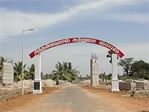 SittanavasalPlaceSittanavasal is a village in Pudukkottai district, Tamil Nadu, India, known for its rock-cut Jain cave temple, the Arivar Koil.
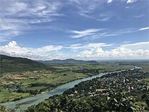 Sittaung RiverPlaceThe Sittaung is a river of central and southern Myanmar, flowing south for about 420 km between the Bago Yoma hills and the Shan Plateau into the Gulf of Martaban.
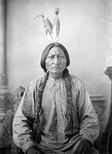 Sitting BullPersonSitting Bull was a Hunkpapa Lakota holy man and leader who united Lakota and Cheyenne bands against American expansion onto the Great Plains.
- Siunia dynastyPeople / groupThe Siunia were an ancient Armenian princely family that ruled the province of Syunik from antiquity into the Middle Ages.
 Siva SinghaPersonSiva Singha was king of the Ahom kingdom of Assam from 1714 to 1744, the eldest son of Rudra Singha.
 SivadolWork / monumentThe Sivadol is a Hindu temple dedicated to Shiva in Sivasagar, Assam, built in 1734 by Ambika, queen of the Ahom king Siva Singha, on the bank of the great Sivasagar…
 SivasPlaceSivas is a city in central Anatolia, Turkey, on the upper Kızılırmak.
 SivasagarPlaceSivasagar, formerly Sibsagar, is a town in Upper Assam, India, and the headquarters of Sivasagar district.
 SiwanaPlaceSiwana is a town in western Rajasthan, India, dominated by a hill fort on the edge of the Thar Desert.
 Siward, Earl of NorthumbriaPersonSiward was an earl of Scandinavian origin who governed York under Cnut and his successors from the 1030s.
- Siwe-Palar-KhuppakPersonSiwe-Palar-Khuppak was a ruler of Elam around 1778 BCE during the Sukkalmah period.
- Six Articles (1832)Work / monumentThe Six Articles were repressive measures adopted by the Federal Assembly of the German Confederation on 28 June 1832, after the Hambach Festival.
 Six Nations of the Grand RiverPlaceSix Nations of the Grand River is the most populous First Nations reserve in Canada, near Brantford in southern Ontario, home to members of all six nations of the…
- Six-Day WarWar · 1967The Six-Day War was the war of 5-10 June 1967 in which Israel, striking first after weeks of crisis, defeated Egypt, Jordan and Syria and captured the Sinai Peninsula…
- Sixteen KingdomsReligion / ideaThe Sixteen Kingdoms was a period of Chinese history in the fourth and fifth centuries CE, when northern China was divided among many short-lived states, many founded…
 Sixteen PrefecturesPlaceThe Sixteen Prefectures were a frontier region of northern China, around modern Beijing and Datong, ceded to the Khitan Liao dynasty by Shi Jingtang in 938 in return…
 Sixth CrusadeWar · 1228–1229The Sixth Crusade (1228–1229) was led by the Holy Roman Emperor Frederick II, who sailed to the Holy Land while excommunicated by Pope Gregory IX.
 Sixth Dynasty of EgyptStateThe Sixth Dynasty of Egypt was the last major dynasty of the Old Kingdom, with kings including Teti, Pepi I, Merenre and Pepi II, whose reign was among the longest in…
 Sixth National Congress of the Communist Party of VietnamEventThe Sixth National Congress of the Communist Party of Vietnam met in Hanoi from 15 to 18 December 1986 and elected Nguyen Van Linh as general secretary.
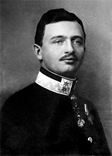 Sixtus AffairPeace · 1917–1918The Sixtus Affair was the secret attempt by Emperor Karl I of Austria-Hungary in 1917 to make a separate peace with France, using his brother-in-law Prince Sixtus of…
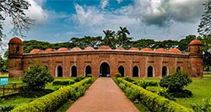 Sixty Dome MosqueWork / monumentThe Sixty Dome Mosque is a 15th-century brick mosque at Bagerhat in south-western Bangladesh, attributed to the frontier magnate Khan Jahan Ali during the Bengal…
- Siyaj K'ak'PersonSiyaj K'ak' was a war leader linked to Teotihuacan whose arrival in the Maya lowlands in 378 CE marked the 'entrada'.
- SiyakaPersonSiyaka II, also called Harsha, was a Paramara king of Malwa in central India who turned his family from Rashtrakuta vassals into an independent power.
- Siyam NikayaInstitutionThe Siyam Nikaya is the largest order of Buddhist monks in Sri Lanka, founded in 1753 when King Kirti Sri Rajasinha of Kandy invited monks from Ayutthaya, led by Upali…
- SiyannuPlaceSiyannu was a small Late Bronze Age kingdom on the Syrian coast south of Ugarit, around modern Tell Siyannu near Jableh.
- SiyasatnamaWork / monumentThe Siyasatnama, or Book of Government, is a Persian treatise on statecraft written by Nizam al-Mulk, the vizier of the Seljuk Empire.
 SiyavashPersonSiyavash is a legendary prince of Iranian tradition, son of King Kay Kavus, whose story is told in Ferdowsi's Shahnameh.
- Sizzo III of SchwarzburgPersonSizzo III of Schwarzburg was a Thuringian nobleman who first called himself count of Schwarzburg in 1123, after the castle on the Schwarza river in the Thuringian Forest.
 SkagerrakPlaceThe Skagerrak is a strait between southern Norway, south-western Sweden and the Jutland peninsula of Denmark, linking the North Sea with the Kattegat and the Baltic.
 SkandaguptaPersonSkandagupta was an emperor of the Gupta Empire who reigned c. 455–467 CE.
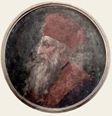 SkanderbegPersonSkanderbeg, born Gjergj Kastrioti, was an Albanian lord who served the Ottomans and in 1443 broke with them and took Krujë.
 SkarduPlaceSkardu is the main town of Baltistan in Gilgit-Baltistan, northern Pakistan, in a broad valley of the Indus near its confluence with the Shigar river.