Encyclopedia: V
561 entries under V · page 3 of 6: Velvet Revolution – Victory Stele of Naram-Sin
 Velvet RevolutionRevolution · 1989The Velvet Revolution was the peaceful overthrow of communist rule in Czechoslovakia in November and December 1989.
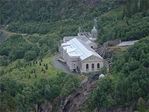 VemorkWork / monumentVemork is a hydroelectric power station near Rjukan in Telemark, Norway, opened in 1911.
- VemulawadaPlaceVemulawada is a temple town in Telangana, India, near Karimnagar.
- VenPlaceVen is a small island in the Øresund between Zealand and Scania, part of Sweden since the Treaty of Roskilde of 1658.
- Venda peoplePeople / groupThe Venda (VhaVenda) are a Bantu-speaking people of the Soutpansberg mountains and the land north to the Limpopo, in South Africa's Limpopo province and parts of…
 VendelPlaceVendel is a parish in Uppland, Sweden, where rich boat graves excavated from 1881 held helmets, weapons and animal sacrifices.
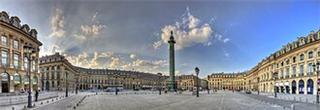 Vendôme ColumnWork / monumentThe Vendôme Column is a monumental column in the Place Vendôme in Paris, erected in 1806–1810 on Napoleon's orders to commemorate the victory at Austerlitz.
- VenetiaPlaceVenetia is a historical region of north-eastern Italy centred on Venice.
 Venetian DalmatiaStateVenetian Dalmatia was the Republic of Venice's possession on the eastern Adriatic coast, held from 1420, when Venice bought the Hungarian claim and took over most…
- VeneticTermVenetic is an extinct Indo-European language spoken by the ancient Veneti in north-eastern Italy, recorded in some 300 inscriptions from about the 6th to the 1st…
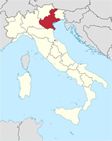 VenetoPlaceVeneto is a region of north-eastern Italy, with its capital at Venice, that also includes Padua, Verona, Vicenza and Treviso.
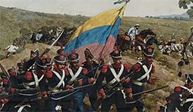 Venezuelan War of IndependenceWar · 1810–1823The Venezuelan War of Independence was the struggle of 1810–1823 in which Venezuelan patriots, led above all by Simón Bolívar, fought Spanish royalist forces.
- VengiPlaceVengi is a historical region of coastal Andhra Pradesh in India, between the deltas of the Krishna and Godavari rivers, named after its old capital near modern Eluru.
 VenicePlaceVenice is a city in north-eastern Italy built on islands in a lagoon, which became a major maritime and commercial republic in the medieval period.
- Venice CommissionInstitutionThe Venice Commission, formally the European Commission for Democracy through Law, is an advisory body of the Council of Europe founded in 1990.
- Venice ProtocolTreaty · 1921The Venice Protocol was an agreement signed on 13 October 1921 between Austria and Hungary under Italian mediation to settle the dispute over Burgenland.
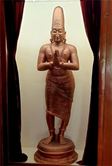 Venkatapati RayaPersonVenkatapati Raya, or Venkata II, was emperor of Vijayanagara of the Aravidu dynasty from 1586 to 1614.
 VenloPlaceVenlo is a city in the province of Limburg in the south-eastern Netherlands, on the Meuse close to the German border.
 Venta BelgarumPlaceVenta Belgarum was the Roman town at Winchester in Hampshire, capital of the civitas of the Belgae in Roman Britain.
 Venta IcenorumPlaceVenta Icenorum was the Roman administrative centre of the Iceni, at Caistor St Edmund, south of Norwich in Norfolk, England.
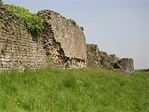 Venta SilurumPlaceVenta Silurum was the Roman town at Caerwent in south-east Wales, capital of the civitas of the Silures after their conquest in the 70s CE.
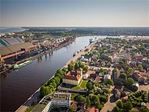 VentspilsPlaceVentspils, German Windau, is a port city at the mouth of the Venta river in western Latvia.
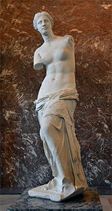 Venus de MiloWork / monumentThe Venus de Milo, or Aphrodite of Milos, is an ancient Greek marble statue of a goddess, usually identified as Aphrodite, found on the island of Melos in 1820.
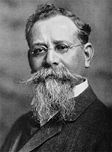 Venustiano CarranzaPersonVenustiano Carranza was a Mexican politician who led the Constitutionalist movement against Victoriano Huerta from 1913 and was president from 1917 to 1920.
 VenutiusPersonVenutius was a leader of the Brigantes of northern Britain and consort of Queen Cartimandua.
- VepsPeople / groupThe Veps are a small Finnic people of north-western Russia, living between Lakes Ladoga, Onega and Beloye.
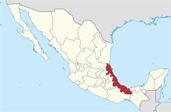 VeracruzPlaceVeracruz is a state of Mexico stretching along the Gulf of Mexico coast between Tamaulipas and Tabasco.
 Veracruz (city)PlaceVeracruz is the principal Gulf of Mexico port of Mexico, in the state of the same name.
 Veraguas ProvincePlaceVeraguas is a province of Panama, the only one with coasts on both the Caribbean and the Pacific, with its capital at Santiago de Veraguas.
- VerapazPlaceVerapaz is a mountainous region of north-central Guatemala, today divided into the departments of Alta Verapaz and Baja Verapaz.
- VerbundbriefWork / monumentThe Verbundbrief was the constitution of the city of Cologne adopted in 1396 after the overthrow of the patrician government.
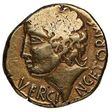 VercingetorixPersonVercingetorix was a chief of the Arverni who in 52 BCE united most of the Gauls in revolt against Julius Caesar.
- VerdenPlaceVerden is a town in Lower Saxony, northern Germany, historically the seat of a prince-bishopric.
 VerdunPlaceVerdun is a town on the Meuse in north-eastern France, the seat of a bishop since late Roman times.
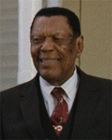 Vere BirdPersonVere Cornwall Bird was a trade unionist and politician who led Antigua from the 1950s.
- VereyaPlaceVereya is a small town in Moscow Oblast, Russia, on the Protva river south-west of Moscow.
- VerhansungTermVerhansung was the expulsion of a town from the Hanseatic League, the gravest sanction the Hansa could impose on a disobedient member.
 VericaPersonVerica was a king of the Atrebates in southern Britain in the early 1st century CE, the last of the sons of Commius named on coins.
 Verkhovna RadaInstitutionThe Verkhovna Rada, or Supreme Council, is the parliament of Ukraine, a single chamber of 450 deputies.
 VerminaPersonVermina was a Numidian prince, son of Syphax, king of the Masaesyli.
 VeroliPlaceVeroli, ancient Verulae, is a hill town of the Hernici in southern Lazio, Italy, above the Sacco valley.
- Verona ManifestoWork / monumentThe Verona Manifesto was the programme adopted by the Republican Fascist Party at its congress in Verona in November 1943, after Mussolini's restoration as head of the…
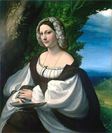 Veronica GambaraPersonVeronica Gambara was an Italian Renaissance poet and stateswoman from Brescia.
- VerritusPersonVerritus was a leader of the Frisii in the mid-1st century CE, named by Tacitus together with Malorix.
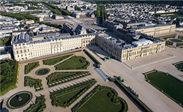 VersaillesPlaceVersailles is a town near Paris and the site of the vast palace built by Louis XIV, which became the seat of the French court and a symbol of absolute monarchy.
 VertumnusReligion / ideaVertumnus was a god of the changing seasons, gardens and fruit, of Etruscan origin and often identified with Voltumna, chief god of the Etruscan league, whose sanctuary…
 VerulamiumPlaceVerulamium was a Roman town in Britain beside modern St Albans, grown from the Iron Age settlement of Verlamion, a centre of the Catuvellauni.
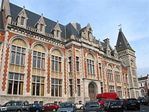 VerviersPlaceVerviers is a city in the province of Liège in eastern Belgium, on the Vesdre.
 VesdrePlaceThe Vesdre is a river of eastern Belgium, about 70 km long, rising in the High Fens near the German border and joining the Ourthe near Liège.
 Vespasiano GonzagaPersonVespasiano Gonzaga was an Italian nobleman, soldier and patron from a cadet branch of the Gonzaga family, who served Philip II of Spain as a military engineer and as…
 Vet RiverPlaceThe Vet River is a river of the Free State province of South Africa and a tributary of the Vaal.
 VetkopersPeople / groupThe Vetkopers were one of two rival factions in late medieval Frisia, opposed to the Schieringers.
 VexinPlaceThe Vexin is a historical region of northern France between the Seine, the Oise and the Epte.
- Vị XuyênPlaceVị Xuyên is a mountainous area of Hà Giang in the far north of Vietnam, on the border with China's Yunnan province, long administered as a district.
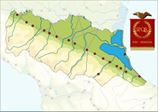 Via AemiliaWork / monumentThe Via Aemilia was a Roman road built in 187 BCE by the consul Marcus Aemilius Lepidus, running in a straight line along the northern edge of the Apennines from…
 Via AugustaWork / monumentThe Via Augusta was the longest Roman road in Hispania, running about 1,500 kilometres from the Pyrenees along the Mediterranean coast through Tarraco and Valentia and…
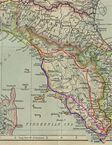 Via CassiaWork / monumentThe Via Cassia was a Roman road running north from Rome through Etruria, past Sutri, Viterbo and Arezzo to Florence and beyond.
 Via EgnatiaWork / monumentThe Via Egnatia was a Roman road built in the later 2nd century BCE by the proconsul Gnaeus Egnatius after Macedonia became a province.
 Via FrancigenaWork / monumentThe Via Francigena was the main medieval road and pilgrim route from France and northern Europe across the Alps to Rome, described in the itinerary of Archbishop…
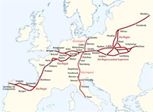 Via RegiaWork / monumentThe Via Regia, or royal road, was a major medieval trade route across central Europe, running from the Rhineland through Frankfurt, Erfurt and Leipzig to Görlitz…
 Via SalariaWork / monumentThe Via Salaria was an ancient road running north-east from Rome through Sabine territory and across the Apennines to the Adriatic coast near Castrum Truentinum.
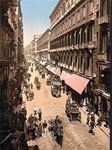 Via ToledoPlaceVia Toledo is one of the main streets of Naples, laid out in 1536 by the Spanish viceroy Pedro de Toledo along the line of the old western walls.
- Vibhaji AjojiPersonVibhaji Ajoji was the founder of Rajkot State in the Kathiawar peninsula of western India.
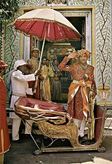 Vibhuti Narayan SinghPersonVibhuti Narayan Singh was the last ruling Maharaja of Benares, succeeding in 1939 while still a boy.
 VibiliusPersonVibilius was a king of the Hermunduri in the 1st century CE, known from the historian Tacitus.
 Vibo ValentiaPlaceVibo Valentia is a town in Calabria, southern Italy, on the site of Hipponion, a Greek colony founded by Locri Epizephyrii in the 7th century BCE.
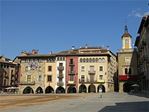 VicPlaceVic is a city in central Catalonia, north-eastern Spain, and the capital of the comarca of Osona.
 Vic-le-ComtePlaceVic-le-Comte is a small town in the Puy-de-Dôme department of Auvergne, France, south-east of Clermont-Ferrand.
 Vic-sur-SeillePlaceVic-sur-Seille is a small town in Lorraine, north-eastern France.
- Vicente ÁlvarezPersonVicente Álvarez was a Filipino revolutionary general from Zamboanga who led the rising against the Spanish garrison there in 1899.
 Vicente Cerna y CernaPersonVicente Cerna y Cerna (1815–1885) was a Guatemalan general and conservative politician who succeeded Rafael Carrera as president in 1865.
 Vicente FilísolaPersonVicente Filísola (1789–1850) was an Italian-born soldier in Spanish and then Mexican service.
 Vicente FoxPersonVicente Fox is a Mexican businessman and politician who was president of Mexico from 2000 to 2006.
 Vicente GuerreroPersonVicente Guerrero was a leader of the Mexican War of Independence who kept up guerrilla resistance in the south after 1815.
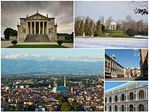 VicenzaPlaceVicenza is a city in the Veneto, north-eastern Italy, between the Berici Hills and the Alps.
 Viceroy of IndiaInstitutionA viceroy is an official who governs a country or province in the name of a monarch.
- Viceroy of KushInstitutionThe Viceroy of Kush, also called the King's Son of Kush, was the official who governed Nubia on behalf of the pharaoh during Egypt's New Kingdom.
 Viceroy of Portuguese IndiaInstitutionThe Viceroy of Portuguese India was the governor of the Estado da Índia, the Portuguese colonial administration in Asia, based at Goa from the early sixteenth century.
 Viceroyalty of New SpainInstitutionThe Viceroyalty of New Spain was the administrative unit of the Spanish Empire covering Mexico, Central America, the Caribbean, parts of what is now the United States…
 Viceroyalty of PeruInstitutionThe Viceroyalty of Peru was the administrative unit of the Spanish Empire created in 1542 to govern most of Spanish South America, with its capital at Lima.
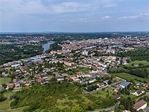 VichyPlaceVichy is a spa town on the Allier in the Auvergne, central France, known since Roman times for its mineral springs.
 Victor Amadeus I, Duke of SavoyPersonVictor Amadeus I was Duke of Savoy from 1630 to 1637, son of Charles Emmanuel I.
 Victor Amadeus IIPersonVictor Amadeus II was duke of Savoy from 1675.
 Victor Amadeus III of SardiniaPersonVictor Amadeus III was King of Sardinia and Duke of Savoy from 1773 to 1796, succeeding his father Charles Emmanuel III.
 Victor Emmanuel I of SardiniaPersonVictor Emmanuel I was King of Sardinia from 1802 to 1821.
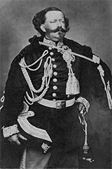 Victor Emmanuel IIPersonVictor Emmanuel II was King of Sardinia from 1849 and the first King of Italy from 1861.
 Victor Emmanuel IIIPersonVictor Emmanuel III was King of Italy from 1900 to 1946.
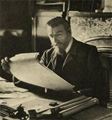 Victor HortaPersonVictor Horta was a Belgian architect and one of the founders of Art Nouveau architecture.
 Victor HugoPersonVictor Hugo was a French poet, novelist and dramatist, a leading figure of Romanticism and author of Notre-Dame de Paris and Les Misérables.
 Victor HuguesPersonVictor Hugues was a French revolutionary commissioner who in 1794 recaptured Guadeloupe from the British and enforced the National Convention's abolition of slavery…
- Victor LiebermanPersonVictor Lieberman is an American historian of South-East Asia at the University of Michigan.
 Víctor Paz EstenssoroPersonVíctor Paz Estenssoro was a Bolivian statesman who founded the Revolutionary Nationalist Movement (MNR) and served as president four times.
 Víctor Raúl Haya de la TorrePersonVíctor Raúl Haya de la Torre was a Peruvian political leader who founded APRA in 1924 as a continental anti-imperialist movement and led it for more than half a century.
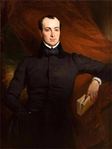 Victor SchoelcherPersonVictor Schoelcher was a French politician and journalist who led the campaign to abolish slavery in the French colonies.
- Victor TurnerPersonVictor Turner was a British cultural anthropologist who studied the Ndembu people of north-western Zambia in the 1950s.
 Victoria and Albert MuseumInstitutionThe Victoria and Albert Museum in London is the world's largest museum of decorative arts and design, founded in 1852 after the Great Exhibition and given its present…
 Victoriano HuertaPersonVictoriano Huerta was a Mexican general who seized power in February 1913 in a coup against President Francisco Madero, who was then murdered.
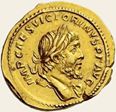 VictorinusPersonVictorinus was emperor of the breakaway Gallic Empire from 269 to 271.
- Victory Stela of PiyeWork / monumentThe Victory Stela of Piye is a granite stela set up at Jebel Barkal in Nubia by the Kushite king Piye around 727 BCE.
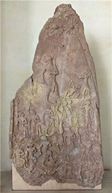 Victory Stele of Naram-SinWork / monumentThe Victory Stele of Naram-Sin is a carved stone monument celebrating the Akkadian king Naram-Sin's victory over the Lullubi mountain people, showing the king ascending…