Encyclopedia: V
561 entries under V · page 5 of 6: Vipasca – Volksgemeinschaft
 VipascaPlaceVipasca was a Roman mining settlement in Lusitania, at modern Aljustrel in southern Portugal, where copper and silver were extracted.
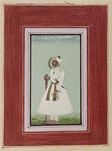 Vir Singh DeoPersonVir Singh Deo, also written Bir Singh Deo, was the Bundela Rajput ruler of Orchha from 1605 to 1627.
- Vira AlakeshvaraPersonVira Alakeshvara was the leading figure of the powerful Alagakkonara family in Sri Lanka in the Gampola period.
- Vira SomeshwaraPersonVira Someshvara was king of the Hoysala dynasty from 1235 to 1263, the son of Narasimha II.
- ViracochaReligion / ideaViracocha was the creator god of the Inca and other Andean peoples, believed to have risen from Lake Titicaca and made the sun, moon, stars and the first humans.
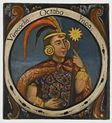 Viracocha IncaPersonViracocha Inca was the eighth ruler of the Kingdom of Cusco in Inca tradition.
 ViracochapampaPlaceViracochapampa is an archaeological site near Huamachuco in the northern highlands of Peru, built by the Wari Empire around 600 to 700 CE.
- ViradhavalaPersonViradhavala was a Vaghela chief of Gujarat, son of Lavanaprasada, who with his father held real power under the last Chaulukya kings in the early 13th century.
- VirapurushadattaPersonVirapurushadatta was a king of the Ikshvaku dynasty of the lower Krishna valley in India in the 3rd century CE, the son of its founder Vasishthiputra Chamtamula.
 Virarajendra CholaPersonVirarajendra Chola was a king of the Chola dynasty of south India, ruling from 1063 to 1070, a son of Rajendra Chola I.
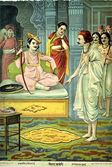 VirataPersonVirata is a king of the Matsya kingdom in the Indian epic Mahabharata.
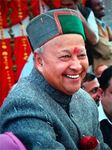 Virbhadra SinghPersonVirbhadra Singh was the last Raja of the princely state of Bashahr in the western Himalaya and an Indian National Congress politician.
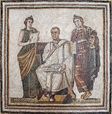 VirgilPersonVirgil was a Roman poet of the Augustan age, author of the Eclogues, the Georgics and the Aeneid, the epic of Rome's legendary Trojan origins.
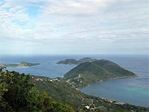 Virgin GordaPlaceVirgin Gorda is the third-largest of the British Virgin Islands, east of Tortola.
 Virgin Lands campaignEventThe Virgin Lands campaign was a Soviet programme launched by Nikita Khrushchev in 1954 to ease grain shortages by ploughing up unused steppe, mainly in northern…
 VirginiaPlaceVirginia is a region on the Atlantic coast of North America, named in honour of Queen Elizabeth I.
- Virginia Declaration of RightsWork / monumentThe Virginia Declaration of Rights was adopted by the Virginia Convention on 12 June 1776, drafted mainly by George Mason.
 ViriathusPersonViriathus was the leader of the Lusitanians in their war against Rome from about 147 to 139 BCE.
- ViridovixPersonViridovix was a chief of the Unelli of the Cotentin peninsula in Gaul who led a coalition against Julius Caesar in 56 BCE, joined by the Eburovices and Lexovii.
- Virius LupusPersonLucius Virius Lupus was Roman governor of Britain from about 197, appointed by Septimius Severus after the defeat of the usurper Clodius Albinus.
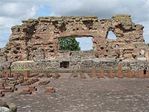 Viroconium CornoviorumPlaceViroconium Cornoviorum, at Wroxeter in Shropshire, England, was the capital of the Cornovii in Roman Britain and one of the largest Roman towns in the province.
 ViroviticaPlaceVirovitica is a town in northern Croatia near the Drava river and the Hungarian border, in western Slavonia.
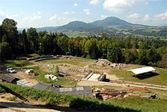 VirunumPlaceVirunum was the capital of the Roman province of Noricum, on the Zollfeld plain in Carinthia, Austria.
- Virupaksha Temple, PattadakalWork / monumentThe Virupaksha Temple at Pattadakal in Karnataka, India, is a Hindu temple dedicated to Shiva, built around 740 by Queen Lokamahadevi to commemorate the victory of her…
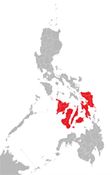 VisayasPlaceThe Visayas are the central group of islands of the Philippines, between Luzon and Mindanao, including Panay, Negros, Cebu, Bohol, Leyte and Samar.
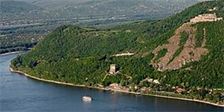 VisegrádPlaceVisegrád is a small town in northern Hungary on the bend of the Danube.
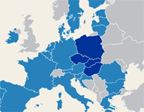 Visegrád GroupInstitutionThe Visegrád Group is a regional alliance of Czechia, Hungary, Poland and Slovakia, founded at Visegrád in Hungary in February 1991 by Czechoslovakia, Hungary and Poland.
- Višeslav of SerbiaPersonVišeslav is the earliest Serbian ruler known by name, recorded by the Byzantine emperor Constantine VII Porphyrogennetos as a descendant of the leader who brought the…
- VishayaInstitutionA vishaya was an administrative district in the Gupta Empire and other early Indian states.
- VishayapatiInstitutionA vishayapati was the official in charge of a vishaya, or district, in the Gupta Empire.
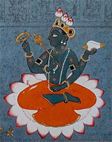 VishnuReligion / ideaVishnu is one of the principal gods of Hinduism, worshipped as the preserver of the universe and, in Vaishnavism, as the supreme being.
- Vishnugopa of KanchiPersonVishnugopa of Kanchi was a Pallava king of Kanchipuram in the mid-4th century.
- VishnuguptaPersonVishnugupta was the last recognised emperor of the Gupta dynasty, ruling around 540–550 CE.
 VishnuvardhanaPersonVishnuvardhana was a king of the Hoysala Empire in southern India, ruling from about 1108 to 1152.
 Vishwanatha NayakPersonVishwanatha Nayak was the founder of the Madurai Nayak dynasty.
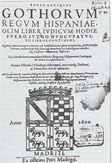 Visigothic CodeWork / monumentThe Visigothic Code, or Liber Iudiciorum, is the law code of the Visigothic kingdom of Hispania, promulgated by King Recceswinth in 654 and revised by Erwig in 681.
- VisigothsPeople / groupThe Visigoths were a Gothic Germanic people who entered the Roman Empire in the late fourth century.
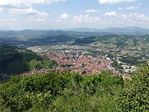 VisokoPlaceVisoko is a town in central Bosnia and Herzegovina on the Bosna river, north-west of Sarajevo.
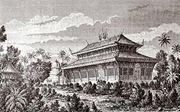 VisounPersonVisoun was king of Lan Xang from 1500 to 1520.
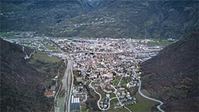 VispPlaceVisp is a town in the canton of Valais, Switzerland, at the confluence of the Vispa with the Rhône, at the entrance to the valleys leading to Zermatt and Saas-Fee.
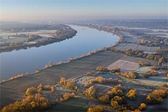 VistulaPlaceThe Vistula is the longest river of Poland, about 1,050 kilometres long, rising in the Silesian Beskids and flowing past Kraków and Warsaw to the Baltic near Gdańsk.
 Vistula LagoonPlaceThe Vistula Lagoon is a brackish lagoon on the southern Baltic coast, separated from the Gulf of Gdańsk by the Vistula Spit and now divided between Poland and Russia.
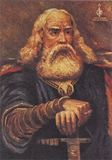 VisvaldisPersonVisvaldis, called Vissewalde in German sources, was the prince of Jersika on the Daugava in present-day Latvia in the early 13th century.
 Vita Karoli MagniWork / monumentThe Vita Karoli Magni, or Life of Charlemagne, is a biography of the Frankish emperor written by his courtier Einhard, probably in the 820s.
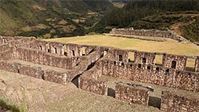 VitcosPlaceVitcos is an Inca archaeological site in the Vilcabamba region of Cusco, Peru.
- VitebskPlaceVitebsk is a city in north-eastern Belarus on the Western Dvina.
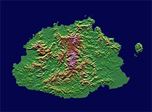 Viti LevuPlaceViti Levu is the largest island of Fiji, covering about 10,400 square kilometres and holding most of the country's population.
- Vítkovice ironworksInstitutionThe Vítkovice ironworks in Ostrava were founded in 1828 by Archduke Rudolf, archbishop of Olomouc, and were later owned by the Rothschild family.
 Vitória, Espírito SantoPlaceVitória is the capital of the Brazilian state of Espírito Santo, built mainly on an island in a bay on the Atlantic coast.
- Vittala TempleWork / monumentThe Vittala Temple is a Hindu temple at Hampi in Karnataka, dedicated to Vitthala, a form of Vishnu, and built mainly in the fifteenth and sixteenth centuries under the…
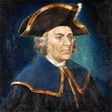 Vitus BeringPersonVitus Bering was a Danish-born navigator in Russian service who led two great expeditions to the North Pacific.
- Viva Maria uprisingRevolt · 1799The Viva Maria was a popular uprising against the French occupation of Tuscany in 1799, which began in Arezzo in May under the cry 'Viva Maria'.
- VivaraisPlaceThe Vivarais is a historical region of south-eastern France, west of the Rhône, named after its episcopal city of Viviers and largely corresponding to the modern…
- ViviPlaceVivi was the first station founded by Henry Morton Stanley in 1879 on the north bank of the lower Congo River, opposite present-day Matadi, as the base for his work for…
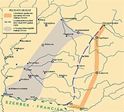 Vix NoteEventThe Vix Note was an Allied demand handed to the Hungarian government on 20 March 1919 by the French lieutenant colonel Fernand Vix.
- Vixen affairCrisis · 1836The Vixen affair was a diplomatic crisis of 1836 between Britain and Russia.
 VizierInstitutionA vizier is a high minister or chief administrator serving a ruler, a title used in many Islamic states and applied by historians to the chief officials of ancient Egypt.
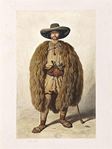 VlachsPeople / groupVlachs is a historical name, used mainly by outsiders, for the Romance-speaking peoples of south-eastern Europe, ancestors of the Romanians and Aromanians.
 Vlad the ImpalerPersonVlad III, known as Vlad the Impaler or Dracula, was voivode of Wallachia in 1448, from 1456 to 1462 and in 1476.
- VladikavkazPlaceVladikavkaz is the capital of North Ossetia–Alania, Russia, on the Terek River at the northern end of the Darial Pass.
 Vladimir II MonomakhPersonVladimir Monomakh was Prince of Pereyaslavl and Chernigov and, from 1113, Grand Prince of Kiev.
 Vladimir LeninPersonVladimir Lenin was a Russian revolutionary who led the Bolshevik party.
 Vladimir MayakovskyPersonVladimir Mayakovsky was a Russian poet, playwright and artist and a leading figure of Russian Futurism.
 Vladimír MečiarPersonVladimír Mečiar is a Slovak politician who led the Movement for a Democratic Slovakia and was prime minister of Slovakia three times between 1990 and 1998.
 Vladimir MinorskyPersonVladimir Minorsky was a Russian-born orientalist and historian of Iran, the Caucasus and Central Asia.
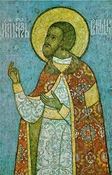 Vladimir the BoldPersonVladimir the Bold, Prince of Serpukhov and Borovsk, was a cousin of Grand Prince Dmitry Donskoy of Moscow and his leading general.
 Vladimir the GreatPersonVladimir the Great was Grand Prince of Kiev from about 980 to 1015.
- Vladimir Yaroslavich of GaliciaPersonVladimir Yaroslavich was Prince of Galicia, son of Yaroslav Osmomysl.
- Vladimir YudovskyPersonVladimir Yudovsky was a Bolshevik revolutionary in Odessa.
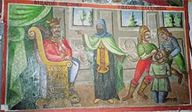 Vladimir-RasatePersonVladimir-Rasate was ruler of Bulgaria from 889 to 893, the eldest son of Boris I.
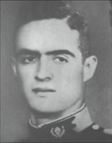 Vladimiro MontesinosPersonVladimiro Montesinos was the de facto head of Peru's National Intelligence Service and the most powerful adviser of President Alberto Fujimori in the 1990s.
- Vladislaus II of BohemiaPersonVladislaus II of Bohemia was Duke of Bohemia from 1140 and its second king from 1158, when Frederick Barbarossa raised him to royal rank for supporting the emperor's…
 Vladislaus II of HungaryPersonVladislaus II of Hungary, of the Jagiellonian dynasty, was elected King of Bohemia in 1471 and King of Hungary in 1490.
 Vladislaus III, Duke of BohemiaPersonVladislaus Henry, a Přemyslid prince, was briefly Duke of Bohemia in 1197 as Vladislaus III before giving up the throne to his brother Ottokar I in return for Moravia.
 Vladislav II of SerbiaPersonVladislav II was the son of King Stefan Dragutin of Serbia, who ruled the northern lands later called the Kingdom of Syrmia.
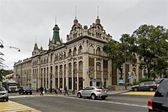 VladivostokPlaceVladivostok is a Russian port city on the Sea of Japan, near the borders with China and North Korea.
 Vladko MačekPersonVladko Maček was leader of the Croatian Peasant Party after the assassination of Stjepan Radić in 1928.
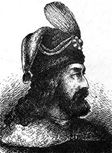 VlastimirPersonVlastimir was Prince of Serbia in the first half of the 9th century and the ruler who gave his name to the Vlastimirović dynasty.
 VliePlaceThe Vlie is a tidal channel between the West Frisian islands of Vlieland and Terschelling in the Netherlands, linking the Wadden Sea with the North Sea.
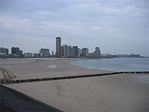 VlissingenPlaceVlissingen (Flushing in English) is a port city on the former island of Walcheren in the Dutch province of Zeeland, at the mouth of the Western Scheldt.
 VlorëPlaceVlorë, historically Valona, is a port city in south-western Albania on the Bay of Vlorë.
 VltavaPlaceThe Vltava is the longest river of the Czech Republic, rising in the Bohemian Forest and flowing north through České Budějovice and Prague to join the Elbe at Mělník.
 Vo Nguyen GiapPersonVo Nguyen Giap was a Vietnamese military commander, the principal general of the Viet Minh and later of North Vietnam.
 Vocabolario degli Accademici della CruscaWork / monumentThe Vocabolario degli Accademici della Crusca was the dictionary of the Italian language published in Venice in 1612 by the Accademia della Crusca of Florence.
- VoccioPersonVoccio was a king of Noricum in the mid-1st century BCE, the only Norican ruler known by name from Roman writers.
 VogelsbergPlaceThe Vogelsberg is a range of low mountains in central Hesse, Germany, the eroded remains of a large Miocene volcano and one of the biggest basalt areas in Central Europe.
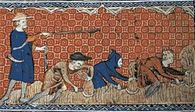 VogtTermVogt (plural Vögte), from the Latin advocatus, was a German title for an official who protected and represented church lands and later, more generally, for a lord's or…
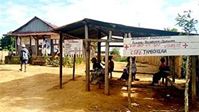 VohipenoPlaceVohipeno is a town in south-eastern Madagascar, on the Matitana river near the Indian Ocean coast.
 Vojislav KoštunicaPersonVojislav Koštunica is a Serbian lawyer and politician who defeated Slobodan Milošević in the Yugoslav presidential election of September 2000; Milošević's refusal to…
 VojvodinaPlaceVojvodina is an autonomous province of northern Serbia, covering Bačka, the Serbian part of the Banat and most of Srem, with its capital at Novi Sad.
- VolcaePeople / groupThe Volcae were a Celtic people known in ancient sources from the 3rd century BCE in southern Gaul, where their two branches, the Arecomici around Nîmes and the…
 VolgaPlaceThe Volga is the longest river in Europe, flowing through central Russia to the Caspian Sea.
 Volga GermansPeople / groupThe Volga Germans were ethnic Germans who settled along the lower Volga in Russia from the 1760s, invited by Catherine the Great with promises of land and religious…
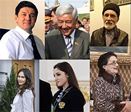 Volga TatarsPeople / groupThe Volga Tatars are a Turkic people of the middle Volga and Ural regions of Russia, most of whom live in Tatarstan and neighbouring republics; they are the largest…
- Volga trade routeTermThe Volga trade route was a network of river and portage routes linking Scandinavia and the Baltic with the Caspian Sea and the Islamic world via the Volga River in the…
- VolgogradPlaceVolgograd is a city on the west bank of the lower Volga in southern Russia, founded as the fortress of Tsaritsyn in 1589.
 VolhyniaPlaceVolhynia is a historical region in north-western Ukraine.
 VolinePersonVoline, born Vsevolod Mikhailovich Eikhenbaum, was a Russian anarchist writer and activist.
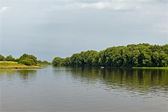 Volkhov RiverPlaceThe Volkhov is a river in north-western Russia that flows about 224 kilometres north from Lake Ilmen to Lake Ladoga.
- VolksgemeinschaftReligion / ideaVolksgemeinschaft, or 'people's community', was the Nazi ideal of a united German nation standing above class, religion and party.