Encyclopedia: A
2,700 entries under A · page 25 of 27: Assinie – Auch
- AssiniePlaceAssinie is a coastal town in south-eastern Ivory Coast, on the sandbar between the Aby lagoon and the Gulf of Guinea.
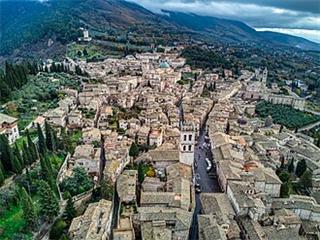 AssisiPlaceAssisi is a hill town in Umbria, central Italy, the birthplace of Saint Francis and Saint Clare.
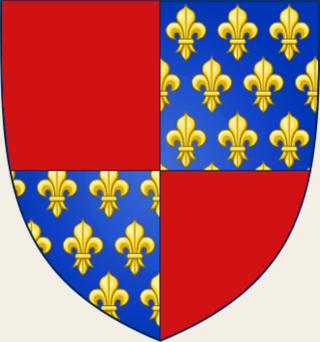 Assizes of AntiochWork / monumentThe Assizes of Antioch were the law code of the crusader Principality of Antioch, regulating feudal relations, the courts and the rights of burgesses.
 Assizes of ArianoWork / monumentThe Assizes of Ariano are a collection of laws issued by Roger II of Sicily, traditionally at an assembly in Ariano in 1140.
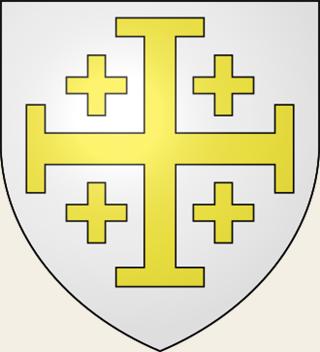 Assizes of JerusalemWork / monumentThe Assizes of Jerusalem are a collection of medieval legal treatises setting out the laws and customs of the crusader Kingdom of Jerusalem and the Kingdom of Cyprus.
- Assizes of RomaniaWork / monumentThe Assizes of Romania is a code of feudal law compiled in the Principality of Achaea in the first half of the 14th century.
 Associates of the Swiss ConfederacyTermThe Associates of the Swiss Confederacy, in German zugewandte Orte, were territories allied to the Old Swiss Confederacy without being full member cantons.
- Association of Southeast Asian NationsInstitutionThe Association of Southeast Asian Nations (ASEAN) is a regional organisation founded in Bangkok in August 1967 by Indonesia, Malaysia, the Philippines, Singapore and…
- AssurPlaceAssur was an ancient city on the Tigris in northern Iraq and the religious and original political capital of Assyria, named after its chief god.
- Assur FernándezPersonAssur Fernández was a Castilian noble whom Ramiro II of León made count of Monzón, near Palencia, around 943.
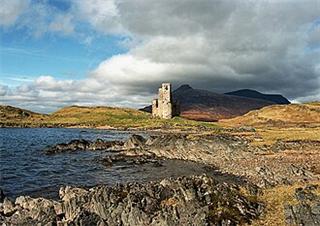 AssyntPlaceAssynt is a mountainous district on the west coast of Sutherland in the north-west Highlands of Scotland, centred on the village of Lochinver.
- Assyrian conquest of Babylon (c. 1225 BCE)Campaign · c. 1225 BCEThe Assyrian conquest of Babylon around c. 1225 BCE was the capture of the city by the Middle Assyrian king Tukulti-Ninurta I.
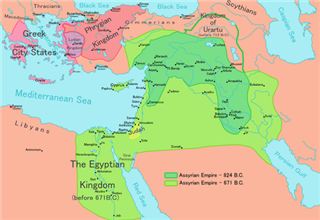 Assyrian conquest of EgyptCampaign · 671 BCEThe Assyrian conquest of Egypt was the invasion of Egypt by the Assyrian king Esarhaddon, who captured Memphis in 671 BCE and drove out the Kushite pharaoh Taharqa.
- Assyrian destruction of SusaSiege · 646 BCEThe Assyrian destruction of Susa was the sack of the Elamite capital by the army of Ashurbanipal in 646 BCE.
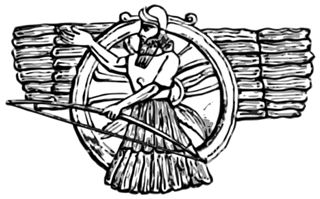 Assyrian EmpireStateThe Assyrian Empire was a Mesopotamian state centred on Assur and Nineveh on the upper Tigris.
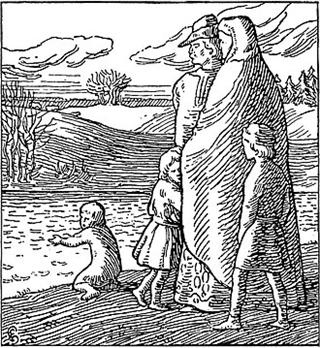 Åsta GudbrandsdatterPersonÅsta Gudbrandsdatter was a Norwegian noblewoman of the late 10th and early 11th centuries, according to the sagas.
 AstanaPlaceAstana is the capital of Kazakhstan, on the Ishim River in the north of the country.
- Astana CemeteryPlaceThe Astana Cemetery is an ancient burial ground near the ruins of Gaochang, east of Turpan in Xinjiang, China.
- Astana GedePlaceAstana Gede is a sacred site at Kawali in Ciamis Regency, West Java, Indonesia, associated with the Sundanese kingdom of Galuh.
- AstaraPlaceAstara is a town on the Caspian coast divided by the Astara river between Azerbaijan and Iran, the two halves forming separate towns.
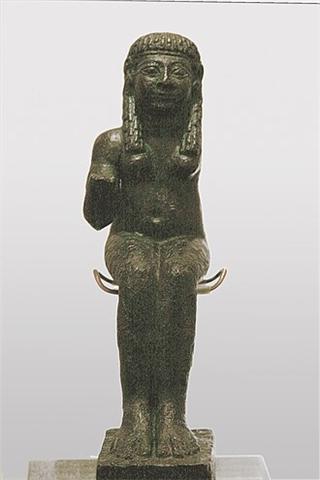 AstarteReligion / ideaAstarte was a major goddess of the ancient Levant, worshipped by Phoenicians, Canaanites and others as a deity of love, fertility and war.
 Aster RevolutionRevolution · 1918The Aster Revolution was the uprising in Budapest of 28-31 October 1918, as Austria-Hungary collapsed at the end of the First World War.
- AstorgaPlaceAstorga is a town in the province of León in north-western Spain.
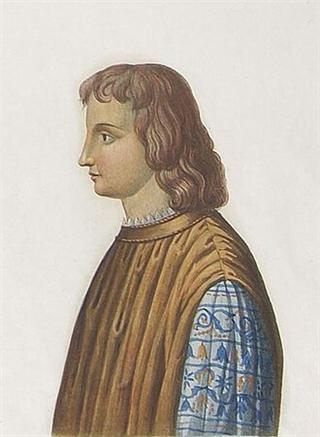 Astorre III ManfrediPersonAstorre III Manfredi was the last Manfredi lord of Faenza in Romagna.
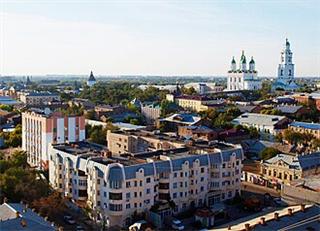 AstrakhanPlaceAstrakhan is a city on the Volga delta near the Caspian Sea, in southern Russia.
 Astrakhan KhanateStateThe Astrakhan Khanate was a Tatar state on the lower Volga, centred on the city of Astrakhan, that emerged from the break-up of the Golden Horde in the fifteenth century.
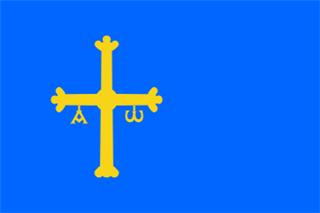 AsturiaPlaceAsturia was the Roman name for the lands of the Astures in north-western Hispania, covering modern Asturias, the province of León and neighbouring areas.
 AsturiasPlaceAsturias is an autonomous community and historic region on the Bay of Biscay coast of northern Spain, separated from the Meseta by the Cantabrian Mountains.
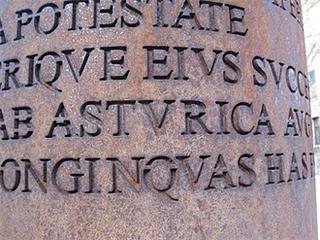 Asturica AugustaPlaceAsturica Augusta was the Roman town on the site of Astorga in north-western Spain, founded after Augustus' Cantabrian Wars in the land of the Astures.
 AstyagesPersonAstyages was the last king of the Median Empire in the sixth century BCE.
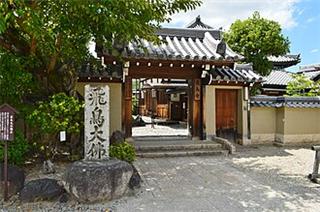 Asuka-deraWork / monumentAsuka-dera is a Buddhist temple in Asuka, Nara Prefecture, and one of the oldest in Japan.
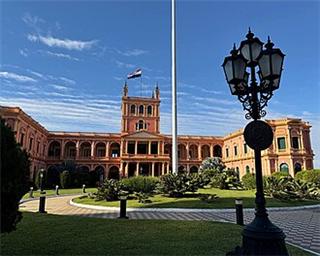 AsunciónPlaceAsunción is the capital and largest city of Paraguay, on the east bank of the Paraguay river.
- Aswan High DamWork / monumentThe Aswan High Dam is a rock-fill dam across the Nile at Aswan in southern Egypt, built between 1960 and 1970 with Soviet finance and engineering after the United…
 AsyutPlaceAsyut is a city on the Nile in Upper Egypt.
- At-TuraifWork / monumentAt-Turaif is the historic citadel district of Diriyah, near Riyadh, which served as the seat of the first Saudi state in the 18th and early 19th centuries.
 AtahualpaPersonAtahualpa was the last Sapa Inca of the Inca Empire before the Spanish conquest.
- AtaïPersonAtaï was a Kanak high chief from the region of La Foa in New Caledonia who led the great revolt of 1878 against French colonial land seizures.
- Atal Bihari VajpayeePersonAtal Bihari Vajpayee (1924–2018) was an Indian statesman and poet, a founder of the Bharatiya Janata Party and prime minister briefly in 1996 and from 1998 to 2004.
 Atala MosqueWork / monumentThe Atala Mosque is a mosque in Jaunpur, Uttar Pradesh, India, begun in the late 14th century and completed in 1408 under Ibrahim Shah Sharqi.
 Atamu TekenaPersonAtamu Tekena was ariki, or king, of Rapa Nui (Easter Island) in the late 19th century.
 AtarPlaceAtar is a town in central Mauritania and the capital of the Adrar region.
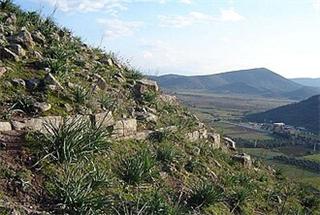 AtarneusPlaceAtarneus was an ancient Greek town on the coast of Mysia in north-western Asia Minor, opposite Lesbos.
- Atatürk's reformsEventAtatürk's reforms were the political, legal, cultural and social changes carried out in Turkey under Mustafa Kemal Atatürk between 1923 and 1938 to build a secular…
 Atbara RiverPlaceThe Atbara is a river of north-eastern Africa, about 800 kilometres long, which rises in the Ethiopian Highlands near Lake Tana and joins the Nile at the town of Atbara…
- AteasPersonAteas was a king of the Scythians in the 4th century BCE who built a powerful realm north of the Black Sea and extended his rule westwards to the lower Danube.
 AtenReligion / ideaThe Aten was the disc of the sun worshipped as a god in ancient Egypt, depicted as a sun whose rays end in human hands.
- AtenismReligion / ideaAtenism was the religion promoted by the pharaoh Akhenaten in the fourteenth century BCE, centred on the worship of the Aten, the sun disc.
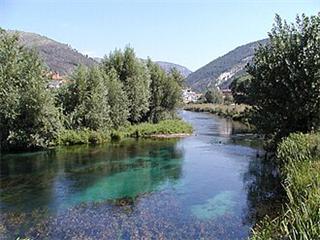 Aterno-PescaraPlaceThe Aterno-Pescara is the main river of Abruzzo in central Italy, known in its upper course as the Aterno and below Popoli as the Pescara, reaching the Adriatic at the…
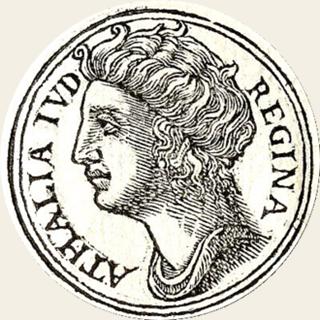 AthaliahPersonAthaliah was queen of Judah for about six years in the 9th century BCE, the only woman to rule either Hebrew kingdom in her own right.
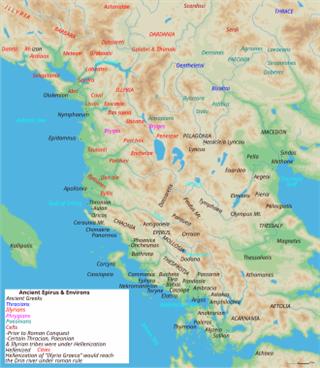 AthamaniansPeople / groupThe Athamanians were an ancient people of the Pindus mountains in north-western Greece, living around the upper Achelous between Epirus, Thessaly and Aetolia.
- AthanagildPersonAthanagild was king of the Visigoths from 554 to 567.
 Athanasios the AthonitePersonAthanasios the Athonite was a Byzantine monk who founded the Great Lavra on Mount Athos in 963 with the support of his friend Nikephoros Phokas, later emperor.
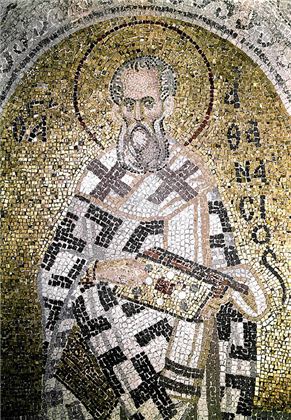 Athanasius of AlexandriaPersonAthanasius of Alexandria was patriarch of Alexandria in the fourth century and a leading defender of Nicene Christianity.
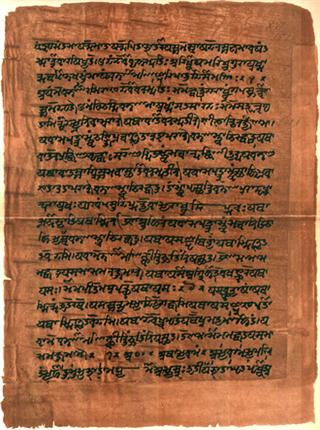 AtharvavedaWork / monumentThe Atharvaveda is the fourth of the Vedas, the sacred texts of Hinduism, compiled around 1000 BCE or somewhat later.
 AthelneyPlaceAthelney is a low hill rising above the marshes of the Somerset Levels in south-west England.
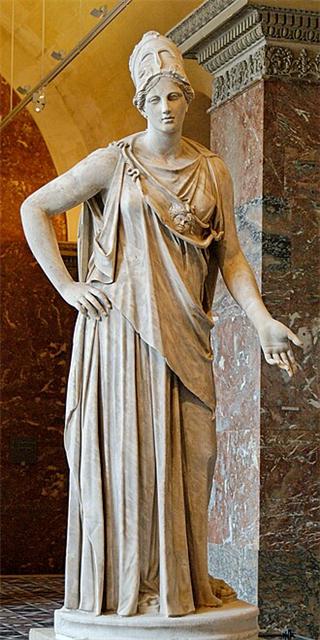 AthenaReligion / ideaAthena was the ancient Greek goddess of wisdom, crafts and war, the virgin daughter of Zeus, said to have sprung fully armed from his head.
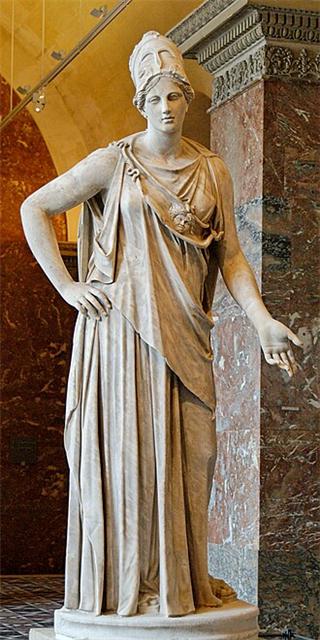 Athena PoliasReligion / ideaAthena Polias, 'Athena of the city', was the form of the goddess Athena worshipped as protector of a Greek city.
 AthensPlaceAthens is a city in Greece that was a leading city-state of the classical era.
- AthinkhayaPersonAthinkhaya was the eldest of the three brothers who founded the Myinsaing regime in central Burma in the late 13th century.
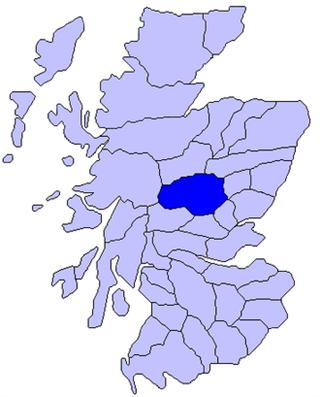 AthollPlaceAtholl is a historic district of the central Highlands of Scotland, in northern Perthshire, covering the valleys of the Tay, Tummel and Garry.
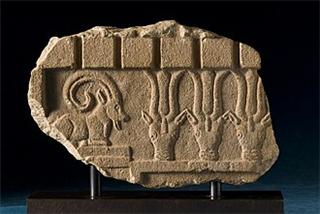 AthtarReligion / ideaAthtar (ʿAthtar) was a god of ancient South Arabia identified with the planet Venus, the male counterpart of the Mesopotamian Ishtar and the Levantine Astarte.
 Ati-Atihan festivalEventThe Ati-Atihan is a festival held each January in Kalibo, Aklan, on the island of Panay in the Philippines, in honour of the Santo Niño.
- Atiba AtobatelePersonAtiba Atobatele was Alaafin of Oyo from about 1837 to 1859.
- Atiedian BrethrenPeople / groupThe Atiedian Brethren (Latin fratres Atiedii) were a college of priests at Iguvium, modern Gubbio, in ancient Umbria.
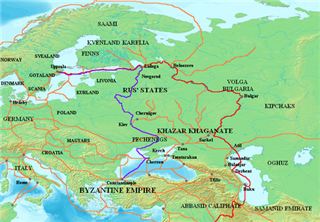 AtilPlaceAtil was the capital of the Khazar Khaganate, located on the lower Volga near the Caspian Sea.
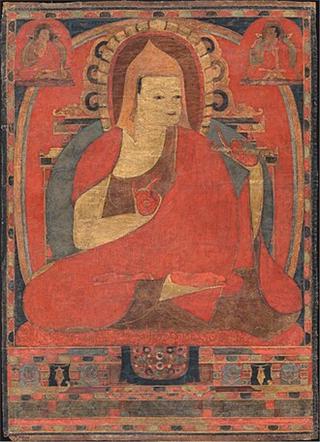 AtishaPersonAtisha Dipankara Shrijnana was a Buddhist teacher from Bengal who taught at the monasteries of the Pala Empire, including Vikramashila.
- Ativira Rama PandyaPersonAtivira Rama Pandya was a ruler of the later Pandya line at Tenkasi in the 16th century, subordinate to the Vijayanagara Empire and the Madurai Nayaks.
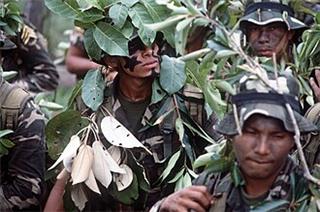 Atlacatl BattalionPeople / groupThe Atlacatl Battalion was a rapid-response counter-insurgency unit of the Salvadoran army, created in 1981 and trained by United States advisers.
- Atlantes of TulaWork / monumentThe Atlantes of Tula are four colossal basalt columns carved as Toltec warriors, about 4.6 metres tall, standing on top of Pyramid B at the archaeological site of Tula…
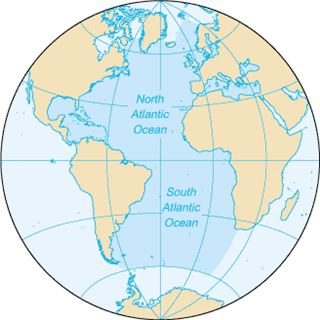 Atlantic OceanPlaceThe Atlantic Ocean separates Europe and Africa from the Americas.
- Atlantic slave tradeTermThe Atlantic slave trade was the forced transportation of millions of enslaved Africans to the Americas between the sixteenth and nineteenth centuries.
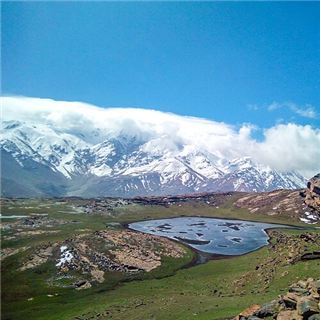 Atlas MountainsPlaceThe Atlas Mountains are a mountain range in north-western Africa, running through Morocco, Algeria and Tunisia.
 Atlit CastlePlaceAtlit Castle, known to the crusaders as Château Pèlerin (Pilgrims' Castle), was a fortress built by the Knights Templar from 1218 on a promontory of the Mediterranean…
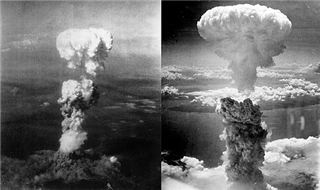 Atomic bombings of Hiroshima and NagasakiCampaign · 1945The atomic bombings of Hiroshima and Nagasaki were the attacks by the United States on two Japanese cities in August 1945, the only uses of nuclear weapons in war.
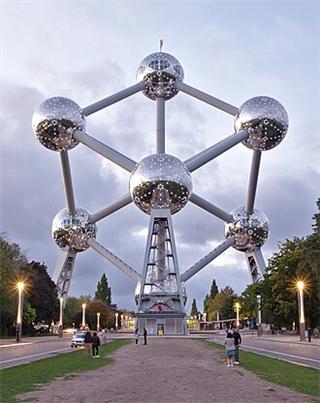 AtomiumWork / monumentThe Atomium is a monument in Brussels built for the 1958 world's fair, Expo 58.
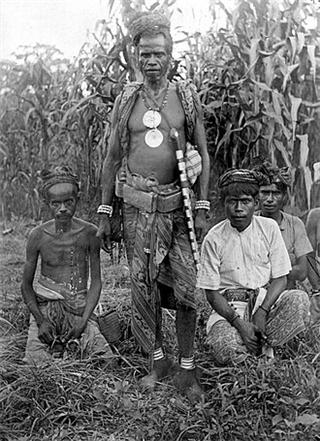 AtoniPeople / groupThe Atoni, or Atoin Meto, are the largest people of West Timor, Indonesia, speaking the Uab Meto language.
- AtropatesPersonAtropates was a Persian noble who served as satrap of Media under the Achaemenid king Darius III and fought at Gaugamela in 331 BCE.
- Atsiz ibn UvaqPersonAtsiz ibn Uvaq was a Turkmen commander who took Jerusalem from the Fatimids in 1073 and Damascus in 1076, founding the first Turkish state in Syria and Palestine.
 Attack on Pearl HarborBattle · 1941The attack on Pearl Harbor was the surprise attack by the Empire of Japan's naval air forces on the United States Pacific Fleet in Hawaii on 7 December 1941.
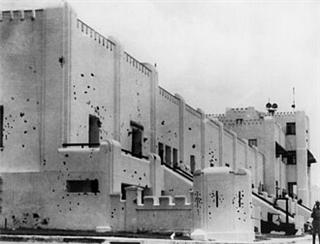 Attack on the Moncada BarracksRevolt · 1953The attack on the Moncada Barracks was an assault on an army post in Santiago de Cuba on 26 July 1953 by about 160 rebels led by Fidel Castro.
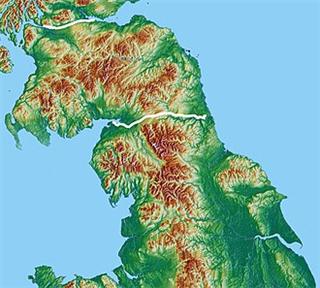 AttacottiPeople / groupThe Attacotti were a people who raided Roman Britain in the fourth century, named by Ammianus Marcellinus with the Picts, Scotti and Saxons in the "barbarian…
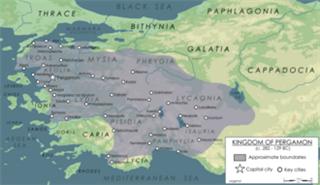 Attalid dynastyStateThe Attalid dynasty ruled the Hellenistic kingdom of Pergamon in western Asia Minor from 282 to 133 BCE.
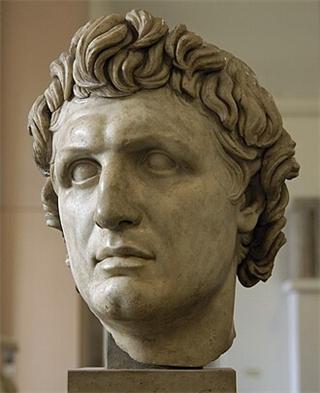 Attalus IPersonAttalus I Soter ruled Pergamon from 241 to 197 BCE.
 Attalus II PhiladelphusPersonAttalus II Philadelphus was King of Pergamon from 159 to 138 BCE, succeeding his brother Eumenes II.
 Attalus IIIPersonAttalus III was the last Attalid king of Pergamon, reigning from 138 BCE.
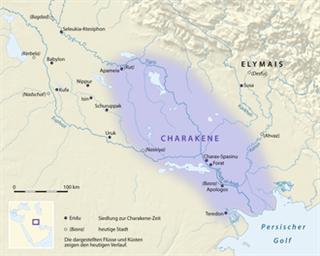 Attambelos VIIPersonAttambelos VII was king of Characene, the trading kingdom at the head of the Persian Gulf, in the early 2nd century CE.
- Attar-shumki IPersonAttar-shumki I was king of Arpad, the Aramaean state of Bit-Agusi in northern Syria, around 800 BCE.
 Al-Attarine MadrasaWork / monumentThe al-Attarine Madrasa is a college for Islamic studies in Fez, Morocco, next to the Qarawiyyin Mosque, built from 1323 to 1325 by the Marinid sultan Abu Said Uthman II.
- AttarissiyaPersonAttarissiya was a warlord described in Hittite records as 'the man of Ahhiya' around 1400 BCE.
- Attic standardTermThe Attic standard was the weight standard for silver coinage originating in Athens, based on a tetradrachm of about 17 grams.
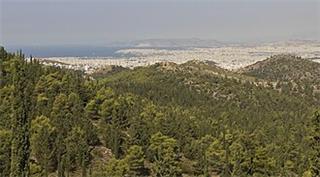 AtticaPlaceAttica is the peninsula of east-central Greece that formed the territory of ancient Athens.
- AttignyPlaceAttigny is a small town on the Aisne in the Ardennes department of north-eastern France.
- AttilaPersonAttila was ruler of the Huns from 434, at first jointly with his brother Bleda, and sole ruler from about 445 until his death in 453.
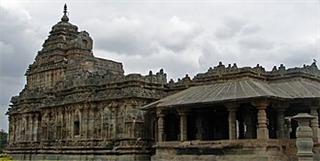 AttimabbePersonAttimabbe was a Jain noblewoman of the Western Chalukya court in the late tenth and early eleventh centuries, the widow of the general Nagadeva.
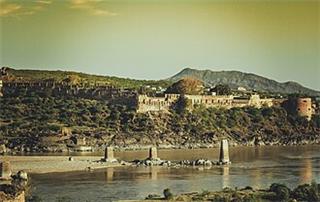 AttockPlaceAttock is a town in Punjab, Pakistan, on the Indus near its junction with the Kabul River.
- AttritionTermAttrition refers to a form of warfare in which victory depends on wearing down the enemy's manpower and material resources through continuous losses.
- Attus ClaususPersonAttus Clausus was a Sabine leader who, according to Roman tradition, moved to Rome around 504 BCE with a large band of followers.
- AtuatucaPlaceAtuatuca was a stronghold in the territory of the Eburones in northern Gaul, described by Julius Caesar.
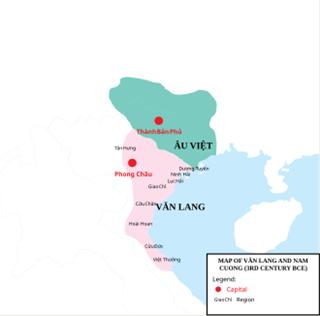 Âu ViệtPeople / groupThe Âu Việt were an ancient people of the northern uplands of present-day Vietnam and southern China.
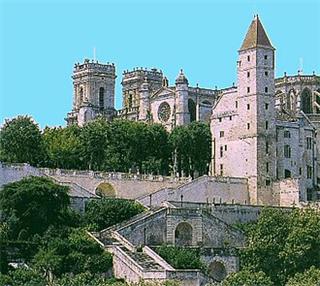 AuchPlaceAuch is a town in Gascony, south-western France, and the capital of the Gers department.