Encyclopedia: W
736 entries under W · page 4 of 8: Weimar Republic – Wetwang
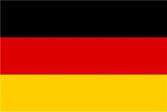 Weimar RepublicStateThe Weimar Republic was the democratic German state established after the fall of the German Empire in 1918, named after the city where its constitution was drafted.
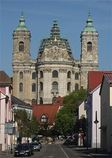 Weingarten, WürttembergPlaceWeingarten is a town in Upper Swabia, in Baden-Württemberg, just north of Ravensburg; it was called Altdorf until 1865.
- Weinsberg massacreRevolt · 1525The Weinsberg massacre took place on 16 April 1525, during the German Peasants' War, when a rebel band from the Neckar valley and the Odenwald stormed the town and…
 WeissenfelsPlaceWeissenfels is a town on the Saale river in Saxony-Anhalt, Germany.
 Weisuo systemInstitutionThe weisuo system was the military organisation of the Ming Empire, under which hereditary soldier households were assigned to garrisons called wei and smaller units…
- WeiziPersonWeizi Qi was an elder brother of Di Xin, the last king of the Shang dynasty.
 Weißenburg in BayernPlaceWeißenburg in Bayern is a town in Middle Franconia, Bavaria, beside the Roman fort of Biriciana on the Raetian Limes.
 Welf I, Duke of BavariaPersonWelf I, Duke of Bavaria, counted as Welf IV of his family, was the founder of the Bavarian line of the House of Welf.
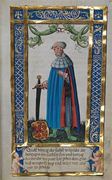 Welf VIPersonWelf VI was a German prince of the Welf dynasty who held the Matildine lands, the March of Tuscany and the Duchy of Spoleto from 1152, granted by his nephew Emperor…
 WellTermA well is a shaft dug into the ground to reach water, essential for life and travel in arid regions such as the Sahara and the Sahel.
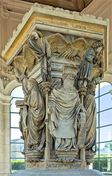 Well of MosesWork / monumentThe Well of Moses is a monumental sculpture by Claus Sluter and his workshop, made in 1395–1405 for the cloister of the Charterhouse of Champmol near Dijon.
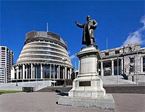 WellingtonPlaceWellington is the capital of New Zealand, on Port Nicholson at the southern tip of the North Island.
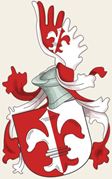 Welser familyPeople / groupThe Welser were a family of merchants and bankers of Augsburg, in southern Germany, among the richest in Europe in the 16th century alongside the Fuggers.
- Welsh MarchesPlaceThe Welsh Marches are the borderlands between England and Wales.
 Welsh peoplePeople / groupThe Welsh are the people of Wales, a Celtic nation of Britain, whose name for themselves, Cymry, comes from a Brittonic word meaning "fellow countrymen".
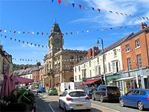 WelshpoolPlaceWelshpool is a market town in Powys, mid Wales, near the River Severn and the English border.
- WelshryTermThe Welshry was the part of a Marcher lordship in medieval Wales where native Welsh tenants lived under Welsh law and custom, as opposed to the Englishry, where…
 Wen XuanWork / monumentThe Wen Xuan (Selections of Refined Literature) is an anthology of Chinese poetry and prose compiled in the early 6th century under Xiao Tong, crown prince of the Liang…
- Wen ZhongPersonWen Zhong was a minister of King Goujian of Yue in the 5th century BCE.
 Wenceslaus I, Duke of BohemiaPersonWenceslaus I, known as Saint Wenceslas, was Duke of Bohemia from about 921.
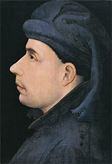 Wenceslaus I, Duke of LuxembourgPersonWenceslaus I was duke of Luxembourg and, through his marriage to Duchess Joanna, duke of Brabant and Limburg from 1355 until his death in 1383.
 Wenceslaus II of BohemiaPersonWenceslaus II was King of Bohemia from 1278 and King of Poland from 1300.
 Wenceslaus III Adam, Duke of CieszynPersonWenceslaus III Adam was a Piast Duke of Cieszyn who succeeded as a child in 1528 and ruled in person from 1545.
 Wenceslaus III of BohemiaPersonWenceslaus III was king of Hungary from 1301 to 1305, as Ladislaus V, and king of Bohemia and Poland in 1305–1306.
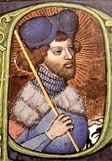 Wenceslaus IV of BohemiaPersonWenceslaus IV of Bohemia, son of Emperor Charles IV, was King of Bohemia from 1378 and King of the Romans from 1376 until the electors deposed him in 1400.
 Wenceslaus of PłockPersonWenceslaus of Płock was a Piast Duke of Płock in Masovia from 1313.
 Wendish CrusadeCampaign · 1147The Wendish Crusade of 1147 was a campaign of Saxon, Danish and Polish princes against the pagan Slavs, or Wends, east of the Elbe, authorised by Pope Eugenius III as…
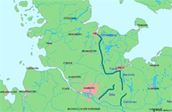 WendsPeople / groupWends is a historical name used by Germans and others for Slavic peoples living near Germanic lands, especially between the Elbe and the Oder.
- WennoPersonWenno was the first master of the Livonian Brothers of the Sword, the crusading order founded in 1202 to conquer and convert Livonia.
 WenxiangPersonWenxiang was a Manchu statesman of China's Qing dynasty, a bannerman of the Plain Red Banner, and one of the architects of the Self-Strengthening Movement.
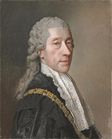 Wenzel Anton von Kaunitz-RietbergPersonWenzel Anton von Kaunitz-Rietberg was state chancellor of the Habsburg monarchy from 1753 to 1792 under Maria Theresa, Joseph II and Leopold II.
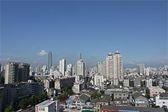 WenzhouPlaceWenzhou is a port city in southern Zhejiang province, China, on the Ou River near the East China Sea.
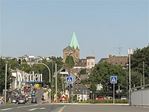 WerdenPlaceWerden is a district of Essen in the Ruhr, Germany, on the river Ruhr.
 WerlaPlaceWerla was a royal palace (Pfalz) of the Ottonian kings on the Oker river near Schladen in Lower Saxony.
- Werner I of StrasbourgPersonWerner I was bishop of Strasbourg from 1001 to 1028 and a member of the early Habsburg family.
 Werner MunzingerPersonWerner Munzinger was a Swiss explorer, linguist and administrator who served the Egyptian government in north-east Africa.
- Werner ReportWork / monumentThe Werner Report was a plan for economic and monetary union in the European Communities, presented in October 1970 by a group chaired by Pierre Werner, prime minister…
 WernigerodePlaceWernigerode is a town in Saxony-Anhalt on the northern edge of the Harz, known for its half-timbered town hall and old town.
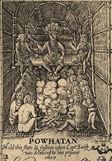 WerowocomocoPlaceWerowocomoco was the chief town of Wahunsenacah, paramount chief of the Powhatan, on the north bank of the York River in Virginia.
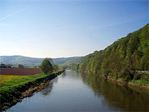 WerraPlaceThe Werra is a river of about 300 kilometres in Thuringia and Hesse, central Germany.
 WertachPlaceThe Wertach is a river in Bavarian Swabia which rises in the Allgäu Alps and flows north through Kaufbeuren to join the Lech at Augsburg.
 WeselPlaceWesel is a town in North Rhine-Westphalia, Germany, where the Lippe joins the Rhine.
 WeserPlaceThe Weser is a river of north-western Germany, formed at Hann.
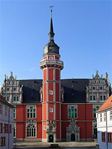 Weser RenaissanceTermWeser Renaissance is the style of Renaissance architecture in the Weser region of north-western Germany, flourishing from about 1520 to 1620.
 Wesley MerrittPersonWesley Merritt was a United States Army general who served as a cavalry commander in the American Civil War and later in the wars against Native Americans of the West.
 WessexStateWessex was the Anglo-Saxon kingdom of the West Saxons in southern England, centred on Winchester.
 West AfricaPlaceWest Africa is the western region of the African continent, stretching from the Sahara to the Gulf of Guinea.
 West Africa SquadronInstitutionThe West Africa Squadron was the Royal Navy force created in 1808 to suppress the Atlantic slave trade after Britain abolished it in 1807.
 West Banas RiverPlaceThe West Banas is a river of western India that rises in the Aravalli hills of southern Rajasthan and flows south-west through northern Gujarat into the Little Rann of…
 West BankPlaceThe West Bank is the territory west of the Jordan River that was part of Mandatory Palestine.
 West BarayWork / monumentThe West Baray is a huge rectangular reservoir at Angkor in Cambodia, about 8 kilometres long and over 2 kilometres wide, built in the eleventh century.
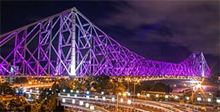 West BengalPlaceWest Bengal is a state in eastern India, with Kolkata as its capital, stretching from the Himalayan foothills at Darjeeling to the Bay of Bengal.
 West BerlinPlaceWest Berlin was the western part of Berlin, formed from the American, British and French occupation sectors of the city, an enclave surrounded by East Germany from 1949…
 West FranciaStateWest Francia was the western kingdom created by the division of the Carolingian Empire at the Treaty of Verdun in 843 CE, assigned to Charles the Bald.
 West FrisiaPlaceWest Frisia (West-Friesland) is a region of the Netherlands in the north of the province of North Holland, around Hoorn, Enkhuizen and Medemblik.
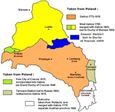 West GaliciaPlaceWest Galicia was the name of the Polish lands, including Kraków, Lublin and Radom, that Austria annexed in the Third Partition of Poland in 1795.
 West GermanyStateWest Germany was the common English name for the Federal Republic of Germany between its foundation in 1949 and German reunification in 1990.
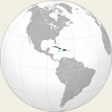 West IndiesPlaceThe West Indies are the islands of the Caribbean Sea, from the Bahamas and the Greater Antilles to the Lesser Antilles, named after Columbus's belief that he had…
 West Indies Associated StatesTermThe West Indies Associated States was the collective name for British colonies in the eastern Caribbean that became states in free association with the United Kingdom…
 West JavaPlaceWest Java is a province of Indonesia in the western part of the island of Java, with its capital at Bandung.
 West Nusa TenggaraPlaceWest Nusa Tenggara is a province of Indonesia made up of the islands of Lombok and Sumbawa, with its capital at Mataram on Lombok.
 West PakistanStateWest Pakistan was the single province formed in 1955 under the One Unit scheme by merging the provinces and princely states of the western wing of Pakistan, including…
 West PrussiaPlaceWest Prussia was a province of the Kingdom of Prussia formed from most of Royal Prussia, which Prussia gained from Poland in the First Partition of 1772; Gdańsk and…
 West Russian Volunteer ArmyPeople / groupThe West Russian Volunteer Army was a force formed in Courland in 1919 under Pavel Bermondt-Avalov, combining anti-Bolshevik Russian former prisoners of war with German…
 West SumatraPlaceWest Sumatra is a province of Indonesia on the western coast of Sumatra, with its capital at Padang.
 West SussexPlaceWest Sussex is a county in south-east England on the English Channel, with Chichester as its county town.
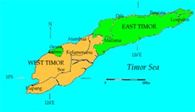 West TimorPlaceWest Timor is the western part of the island of Timor, forming part of the Indonesian province of East Nusa Tenggara, with its capital at Kupang.
 West YorkshirePlaceWest Yorkshire is a metropolitan county of northern England, created in 1974 and including Leeds, Bradford, Wakefield, Huddersfield and Halifax.
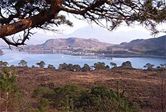 Wester RossPlaceWester Ross is the western part of the old county of Ross and Cromarty in the Highlands of Scotland, a mountainous coast of sea lochs and islands between Lochalsh and…
 Western African Ebola epidemicEventThe Western African Ebola epidemic was the largest outbreak of Ebola virus disease on record, spreading from Guinea in late 2013 to Liberia and Sierra Leone.
 Western BugPlaceThe Western Bug is a river of eastern Europe, about 770 kilometres long, rising in western Ukraine and flowing north along the borders of Poland with Ukraine and…
 Western Chalukya EmpireStateThe Western Chalukya Empire was a dynasty that ruled much of the western Deccan of India from 973 to 1189, founded by Tailapa II after the fall of the Rashtrakutas and…
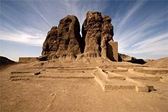 Western DeffufaWork / monumentThe Western Deffufa is a massive mud-brick structure at Kerma in northern Sudan, the main temple of the Kerma kingdom.
 Western DvinaPlaceThe Western Dvina, called the Daugava in Latvia, rises in the Valdai Hills of Russia and flows through Belarus and Latvia to the Gulf of Riga.
- Western EuropePlaceWestern Europe is the western part of the European continent.
 Western Front (World War I)Campaign · 1914–1918The Western Front was the main theatre of the First World War in western Europe, a line of trenches running about 700 kilometres from the Belgian coast to the Swiss…
 Western Ganga dynastyPeople / groupThe Western Ganga dynasty ruled southern Karnataka in India from about 350 to 1000, with capitals at Kolar and later Talakad.
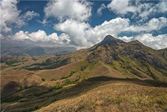 Western GhatsPlaceThe Western Ghats are a mountain range running parallel to the western coast of the Indian peninsula.
 Western India States AgencyInstitutionThe Western India States Agency was a political agency of British India, formed in 1924 to oversee the many princely states of Kathiawar, Cutch and parts of Gujarat…
 Western Jin dynastyStateThe Western Jin dynasty was a Chinese dynasty that ruled from 265 to 316 CE, founded by the Sima family, which seized power from the Wei state.
 Western New GuineaPlaceWestern New Guinea is the western half of the island of New Guinea, administered by Indonesia since 1963 and now divided into several Papuan provinces.
 Western RegionsPlaceThe Western Regions was the Chinese name, from the Han dynasty, for the lands west of the Yumen Pass, chiefly the oasis city-states of the Tarim Basin such as Kucha…
- Western Roman EmpireStateThe Western Roman Empire was the western half of the Roman Empire, governed separately after the permanent division of 395 CE.
 Western SaharaPlaceWestern Sahara is a sparsely populated desert territory on the Atlantic coast of north-west Africa, formerly the Spanish Sahara.
- Western SatrapsPeople / groupThe Western Satraps were a dynasty of Saka (Indo-Scythian) rulers who governed western India, including Gujarat and Malwa, from around the first to the fourth century CE.
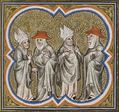 Western SchismEventThe Western Schism was a split in the Catholic Church from 1378 to 1417, when rival popes in Rome and Avignon, and from 1409 a third line from Pisa, each claimed the…
 Western SudanPlaceThe Western Sudan is a historical term for the Sahel and savannah region of West Africa south of the Sahara, from the Atlantic to around Lake Chad.
 Western ThracePlaceWestern Thrace is the region between the Nestos and Evros rivers in north-eastern Greece.
- Western Turkic KhaganateStateThe Western Turkic Khaganate was the western half of the Gokturk Empire, which became a separate state after the empire divided in the late sixth century.
 Western WeiStateThe Western Wei was a northern Chinese state that ruled from 535 to 557 CE, one of the successors to the Northern Wei dynasty.
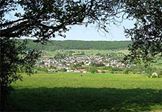 WesterwaldPlaceThe Westerwald is a low mountain range east of the Rhine between the Sieg, Lahn and Dill rivers, mainly in Rhineland-Palatinate and Hesse.
 Westminster AbbeyWork / monumentWestminster Abbey is a church in Westminster, London, rebuilt by Edward the Confessor and consecrated in 1065, then rebuilt again in Gothic style from 1245 under Henry…
 Westminster systemReligion / ideaThe Westminster system is the model of parliamentary government developed in the United Kingdom, in which the executive is drawn from and accountable to an elected…
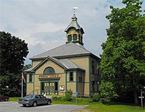 Westminster, VermontPlaceWestminster is a town in south-eastern Vermont, on the Connecticut River.
- WestoPeople / groupThe Westo were an Iroquoian-speaking people who appeared in Virginia and Carolina in the mid-17th century, probably descendants of the Erie.
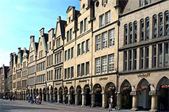 WestphaliaPlaceWestphalia is a region of north-western Germany between the Rhine and the Weser, centred on Münster and reaching south to the Ruhr.
 Wet-rice agricultureTermWet-rice agriculture is the cultivation of rice in flooded paddy fields, a highly productive system that can support dense populations.
 Wethersfield, ConnecticutPlaceWethersfield is a town on the Connecticut River just south of Hartford, settled in 1634 by colonists from Massachusetts and one of the three river towns that formed the…
 WetterauPlaceThe Wetterau is a fertile lowland in Hesse, Germany, between the Taunus and the Vogelsberg north of Frankfurt, named after the river Wetter.
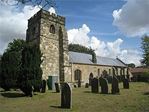 WetwangPlaceWetwang is a village in the Yorkshire Wolds in the East Riding of Yorkshire, England.