Encyclopedia: K
1,366 entries under K · page 7 of 14: Khalsa – Khwarazmians
- KhalsaReligion / ideaThe Khalsa is the collective body of initiated Sikhs, established by Guru Gobind Singh in 1699 as a community bound by shared discipline, identity and readiness to…
- KhalwaInstitutionKhalwa refers to the Quranic schools found across the Sudanic belt of Africa, where pupils learned to recite and write the Quran and received basic religious instruction.
 KhamPlaceKham is a historical region of eastern Tibet, now divided mainly between the Tibet Autonomous Region and the Chinese provinces of Sichuan, Qinghai and Yunnan.
- Kham FuPersonKham Fu was a king of Lan Na in northern Thailand in the 1330s, a descendant of the founder Mangrai.
 Khama IIIPersonKhama III was kgosi of the Bangwato in present-day Botswana from 1875 to 1923.
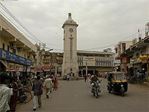 KhambhatPlaceKhambhat, historically Cambay, is a town in Gujarat, India, at the head of the Gulf of Khambhat.
 KhamiPlaceKhami is an archaeological site in south-western Zimbabwe, known for its terraced dry-stone walls and enclosures.
- Khammao VilayPersonKhammao Vilay was a Lao official who served as prime minister of the Lao Issara government formed in Vientiane in October 1945 after the Japanese surrender.
- Khan Ahmad KhanPersonKhan Ahmad Khan was the last ruler of the Karkiya dynasty of Lahijan in eastern Gilan, on the Caspian coast of Iran.
 Khana RatsadonPeople / groupThe Khana Ratsadon, or People's Party, was a group of civilian and military officials founded by Thai students in Paris in 1927.
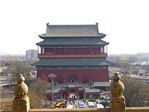 KhanbaliqPlaceKhanbaliq, meaning 'city of the khan', was the capital built by Kublai Khan on the site of present-day Beijing.
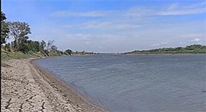 KhandeshPlaceKhandesh is a historical region in the valley of the Tapti river in north-western Maharashtra, India, now mainly covered by the Jalgaon, Dhule and Nandurbar districts.
- Khandkya Ballal ShahPersonKhandkya Ballal Shah was a Gond king of Chanda in the Wainganga and Wardha valleys of central India.
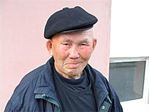 KhantyPeople / groupThe Khanty, formerly called Ostyaks, are a Finno-Ugric people of western Siberia, living mainly along the Ob and Irtysh and their tributaries in the Khanty-Mansi…
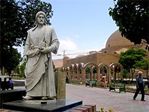 KhaqaniPersonKhaqani was a Persian poet from Shirvan, in present-day Azerbaijan, and one of the masters of the Persian ode.
- Khara KhulaPersonKhara Khula was a chief of the Choros tribe of the Oirats who built up a power base in the steppe between the Altai Mountains and the Ili River in the early seventeenth…
- KharajInstitutionKharaj was a land tax levied in Islamic states on agricultural land, originally applied to territory conquered by Muslim armies and worked by non-Muslim cultivators.
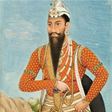 Kharak SinghPersonKharak Singh was the eldest son and successor of Ranjit Singh, founder of the Sikh Empire.
- KharavelaPersonKharavela was a king of Kalinga, in modern Odisha, of the Mahameghavahana dynasty, who probably reigned in the 1st century BCE.
 Kharg IslandPlaceKharg Island is a small island in the Persian Gulf off the coast of Iran, north-west of Bushehr.
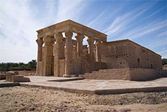 Kharga OasisPlaceThe Kharga Oasis is the southernmost of the major oases of Egypt's Western Desert, about 200 kilometres west of the Nile valley.
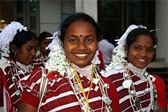 Kharia peoplePeople / groupThe Kharia are an Adivasi people of eastern India, living mainly in Jharkhand, Odisha, Chhattisgarh and West Bengal.
- KharijitesPeople / groupThe Kharijites were an early Islamic sectarian movement that broke away from the caliph Ali after he agreed to arbitration with Muawiya at Siffin in 657.
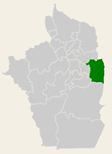 Al-KharjPlaceAl-Kharj is a city and agricultural district in central Saudi Arabia, about 80 kilometres south-east of Riyadh.
 KharkivPlaceKharkiv is the second-largest city of Ukraine, in the north-east of the country near the Russian border.
 Kharkiv CollegiumInstitutionThe Kharkiv Collegium was an Orthodox school in Kharkiv, founded in 1726 when Bishop Epifaniy Tikhorsky moved the Belgorod seminary there.
 KhartoumPlaceKhartoum is the capital of Sudan, at the meeting of the Blue and White Niles.
 Khas peoplePeople / groupThe Khas are an Indo-Aryan people of the western and central Himalayas, the original speakers of the language that became Nepali, once called Khas kura.
 Khasa Malla kingdomStateThe Khasa Malla kingdom was a medieval state of western Nepal and adjoining western Tibet, ruled from Sinja in the Karnali basin.
 KhasekhemwyPersonKhasekhemwy was the last king of the Second Dynasty of Egypt, around 2690 BCE.
- KhaspurPlaceKhaspur is a historic site in the Cachar district of southern Assam, India, near Silchar, which was the last capital of the Kachari kingdom from the 18th century.
 KhassonkePeople / groupThe Khassonke are a people of the Kayes region of western Mali, living along the upper Senegal River.
- Khatyn massacreEventThe Khatyn massacre was the destruction of the village of Khatyn in Belarus by a German auxiliary police battalion and SS troops on 22 March 1943.
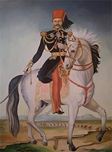 Khayr al-Din al-TunisiPersonKhayr al-Din al-Tunisi was a statesman of Circassian origin who rose as a mamluk at the court of the beys of Tunis.
 Khayr al-Nisa BegumPersonKhayr al-Nisa Begum, known as Mahd-i Ulya, was a Safavid queen from the Mar'ashi family of Mazandaran.
 Khaz'al ibn JabirPersonKhaz'al ibn Jabir was the Arab sheikh of Mohammerah, modern Khorramshahr, who from 1897 ruled much of Khuzestan as a semi-independent prince under nominal Qajar…
 Khazar KhaganateStateThe Khazar Khaganate was a Turkic steppe state that controlled the region between the Black Sea, the Caspian and the Volga from the seventh to the tenth century.
 Khazen familyPeople / groupThe Khazen family is a Maronite noble family of Mount Lebanon, whose sheikhs held the Keserwan district as tax-farming lords from the 17th century under the Ma'n and…
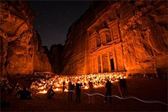 Al-KhaznehWork / monumentAl-Khazneh, 'the Treasury', is a monumental facade carved into the sandstone cliff at the end of the Siq gorge in Petra, Jordan.
 Khedive of EgyptTermKhedive was the title of the hereditary viceroys of Egypt under Ottoman suzerainty, granted by the sultan to Isma'il Pasha in 1867 and used until 1914.
- Khengarji IPersonKhengarji I was the Jadeja ruler who united Cutch in the mid-16th century and is regarded as the founder of the Cutch State.
 Kherlen RiverPlaceThe Kherlen is a river of eastern Mongolia and north-eastern China, about 1,250 kilometres long, which rises in the Khentii Mountains and flows east into Hulun Lake.
 KhevsursPeople / groupThe Khevsurs are a Georgian highland people of Khevsureti, on the northern and southern slopes of the Greater Caucasus near the border with Chechnya.
- Khidr Bey of TekePersonKhidr Bey was a ruler of the Teke beylik on the southern coast of Anatolia in the first half of the 14th century, with his seat at Antalya.
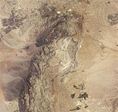 Khirbat en-NahasPlaceKhirbat en-Nahas, 'ruins of copper', is a large Iron Age copper-smelting site in the Faynan district of southern Jordan.
 Khirbet el-QomPlaceKhirbet el-Qom is an archaeological site in the hills west of Hebron, in the West Bank, where tombs of the Iron Age were investigated by William Dever in 1967.
- KhitansPeople / groupThe Khitans were a nomadic people of the Mongolian and Manchurian steppe who founded the Liao dynasty in northern China in the tenth century.
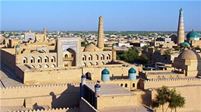 KhivaPlaceKhiva is a city in the Khwarazm region of present-day Uzbekistan, long the capital of the Khanate of Khiva.
- Khizr Khan (Khalji prince)PersonKhizr Khan was the eldest son of the Delhi sultan Alauddin Khalji and for years his designated heir.
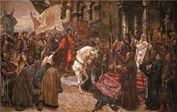 Khmelnytsky UprisingRevolt · 1648The Khmelnytsky Uprising was a Cossack rebellion that began in 1648 under Bohdan Khmelnytsky in the Ukrainian lands of the Polish-Lithuanian Commonwealth.
 Khmer EmpireStateThe Khmer Empire was a Hindu-Buddhist state centred on Angkor in present-day Cambodia, dominant in mainland South-East Asia from the ninth to the fifteenth century.
 Khmer RougePeople / groupThe Khmer Rouge was the name given to the Communist Party of Kampuchea and its armed forces.
 Khmu peoplePeople / groupThe Khmu are an Austroasiatic-speaking people of northern Laos and neighbouring parts of Vietnam, Thailand and China.
 Khnumhotep IIPersonKhnumhotep II was a nomarch of the Oryx nome in Middle Egypt under the Twelfth Dynasty kings Amenemhat II and Senusret II.
- Kho OrlukPersonKho Orluk was a leader of the Torghut, an Oirat Mongol people, who led his followers west from Dzungaria across the Kazakh steppe in the early 17th century.
- KhoekhoePeople / groupThe Khoekhoe, formerly called Khoikhoi, are the indigenous pastoral peoples of south-western Africa, who herded cattle and sheep and spoke click languages.
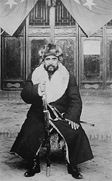 Khoja NiyazPersonKhoja Niyaz was a Uyghur leader from Kumul (Hami) who headed the Kumul rebellion against the Xinjiang provincial government from 1931.
- KhokharsPeople / groupThe Khokhars are a Punjabi clan and community whose lands lay in the Salt Range and northern Punjab, in present-day Pakistan.
 Kholodny YarPlaceKholodny Yar is a forested area of ravines near Chyhyryn in central Ukraine, around the Motronynskyi Monastery.
 Khor FakkanPlaceKhor Fakkan is a port town on the Gulf of Oman coast of the United Arab Emirates, an exclave of the emirate of Sharjah.
 KhorasanPlaceKhorasan is a historical region of north-eastern Iran and adjoining parts of Central Asia and Afghanistan, containing cities such as Nishapur, Merv and Herat.
 Khorat PlateauPlaceThe Khorat Plateau is a broad, low plateau in north-eastern Thailand, bounded by the Mekong river to the north and east and by the Phetchabun and Dangrek ranges.
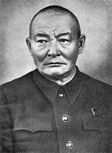 Khorloogiin ChoibalsanPersonKhorloogiin Choibalsan was the leader of the Mongolian People's Republic from the late 1930s until his death in 1952.
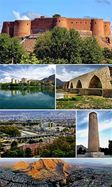 KhorramabadPlaceKhorramabad is the capital of Lorestan province in western Iran, in a valley of the Zagros Mountains.
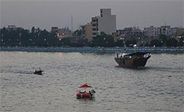 KhorramshahrPlaceKhorramshahr, formerly Mohammerah, is a port city in Khuzestan province, south-western Iran, at the meeting of the Karun river and the Shatt al-Arab.
 KhorsabadPlaceKhorsabad is the modern name of the site of Dur-Sharrukin, the royal city built by the Assyrian king Sargon II in northern Iraq in the late eighth century BCE.
- KhosrovanuyshPersonKhosrovanuysh was an Armenian queen of the 10th century, wife of King Ashot III of Bagratid Armenia.
 Khosrow IPersonKhosrow I, also known as Anushirvan, was a Sasanian king who reigned in the sixth century CE and is remembered as one of the dynasty's greatest rulers.
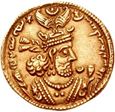 Khosrow IIPersonKhosrow II was the last great king of the Sasanian Empire, reigning in the late sixth and early seventh centuries CE.
 KhotogoidPeople / groupThe Khotogoid were a Mongol people of north-western Mongolia, part of the western Khalkha domain under the Zasagt Khan.
- KhottigaPersonKhottiga was Rashtrakuta emperor of the Deccan from 967 to 972, succeeding his brother Krishna III.
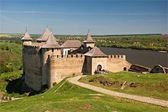 KhotynPlaceKhotyn, Hotin in Romanian, is a town on the Dniester in western Ukraine, known for its medieval fortress.
 Khowar languageTermKhowar, also called Chitrali, is an Indo-Aryan language of the Dardic group spoken by several hundred thousand people in Chitral in Khyber Pakhtunkhwa, Pakistan, and in…
 KhoyPlaceKhoy is a city in West Azerbaijan province in north-western Iran, north of Lake Urmia and near the Turkish border.
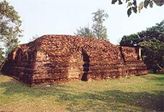 Khu BuaPlaceKhu Bua is an archaeological site in Ratchaburi province in western Thailand, the remains of a moated town of the Dvaravati culture, flourishing from about the 7th to…
- Khuc HaoPersonKhuc Hao was a Vietnamese governor of the Tinh Hai circuit, the former Tang protectorate of Annam, from 907 to 917.
- Khuc Thua DuPersonKhuc Thua Du was a landowner from Hong Chau in the Red River delta who seized control of the Tinh Hai circuit in 905 as the Tang dynasty collapsed.
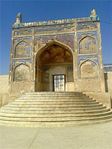 KhudabadPlaceKhudabad is a ruined town near Dadu in Sindh, Pakistan, founded by the Kalhora dynasty in the early 18th century.
 Khudayar KhanPersonKhudayar Khan was khan of Kokand, holding the throne three times between 1845 and 1875 amid civil wars between settled and nomadic factions.
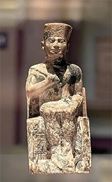 KhufuPersonKhufu was a king of Egypt's Fourth Dynasty in the 26th century BCE and the son of Sneferu.
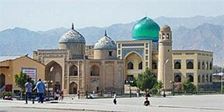 KhujandPlaceKhujand is the second city of Tajikistan, on the Syr Darya at the entrance to the Fergana Valley.
- Khuman Singh of CharkhariPersonKhuman Singh was a Bundela Rajput descended from Maharaja Chhatrasal through the Jaitpur branch, who founded the state of Charkhari in Bundelkhand around 1765 on his…
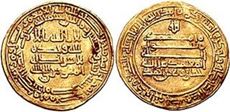 KhumarawayhPersonKhumarawayh was the second Tulunid ruler of Egypt and Syria, succeeding his father Ahmad ibn Tulun in 884.
- Khun BoromPersonKhun Borom is the legendary ancestor of the Lao and other Tai peoples in Lao chronicles.
- Khun Chom ThamPersonKhun Chom Tham is the traditional founder of the northern Thai kingdom of Phayao.
- Khun LoPersonKhun Lo is the legendary founder of the ruling line of Muang Sua, the town that became Luang Prabang.
 Khün peoplePeople / groupThe Khün are a Tai people of the Kengtung area in eastern Shan State, Myanmar.
- KhunzakhPlaceKhunzakh is a village in the mountains of central Dagestan, Russia, on a plateau above the Avar Koysu river.
- Al-KhuraybahPlaceAl-Khuraybah is an archaeological site in the AlUla valley of north-western Saudi Arabia, identified as ancient Dedan, the seat of the kingdoms of Dedan and Lihyan.
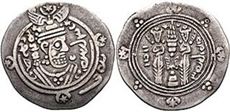 Khurshid of TabaristanPersonKhurshid was the last Dabuyid ispahbad of Tabaristan, ruling from about 740.
- KhusobekPersonKhusobek, also called Sobekkhu, was an Egyptian army officer of the Twelfth Dynasty under Senusret III and Amenemhat III.
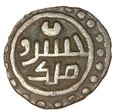 Khusrau MalikPersonKhusrau Malik was the last sultan of the Ghaznavid dynasty, ruling from Lahore over the Ghaznavid lands in the Punjab from 1160.
 Khusrau ShahPersonKhusrau Shah was a sultan of the Ghaznavid dynasty and son of Bahram Shah, reigning from 1157 to 1160.
- KhustPlaceKhust is a town in Zakarpattia Oblast in western Ukraine, on the Tysa river below the ruins of a medieval castle.
- KhutbaInstitutionThe khutba is the sermon delivered at Friday congregational prayer in Islam, in which the name of the recognised ruler was traditionally proclaimed.
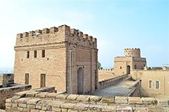 KhuzestanPlaceKhuzestan, historically Khuzistan, is a province of south-western Iran at the head of the Persian Gulf, watered by the Karun River.
- KhvarenahReligion / ideaKhvarenah, known in Middle Persian as xwarrah, is an Iranian concept of divine glory or royal fortune believed to accompany legitimate rulers.
 KhwarazmPlaceKhwarazm is a historical region around the lower Amu Darya river and its delta south of the Aral Sea, in present-day Uzbekistan and Turkmenistan.
- Khwarazmian EmpireStateThe Khwarazmian Empire was a Persianate Muslim state ruled by the Khwarazm Shahs, which grew from the Khwarazm region into a major power in Central Asia and Iran around…
- KhwarazmiansPeople / groupThe Khwarazmians were the people and ruling dynasty of Khwarazm, whose shahs built the Khwarazmian Empire.