Encyclopedia: S
2,773 entries under S · page 6 of 28: Sankin-kōtai – Sarcophagus of the Spouses
 Sankin-kōtaiInstitutionSankin-kōtai, or alternate attendance, was a system of the Tokugawa Shogunate requiring daimyo to divide their time between their domains and the shogun's capital at…
 Sankore MadrasahInstitutionThe Sankore Madrasah was an Islamic centre of learning based around the Sankore Mosque in Timbuktu.
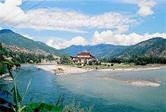 Sankosh RiverPlaceThe Sankosh is a river that rises in northern Bhutan, where it is called the Puna Tsang Chu, and flows south through the Bhutanese town of Punakha into India, where it…
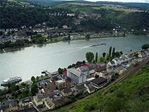 Sankt GoarPlaceSankt Goar is a small town on the left bank of the Middle Rhine in Rhineland-Palatinate, Germany, opposite St.
 Sankuru RiverPlaceThe Sankuru is a river of the central Democratic Republic of the Congo and the main tributary of the Kasai, which it joins after a course of about 1,200 kilometres.
 ŞanlıurfaPlaceŞanlıurfa, commonly called Urfa, is a city in south-eastern Turkey on the site of ancient Edessa, a centre of early Syriac Christianity and capital of the crusader…
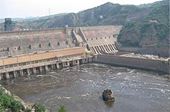 SanmenxiaPlaceSanmenxia is a city in western Henan province, China, on the Yellow River near the gorge that gives it its name.
 Sans-Souci PalaceWork / monumentSans-Souci was the royal palace of Henri I, king of Haiti, built at Milot between 1810 and 1813.
- Sansar Chand KatochPersonSansar Chand was the Katoch raja of Kangra in the Himalayan foothills from 1775 to 1823.
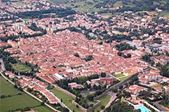 SansepolcroPlaceSansepolcro, formerly Borgo Sansepolcro, is a town in the upper Tiber valley in the province of Arezzo, Tuscany.
- SanskritTermSanskrit is a classical Indo-Aryan language of South Asia, used for religious, literary, philosophical and scientific texts over more than three millennia.
- Sant Andreu de SuredaWork / monumentSant Andreu de Sureda, in French Saint-André-de-Sorède, is a former Benedictine abbey in the foothills of the Albères in Roussillon, southern France.
 Sant Climent de TaüllWork / monumentSant Climent de Taüll is a Romanesque church in the Vall de Boí in the Catalan Pyrenees, consecrated in 1123.
 Sant Genís de FontanesWork / monumentSant Genís de Fontanes, in French Saint-Génis-des-Fontaines, is a former Benedictine abbey in Roussillon, founded in the early 9th century.
 Sant Joan de CasellesWork / monumentSant Joan de Caselles is a Romanesque church in the parish of Canillo, Andorra, built in the eleventh and twelfth centuries.
 Sant Julià de LòriaPlaceSant Julià de Lòria is the southernmost of the seven parishes of Andorra and the name of its main town, on the Gran Valira near the Spanish border.
 Sant Martí d'EmpúriesPlaceSant Martí d'Empúries is a village on the Costa Brava in Catalonia, on what was once a small island at the mouth of the Fluvià.
 Sant Martí del CanigóInstitutionSant Martí del Canigó is a Benedictine monastery high on the slopes of the Canigó massif in the eastern Pyrenees, now in the French department of Pyrénées-Orientales.
 Sant Pere de BesalúInstitutionSant Pere de Besalú is a former Benedictine monastery in Besalú, Catalonia, founded in 977 by Miró Bonfill, who was both count of Besalú and bishop of Girona.
 Sant'Apollinare NuovoWork / monumentSant'Apollinare Nuovo is a basilica in Ravenna built by Theodoric the Great in the early 6th century as his Arian palace church.
 Santa Ana, ManilaPlaceSanta Ana is a district of the City of Manila in the Philippines, on the Pasig River.
- Santa CatarinaPlaceSanta Catarina is a state of southern Brazil on the Atlantic coast, with its capital at Florianópolis on Santa Catarina Island.
- Santa Cruz de Mar PequeñaPlaceSanta Cruz de Mar Pequeña was a fortified trading post founded on the Atlantic coast of north-west Africa in 1478 by Diego García de Herrera, lord of the Canary Islands.
 Santa Cruz massacreEventThe Santa Cruz massacre took place on 12 November 1991, when Indonesian troops opened fire on mourners and pro-independence demonstrators at the Santa Cruz cemetery in…
 Santa Elena ProvincePlaceSanta Elena is a province on the Pacific coast of Ecuador, covering the Santa Elena peninsula, the westernmost part of the country's coast.
- Santa Fe de Nuevo MéxicoPlaceSanta Fe de Nuevo México was a province on the northern frontier of New Spain, founded by Juan de Oñate's colonising expedition in 1598, with its capital at Santa Fe…
 Santa Fe, ArgentinaPlaceSanta Fe is a city on the Paraná river in northern Argentina, founded by Juan de Garay in 1573 as a stopping place between Asunción and the Río de la Plata.
 Santa Fe, New MexicoPlaceSanta Fe was founded around 1610 by the Spanish governor Pedro de Peralta as the capital of the province of New Mexico, on the northern frontier of New Spain.
 Santa HermandadInstitutionThe Santa Hermandad, or Holy Brotherhood, was a peacekeeping force created by Isabella I and Ferdinand II at the Cortes of Madrigal in 1476, built on the older…
- Santa IgiaPlaceSanta Igia was the capital of the medieval Judicate of Cagliari in southern Sardinia, on the edge of the lagoon west of present-day Cagliari.
 Santa Isabel IslandPlaceSanta Isabel is one of the largest islands of the Solomon Islands, lying north-west of Guadalcanal.
 Santa María (ship)Work / monumentThe Santa María was the largest of the three ships of Christopher Columbus's first voyage in 1492 and served as his flagship.
 Santa Maria Capua VeterePlaceSanta Maria Capua Vetere is a town in Campania, Italy, on the site of ancient Capua, once the largest city of southern Italy.
- Santa Maria de MurWork / monumentSanta Maria de Mur is a Romanesque church and former house of canons near the castle of Mur in the Pallars Jussà district of Catalonia.
- Santa Maria del MarWork / monumentSanta Maria del Mar is a Gothic basilica in the Ribera quarter of Barcelona, built between 1329 and 1383 with the support of the city's merchants and sailors.
 Santa María del NarancoWork / monumentSanta María del Naranco is a building on Mount Naranco above Oviedo, built as a royal hall for Ramiro I of Asturias and dated by an inscription of 848; it was later…
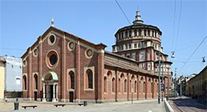 Santa Maria delle Grazie, MilanWork / monumentSanta Maria delle Grazie is a Dominican church and convent in Milan, built from 1463 to designs by Guiniforte Solari.
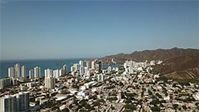 Santa MartaPlaceSanta Marta is a port city on the Caribbean coast of Colombia, founded by Rodrigo de Bastidas in 1525 and one of the oldest Spanish towns in South America.
- Santa River (Peru)PlaceThe Santa River is a river of northern Peru that rises at Lake Conococha in the Andes, flows north through the Callejón de Huaylas and then turns west to reach the…
 Santa Sofia, BeneventoWork / monumentSanta Sofia is a church in Benevento, southern Italy, founded around 760 by the Lombard duke Arechis II as the national shrine of the southern Lombards.
 Santal peoplePeople / groupThe Santal are one of the largest Adivasi peoples of South Asia, living mainly in Jharkhand, West Bengal, Odisha and Bihar in India, with communities in Bangladesh and…
 Santander, SpainPlaceSantander is a port city on the Bay of Biscay in northern Spain and the capital of Cantabria.
- SantarémPlaceSantarém is a city on the Tagus in central Portugal, the main town of the Ribatejo.
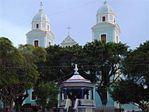 Santarém, ParáPlaceSantarém is a city in the Brazilian state of Pará, where the Tapajós river meets the Amazon.
 Santarém, PortugalPlaceSantarém is a city on the Tagus in central Portugal, north-east of Lisbon, above a fertile river plain.
- SanteríaReligion / ideaSantería is an Afro-Cuban religion that developed among enslaved Yoruba people and their descendants in Cuba, blending Yoruba spiritual traditions with elements of…
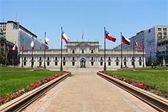 SantiagoPlaceSantiago is the capital and largest city of Chile, in the central valley at the foot of the Andes.
 Santiago de CompostelaPlaceSantiago de Compostela is the capital of Galicia in north-western Spain.
 Santiago de LiniersPersonSantiago de Liniers was a French-born officer in Spanish service who led the defence of Buenos Aires against the British invasions of 1806 and 1807.
 Santiago de QuerétaroPlaceSantiago de Querétaro is a city in central Mexico and the capital of the state of Querétaro.
 Santiago del EsteroPlaceSantiago del Estero is a city in north-western Argentina, founded by the Spanish in 1553 and the oldest surviving Spanish town in the country.
 Santiago DerquiPersonSantiago Derqui was an Argentine lawyer and politician who served as president of the Argentine Confederation from 1860 to 1861.
- Santiago ImánPersonSantiago Imán was a Yucatecan militia officer who led a federalist revolt against Mexico's centralist government in 1839–1840, starting at Tizimín.
 Santiago MariñoPersonSantiago Mariño was a Venezuelan independence leader who in 1813 freed eastern Venezuela from Spanish rule while Simón Bolívar campaigned in the west.
 Santiago MéndezPersonSantiago Méndez Ibarra was a politician from Campeche who served several times as governor of Yucatán in the 1840s and 1850s.
 Santissima Trinità di SaccargiaWork / monumentSantissima Trinità di Saccargia is a Romanesque church near Codrongianos in northern Sardinia, consecrated in 1116 and given by the judges of Logudoro to Camaldolese…
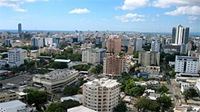 Santo DomingoPlaceSanto Domingo, on the south coast of Hispaniola, was founded by the Spanish in the 1490s and is the oldest continuously inhabited European city in the Americas.
 Santo Niño de CebúWork / monumentThe Santo Niño de Cebú is a small wooden statue of the Christ Child given by Ferdinand Magellan's expedition to the wife of Rajah Humabon of Cebu at her baptism in 1521.
- SantoñaPlaceSantoña is a coastal town in Cantabria, northern Spain, on the estuary of the Asón river, known for its anchovy canning and its fortifications.
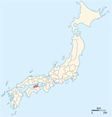 Sanuki ProvincePlaceSanuki Province was an old province of Japan in north-eastern Shikoku, corresponding to modern Kagawa Prefecture.
- SanurPlaceSanur is a coastal district of Denpasar on the south-east coast of Bali, Indonesia.
- Sao BosoPersonSao Boso, known to Europeans as King Boatswain, was a Mandingo warrior and trader who in the early 19th century built the Condo Confederation around Bopolu in the…
- São CucufatePlaceSão Cucufate is the site of a large Roman villa near Vila de Frades, in the Vidigueira municipality of the Alentejo in southern Portugal.
- Sao Hkun HsengPersonSao Hkun Hseng was saopha, or prince, of Hsipaw, a northern Shan state in Burma, from 1886.
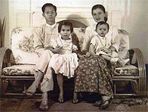 Sao Kya SengPersonSao Kya Seng was the last saopha of Hsipaw, a Shan state in Burma, educated as a mining engineer in the United States, where he met his Austrian wife Inge Sargent.
- São LuísPlaceSão Luís is a port city on the island of Maranhão in northern Brazil.
 São Luís, MaranhãoPlaceSão Luís is the capital of the Brazilian state of Maranhão, on an island off Brazil's northern coast.
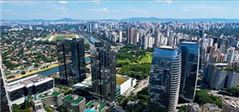 São PauloPlaceSão Paulo is a region of south-eastern Brazil, now a state, centred on the city of the same name.
 Sao Shwe ThaikePersonSao Shwe Thaike was the saopha of Yawnghwe, a Shan state on Inle Lake, and the first President of the Union of Burma from 1948 to 1952.
 São ToméPlaceSão Tomé is an island in the Gulf of Guinea off the coast of Central Africa, settled by the Portuguese in the late fifteenth century.
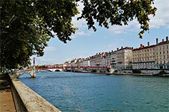 SaônePlaceThe Saône is a river of eastern France, rising in the Vosges and flowing about 470 km south to join the Rhône at Lyon.
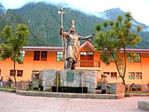 Sapa IncaTermSapa Inca, the 'unique Inca', was the title of the ruler of the Inca state.
 Saparmurat NiyazovPersonSaparmurat Niyazov was first secretary of the Communist Party of the Turkmen SSR from 1985 and president of independent Turkmenistan from 1991 until his death in 2006.
 SapaudiaPlaceSapaudia was a late Roman name for a region around Geneva and Lake Geneva, in present-day Switzerland and France.
- SaphraxPersonSaphrax was a leader of the Greuthungi Goths who, with Alatheus, led part of the people across the Danube into Roman territory in 376 after the Hunnic invasion.
 Sapieha familyPeople / groupThe Sapiehas are a Lithuanian and Polish magnate family of Ruthenian origin that rose to prominence in the sixteenth century.
- Sapienza University of RomeInstitutionSapienza University of Rome is a public university in Rome, founded in 1303 by Pope Boniface VIII as a studium for the papal city.
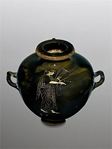 SapphoPersonSappho was a Greek lyric poet of Lesbos, active in Mytilene around 600 BCE.
- SaqalPersonSaqal was khagan of the Turgesh, a Turkic people of the western Tien Shan, from 706 to 711.
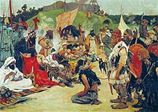 SaqalibaPeople / groupSaqaliba, 'Slavs', was the Arabic term for slaves and freedmen of European origin in the medieval Islamic world, many taken from Slavic lands.
- SaqifahEventSaqifah refers to the meeting held in 632 CE at the Saqifah, a covered gathering place of the Banu Sa'ida in Medina, where companions of the Prophet Muhammad debated…
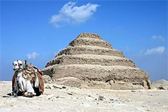 SaqqaraPlaceSaqqara is a vast ancient burial ground west of Memphis in Egypt, used for over 3,000 years.
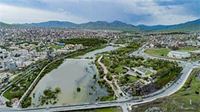 SaqqezPlaceSaqqez is a city in Kurdistan province in western Iran, in the Zagros Mountains.
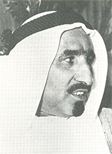 Saqr bin Mohammed Al QasimiPersonSaqr bin Mohammed Al Qasimi was ruler of Ras al-Khaimah from 1948 until his death in 2010.
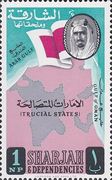 Saqr bin Sultan Al QasimiPersonSaqr bin Sultan Al Qasimi was ruler of Sharjah from 1951 to 1965.
 Sar-e Pol-e ZahabPlaceSar-e Pol-e Zahab is a town in Kermanshah province in western Iran, on the ancient route from Mesopotamia through the Zagros mountains to the Iranian plateau.
 Sara peoplePeople / groupThe Sara are a group of related peoples of southern Chad and the north of the Central African Republic, speaking Central Sudanic languages, and form the largest ethnic…
- SaragursPeople / groupThe Saragurs were a nomadic people who appeared in the steppes north of the Caucasus around 463, according to the Byzantine historian Priscus.
 Sarah Wescot-WilliamsPersonSarah Wescot-Williams is a politician from Sint Maarten who became its first prime minister on 10 October 2010, when the island became an autonomous country within the…
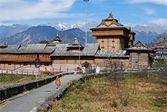 SarahanPlaceSarahan is a village in Shimla district, Himachal Pradesh, India, high above the Sutlej valley.
- SaraiPlaceSarai was the capital of the Golden Horde on the lower Volga, founded by Batu Khan in the 1240s near present-day Astrakhan; a second capital, New Sarai, was built…
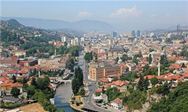 SarajevoPlaceSarajevo is the principal city of Bosnia, which came under Austro-Hungarian administration in 1878 and was annexed in 1908.
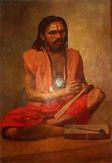 Sarala DasPersonSarala Das was a 15th-century Odia poet, often called the father of Odia literature.
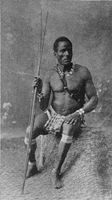 SaramakaPeople / groupThe Saramaka are a maroon people of central Suriname, descended from Africans who escaped from plantations in the late 17th and 18th centuries and settled along the…
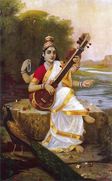 SaraswatiReligion / ideaSaraswati is the Hindu goddess of knowledge, learning, music and the arts, also identified in the Rigveda with a sacred river.
 Saraswati Mahal LibraryInstitutionThe Saraswati Mahal Library is one of the oldest libraries in Asia, in the palace complex of Thanjavur, Tamil Nadu, India.
- SaraychikPlaceSaraychik was a medieval town on the Ural River in western Kazakhstan, upstream from modern Atyrau.
 Sarayu RiverPlaceThe Sarayu is a river of northern India, the name given in Hindu tradition to the stretch of the Ghaghara that flows past Ayodhya in Uttar Pradesh.
 Sarbat KhalsaInstitutionThe Sarbat Khalsa, "the entire Khalsa", was the general assembly of the Sikh community, which met at the Akal Takht in Amritsar, usually at Baisakhi and Diwali, during…
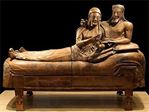 Sarcophagus of the SpousesWork / monumentThe Sarcophagus of the Spouses is an Etruscan terracotta funerary urn from Caere, made around 520 BCE, showing a married couple reclining together at a banquet.