Encyclopedia: S
2,773 entries under S · page 8 of 28: Sawdan – Scramble for Africa
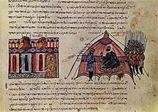 SawdanPersonSawdan was the third and last emir of Bari, ruling from about 857 to 871.
- SawlonPersonSawlon was saopha of Mohnyin, a Shan state in northern Burma, in the early 16th century.
- SawluPersonSawlu was king of Pagan from 1077 to 1084, the son and successor of Anawrahta.
- Saxe-MerseburgStateSaxe-Merseburg was a duchy created in 1656–1657 for Christian, a younger son of Elector John George I of Saxony, and centred on Merseburg on the Saale.
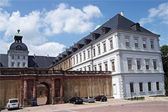 Saxe-WeissenfelsStateSaxe-Weissenfels was a duchy created in 1656–1657 for Augustus, a younger son of Elector John George I of Saxony, with its residence at Weissenfels on the Saale from…
- SaxnotReligion / ideaSaxnot was a god of the pagan Saxons, named with Thunaer and Woden in the Old Saxon baptismal vow of the late eighth or ninth century, which required converts to…
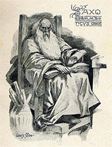 Saxo GrammaticusPersonSaxo Grammaticus was a Danish historian and cleric in the service of Archbishop Absalon of Lund.
- Saxon RétablissementEventThe Rétablissement was the programme of reconstruction in the Electorate of Saxony after the Seven Years' War, begun in 1762–1763 under Elector Frederick Christian and…
 Saxon WarsWar · 772–804The Saxon Wars were the campaigns fought from 772 to 804 by Charlemagne against the Saxons, a Germanic people living east of the Rhine.
- SaxonsPeople / groupThe Saxons were a Germanic people of northern Germany, whose name was later carried by the duchy and electorate of Saxony.
- Saxons (people)People / groupSaxons here refers to the inhabitants and forces of the Electorate of Saxony in early modern Germany.
 SaxonyPlaceSaxony is a name that has moved across Germany.
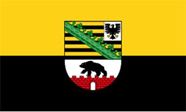 Saxony-AnhaltPlaceSaxony-Anhalt is a state of central Germany, with Magdeburg as its capital.
 Saya SanPersonSaya San was a Burmese former monk and traditional healer who led a peasant rebellion against British rule in 1930–1932.
 Sayajirao Gaekwad IIIPersonSayajirao Gaekwad III was maharaja of Baroda from 1875 to 1939, chosen from a distant branch of the family after the British deposed Malhar Rao.
- SayanaPersonSayana was a Sanskrit scholar and minister at the court of the early Vijayanagara kings, especially Bukka I and Harihara II.
- Sayf al-DawlaPersonSayf al-Dawla was a Hamdanid prince who founded the Emirate of Aleppo in 945, while his brother Nasir al-Dawla held Mosul.
- Sayf al-Din Suleyman BeyPersonSayf al-Din Suleyman Bey was the founder of the Eshrefid beylik in central Anatolia, a descendant of the Turkmen commander Eshref.
- Sayf al-Din SuriPersonSayf al-Din Suri was a prince of the Ghurid dynasty of Ghor.
 Sayf ibn Dhi YazanPersonSayf ibn Dhi Yazan was a semi-legendary Himyarite king of Yemen, remembered in Arabic folk tradition.
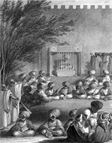 Sayfawa dynastyStateThe Sayfawa dynasty was the ruling house of Kanem and later Bornu around Lake Chad, which claimed descent from Sayf ibn Dhi Yazan.
- SayinReligion / ideaSayin was the chief god of the ancient Kingdom of Hadramawt in southern Arabia, usually understood as a moon god.
- Sayn AbbeyWork / monumentSayn Abbey is a former Premonstratensian monastery in Bendorf, near Koblenz, founded in 1202 by Count Henry II of Sayn.
- SayramPlaceSayram is an ancient town in southern Kazakhstan, east of Shymkent, on the site usually identified with medieval Isfijab.
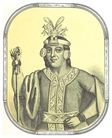 Sayri TúpacPersonSayri Túpac was ruler of the Neo-Inca State at Vilcabamba from 1545, after the death of his father Manco Inca.
- Sayyid Abdul Jabbar ShahPersonSayyid Abdul Jabbar Shah was chosen as ruler of Swat by the Yusufzai tribes of the valley in 1915, in an attempt to unite them under a single authority.
- Sayyid Ali KiyaPersonSayyid Ali Kiya was a Zaydi sayyid who founded the Kar-Kiya dynasty of eastern Gilan on the Caspian coast of Iran.
- Sayyid dynastyStateThe Sayyid dynasty ruled the Delhi Sultanate in the first half of the fifteenth century, after Timur's sack of Delhi in 1398.
- Sayyida al-HurraPersonSayyida al-Hurra was a Muslim noblewoman from a family of Granada refugees, daughter of the founder of Chefchaouen.
- Sayyida ShirinPersonSayyida Shirin was a Buyid queen who ruled at Rayy in northern Iran as regent for her son Majd al-Dawla from 997 until her death in 1028.
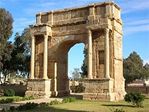 SbeitlaPlaceSbeitla is a town in central Tunisia, beside the ruins of Roman Sufetula.
 ScaligerPeople / groupThe Scaliger, or della Scala, were a family who ruled Verona as lords from the 1260s to 1387.
 Scaliger TombsWork / monumentThe Scaliger Tombs, or Arche Scaligere, are a group of Gothic funerary monuments in Verona, beside the church of Santa Maria Antica, built for the della Scala lords of…
 ScandinaviaPlaceScandinavia is the region of northern Europe comprising Denmark, Norway and Sweden.
 ScaniaPlaceScania is the southernmost province of modern Sweden, facing Denmark across the Øresund strait.
 Scanian WarWar · 1675–1679The Scanian War was fought from 1675 to 1679 between Denmark-Norway and Sweden, as part of the wider Franco-Dutch War.
 Scarborough, TobagoPlaceScarborough is the capital and main port of Tobago, in Trinidad and Tobago, on the island's southern coast.
- Scarpetta OrdelaffiPersonScarpetta Ordelaffi was lord of Forlì in Romagna at the start of the 14th century and a leader of the region's Ghibellines.
 Scattery IslandPlaceScattery Island is a small island in the Shannon estuary off Kilrush, County Clare, Ireland.
 ScetisPlaceScetis, the Wadi el-Natrun in the desert west of the Nile Delta in Egypt, was one of the main centres of early Christian monasticism.
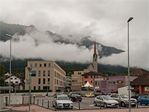 SchaanPlaceSchaan is the largest municipality of Liechtenstein, just north of the capital Vaduz on the Rhine plain.
- SchalksburgPlaceThe Schalksburg was a castle on a hill near Balingen and Albstadt in the Swabian Jura, in Baden-Württemberg, Germany.
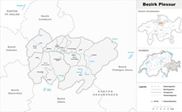 SchanfiggPlaceThe Schanfigg is a valley in the Swiss canton of Graubünden, running from Chur up the Plessur river to the resort of Arosa.
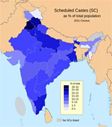 Scheduled CastesPeople / groupScheduled Castes is the official term in India for the communities historically subjected to untouchability, listed in a schedule under the constitution.
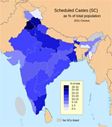 Scheduled TribesPeople / groupScheduled Tribes is the official designation in India for indigenous communities, often called Adivasis, listed under the constitution of 1950.
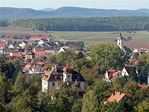 ScheinfeldPlaceScheinfeld is a small town in Middle Franconia, Bavaria, in the Steigerwald hills.
- ScheldtPlaceThe Scheldt is a river of western Europe, flowing about 350 km from northern France through Belgium to the North Sea in the Netherlands.
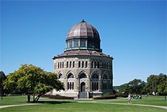 Schenectady, New YorkPlaceSchenectady is a city in New York State on the Mohawk River, founded by Dutch settlers in 1661.
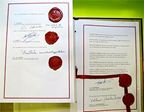 Schengen AgreementEventThe Schengen Agreement is a treaty signed on 14 June 1985 at Schengen in Luxembourg by Belgium, France, West Germany, Luxembourg and the Netherlands to abolish checks…
 Schengen AreaInstitutionThe Schengen Area is a zone of European countries that have abolished passport and border controls at their common borders.
- Schenk von LimpurgPeople / groupThe Schenks of Limpurg were a Swabian noble family who held the hereditary office of imperial cupbearer (Schenk) and from the 13th century ruled the Lordship of Limpurg…
 ScheveningenPlaceScheveningen is a seaside district of The Hague in the Netherlands, originally a fishing village on the North Sea coast.
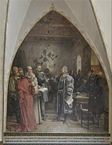 SchieringersPeople / groupThe Schieringers were one of two rival factions in late medieval Frisia, opposed to the Vetkopers, in feuds that lasted from the 14th to the end of the 15th century.
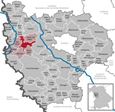 SchillingsfürstPlaceSchillingsfürst is a small town in Middle Franconia, Bavaria, on a hill near Rothenburg ob der Tauber.
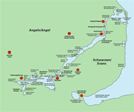 SchleiPlaceThe Schlei is a long, narrow inlet of the Baltic Sea in Schleswig-Holstein, northern Germany, reaching about 40 kilometres inland.
 Schleissheim PalaceWork / monumentSchleissheim Palace is a group of three palaces at Oberschleissheim, north of Munich.
 SchleizPlaceSchleiz is a small town in the Saale-Orla district of Thuringia, Germany.
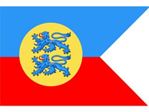 SchleswigPlaceSchleswig is a historical region and former duchy in southern Jutland, divided since a plebiscite of 1920 between Denmark (North Schleswig) and Germany (South Schleswig).
 Schleswig-HolsteinPlaceSchleswig-Holstein is the northernmost state of Germany, between the North Sea and the Baltic, with its capital at Kiel.
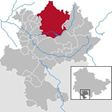 SchleusingenPlaceSchleusingen is a small town in southern Thuringia, Germany, at the southern edge of the Thuringian Forest.
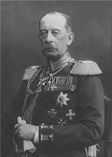 Schlieffen PlanWork / monumentThe Schlieffen Plan was the German military plan, named after the chief of the general staff Alfred von Schlieffen, for fighting a two-front war against France and…
- Schloss BurgPlaceSchloss Burg is a castle above the Wupper river within the city of Solingen in North Rhine-Westphalia, Germany.
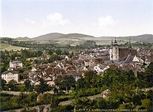 SchmalkaldenPlaceSchmalkalden is a town in south-western Thuringia, Germany, on the south-western slopes of the Thuringian Forest, long known for iron and steel working.
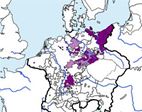 Schmalkaldic LeaguePeople / groupThe Schmalkaldic League was a defensive alliance of Lutheran princes and imperial cities of the Holy Roman Empire, founded at Schmalkalden in 1531 and led by Philip of…
 Schmalkaldic WarWar · 1546–1547The Schmalkaldic War of 1546–1547 was fought between Emperor Charles V and the Schmalkaldic League of Lutheran princes and cities in the Holy Roman Empire.
 Schneeberg, SaxonyPlaceSchneeberg is a mining town in the Ore Mountains of Saxony, Germany.
- SchoemansdalPlaceSchoemansdal was a Boer settlement in the Soutpansberg in the far north of the Transvaal, founded in 1848 by Andries Hendrik Potgieter's followers and later named after…
 Schola Medica SalernitanaInstitutionThe Schola Medica Salernitana at Salerno in southern Italy was the first great medical school of medieval Europe, flourishing from the 10th to the 13th century.
- Scholar-officialsPeople / groupScholar-officials were the educated class of imperial China who staffed the civil service after passing the state examinations based on the Confucian classics.
- ScholasticismReligion / ideaScholasticism was the dominant method of philosophy and theology in the universities of medieval Europe, which sought to reconcile Christian doctrine with reason…
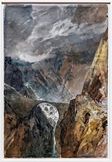 Schöllenen GorgePlaceThe Schöllenen Gorge is a narrow gorge of the Reuss River in the canton of Uri, Switzerland, between Göschenen and Andermatt on the route to the Gotthard Pass.
 Schönberg (Mecklenburg)PlaceSchönberg is a small town in north-western Mecklenburg, Germany, near Lübeck.
- Schönborn familyPeople / groupThe Schönborn are a German noble family from the Rhineland who rose to great power in the church in the 17th and 18th centuries.
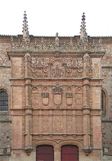 School of SalamancaReligion / ideaThe School of Salamanca was a group of 16th-century Spanish theologians and jurists, led by Francisco de Vitoria and including Domingo de Soto, Luis de Molina and…
 School of the AmericasInstitutionThe School of the Americas is a United States Army training institution for Latin American military and police officers, founded in the Panama Canal Zone in 1946.
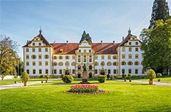 Schule Schloss SalemInstitutionSchule Schloss Salem is a boarding school in Baden-Württemberg, Germany, founded in 1920 by Prince Maximilian of Baden and the educator Kurt Hahn in the former imperial…
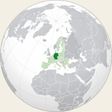 SchUM citiesPlaceThe SchUM cities are Speyer, Worms and Mainz, whose Jewish communities formed a federation in the Middle Ages and were leading centres of Ashkenazi learning.
- SchwalmPlaceThe Schwalm is a river in northern Hesse, Germany, about 97 km long, rising in the Vogelsberg and flowing north past Alsfeld and Schwalmstadt (Treysa and Ziegenhain) to…
 Schwarza (Saale)PlaceThe Schwarza is a river in Thuringia, about 50 km long, a left tributary of the Saale that flows through a deep, wooded valley on the edge of the Thuringian Forest.
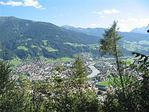 SchwazPlaceSchwaz is a town in the Inn valley of Tyrol, Austria, east of Innsbruck.
- SchwörbriefWork / monumentThe Schwörbrief is the constitution of the imperial city of Ulm, granted in 1397, which gave the guilds a majority on the city council.
- Scientific RevolutionReligion / ideaThe Scientific Revolution was the period, roughly the sixteenth and seventeenth centuries, in which new methods of observation, experiment and mathematics transformed…
 ScilurusPersonScilurus was a king of the Scythians in the Crimea in the 2nd century BCE, who ruled from Scythian Neapolis near modern Simferopol.
 ŚcinawaPlaceŚcinawa is a small town on the Oder river in Lower Silesia, Poland, between Głogów and Wrocław.
- ScindiasPeople / groupThe Scindias were a Maratha ruling family who became one of the most powerful houses of the Maratha Confederacy, later based at Gwalior.
 Scipio AemilianusPersonScipio Aemilianus was a Roman general and statesman who commanded the final siege of Carthage during the Third Punic War.
 Scipio AfricanusPersonPublius Cornelius Scipio Africanus was the Roman general who defeated Carthage in the Second Punic War.
- Scipio familyPeople / groupThe Scipio family was a leading branch of the Roman Cornelii, prominent in the Roman Republic.
 Scone, ScotlandPlaceScone, near Perth in central Scotland, was the inauguration place of the kings of Scots, an important royal centre of the Pictish and Gaelic kings from at least the 9th…
- ScopasPersonScopas was an Aetolian mercenary general who commanded the Ptolemaic army during the Fifth Syrian War.
- Scorpion MaceheadWork / monumentThe Scorpion Macehead is a decorated limestone ceremonial mace head found in the Main Deposit of the temple at Hierakonpolis in 1897–1898.
 Scotch-Irish AmericansPeople / groupThe Scotch-Irish, or Scots-Irish, are Americans descended from Presbyterian settlers from Ulster, most of them of Scottish origin, who emigrated in large numbers in the…
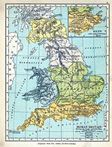 ScotiPeople / groupScoti was the Latin name for the Gaels of Ireland, first used by Roman writers in the fourth century, when they raided Roman Britain.
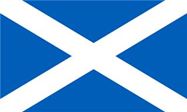 ScotlandPlaceScotland is a country occupying the northern part of Great Britain.
- Scott's Hall, JamaicaPlaceScott's Hall is a Maroon community in the parish of St Mary in Jamaica, one of the towns of the Windward Maroons established after the peace of 1739.
 Scottish EnlightenmentReligion / ideaThe Scottish Enlightenment was the flourishing of philosophy, science and scholarship in eighteenth-century Scotland, centred on the universities of Edinburgh, Glasgow…
 Scottish HighlandsPlaceThe Scottish Highlands are the mountainous north and west of Scotland, beyond the Highland Boundary Fault.
- Scottish Reformation ParliamentEventThe Scottish Reformation Parliament met in Edinburgh in August 1560, after the Treaty of Edinburgh had removed French and English troops.
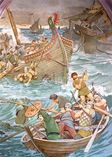 Scottish–Norwegian WarWar · 1262–1266The Scottish–Norwegian War was fought from 1262 to 1266 between Alexander III of Scotland and Haakon IV of Norway over the Hebrides and the Isle of Man.
 Scramble for AfricaEventThe Scramble for Africa was the rapid partition and colonisation of most of the African continent by European powers in the late nineteenth and early twentieth centuries.